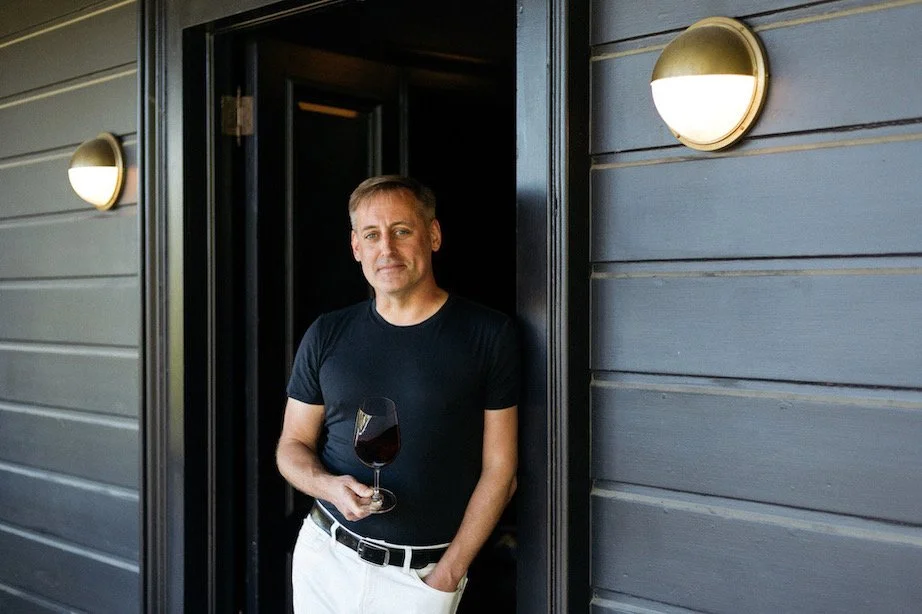
Patrick Riggs - Jack Neal & Son Vineyard Management
In this episode, viticulturist Patrick Riggs of Jack Neal & Son Vineyard Management dives deep into the realities of organic farming in Napa Valley. We unpack what it takes to convert vineyards from conventional to organic, from soil testing and rethinking fertilizer programs to choosing equipment for under‑vine weed control and managing more volatile, season‑driven budgets. Patrick explains how tools and machinery for cultivation have evolved, how he approaches weed control without herbicides, and why organic systems demand a more diagnostic, problem‑solving mindset.
Patrick also details integrated strategies for managing vine mealybug organically—combining year‑round mating disruption, biological controls like parasitic wasps and mealybug destroyers, and very selective use of organic sprays. From there, we explore floor management, soil moisture dynamics, and irrigation strategy in drought years: when to irrigate, how to prioritize limited water, why shaded interior leaves can be “water hogs,” and how canopy design and trellis choices are shifting to protect fruit in a hotter, drier future. We close with newer tools like Surround (kaolin clay), spore trapping for mildew risk, updated organic nematode approaches, and even a duck‑powered experiment to clean a reservoir overrun with Azolla.
Resources from this Episode
Jack Neal & Son Vineyard Management
This episode is sponsored by Harvest Pillar concrete trellis posts. Want to know why more growers are going for concrete? It’s because Harvest Pillar is the last trellis post you’ll ever need.
Check out the Fundamentals of Winemaking Made Easy video course
-
Episode 214: Patrick Riggs - Jack Neal & Son Vineyard Management
Recorded March 12, 2026
Jim Duane:
All right, Patrick, thank you for doing this. I'm excited to sit down and have this long-form conversation. Maybe to begin with, give your background and how you came to be working at Jack Neal & Son in Napa Valley.
Patrick Riggs:
I work for Jack Neal & Son Vineyard Management. Obviously I am the… well, the story kind of starts earlier than that.
At one point someone said, “If you want, you can come back and work for me.” I said, “Let’s do it.” And here we are. That was 2020, so about six years ago.
Jim Duane:
Mark Neal of Jack Neal & Son — he’s one of the sons?
Patrick Riggs:
Yes, yes.
Jim Duane:
I worked with Mike Neal briefly for a couple of years at Chandon before he took off and went north.
Patrick Riggs:
Yes, he’s in Oregon, I believe.
Jim Duane:
Did you want to work specifically with grapevines, or did you want to be in California? What was the motivation to go west?
Patrick Riggs:
It was specifically with wine grapes.
I’m originally from the Midwest. I came out from Wisconsin in 2001 because I wanted to work with grapevines. That was really the motivation.
I had a background in soil science and bacteriology and thought I’d give it a shot. So I drove out to California. At the same time, I had already applied to UC Davis to pursue a master’s degree.
I ended up working under Doug Gubler in plant pathology studying grapevine diseases. That really launched my career in viticulture.
Jim Duane:
Did you grow up around wine at all?
Patrick Riggs:
No, not really. Where I grew up there wasn’t much of a wine culture. It wasn’t part of everyday life.
My interest came more from an agricultural and scientific perspective. I was fascinated by plant systems, soils, and how crops interact with the environment.
Grapevines ended up being the crop that pulled everything together.
Jim Duane:
So you did your graduate work at Davis and then what came next?
Patrick Riggs:
After finishing my master’s program, I got a job with Louis Martini as a technician.
That role gave me a lot of hands-on vineyard experience. I was doing field monitoring, disease scouting, and helping with vineyard trials. It was a great transition from the academic world into real vineyard operations.
Working there gave me a much better understanding of how vineyards are actually farmed in Napa Valley.
Jim Duane:
What was the biggest adjustment going from academia into practical vineyard work?
Patrick Riggs:
The scale and the logistics.
When you're studying plant pathology in graduate school, you're often focused on controlled experiments or specific disease interactions. In the real world, you're managing hundreds of acres of vineyards, coordinating crews, weather events, irrigation systems, and production goals.
Everything becomes much more dynamic.
You quickly realize that vineyard farming is part science, part logistics, and a lot of communication.
Jim Duane:
And then you eventually moved over to Jack Neal & Son?
Patrick Riggs:
Yes. In 2006 there was a viticulturist position that opened up at Jack Neal & Son Vineyard Management, and I applied.
That was my introduction to vineyard management on a larger scale. The company manages vineyards for many different clients across Napa Valley, so you’re working with a wide range of sites and vineyard owners.
Jim Duane:
How did that experience shape your understanding of Napa Valley vineyards?
Patrick Riggs:
It really exposed me to the diversity of vineyard sites in the valley.
You see how different soils, exposures, elevations, and farming goals affect how vineyards are managed. You also see the differences in how growers and wineries approach quality and production.
No two vineyards are exactly the same.
Jim Duane:
You also spent time at Domaine Chandon, correct?
Patrick Riggs:
Yes. After my time with Jack Neal & Son, I went to Domaine Chandon where I managed their estate vineyards.
That was a really interesting role because you’re working within a winery that has a very specific style and production model. Sparkling wine grapes require different farming approaches compared to still wine production.
Later I transitioned into grower relations there, working directly with the growers who supplied fruit to the winery.
Jim Duane:
What does grower relations actually involve?
Patrick Riggs:
A lot of communication.
You’re working with independent growers to ensure that their farming practices align with the winery’s quality goals. That involves vineyard visits, crop assessments, contract discussions, and coordination during harvest.
You’re essentially the bridge between the vineyard and the winery.
Jim Duane:
That seems like a huge part of vineyard management in general — communication between growers and wineries.
Patrick Riggs:
It absolutely is.
A lot of vineyard management is balancing what the grower wants, what the winery needs, and what the site can realistically produce.
Those three things don’t always align perfectly. A big part of the job is helping everyone understand the trade-offs and the reasoning behind farming decisions.
Jim Duane:
And vineyards are long-term systems.
Patrick Riggs:
Exactly.
The decisions you make today might not show their full impact for years. Vineyard farming requires a long-term perspective. You're thinking about vine health, soil conditions, and sustainability over decades.
Jim Duane:
So you eventually returned to Jack Neal & Son?
Patrick Riggs:
Yes. Around 2020 I came back.
The opportunity came up and it felt like the right move at the time. The company had continued to grow and evolve, and it was exciting to rejoin the team.
Jim Duane:
What does your role there look like today?
Patrick Riggs:
A lot of my time is spent overseeing vineyards and coordinating farming operations.
Jack Neal & Son manages vineyards throughout Napa Valley, so we work closely with vineyard owners, farming crews, and wineries to manage everything from pruning to harvest.
There’s a lot of planning involved — irrigation scheduling, canopy management decisions, crop estimates, and coordinating harvest timing.
Jim Duane:
How much of your time is spent in the field versus in meetings or planning?
Patrick Riggs:
It’s a mix.
Field time is critical because that’s where you actually see what’s happening with the vines. But there’s also a lot of coordination and communication that happens behind the scenes.
Vineyard management is very much a team effort.
Jim Duane:
What are some of the biggest challenges vineyard managers face today?
Patrick Riggs:
Labor availability is a major one.
Climate variability is another. We're seeing more extremes — heat events, drought conditions, unusual weather patterns — and that affects how vineyards are farmed.
And then there are the economic pressures facing growers and wineries.
All of those factors influence farming decisions.
Jim Duane:
Do you think Napa Valley vineyards are changing in how they’re managed?
Patrick Riggs:
Yes, I think there’s been a gradual shift toward more thoughtful and sustainable farming practices.
Growers are paying more attention to soil health, water use, and long-term vineyard resilience.
Those trends have been building for a while, but they’re becoming more important every year.
Jim Duane:
When you look back at your career path, what do you think made the biggest difference?
Patrick Riggs:
Being willing to learn from the people around me.
Viticulture is a field where practical knowledge matters a lot. You learn from growers, vineyard managers, winemakers, and field crews.
Everyone has insights based on their experience.
Jim Duane:
That seems to be a common theme in the wine industry.
Patrick Riggs:
It really is.
Winegrowing is collaborative by nature. Even though there’s competition between wineries, people tend to share knowledge and help each other solve problems.
That culture is one of the things that makes working in this industry rewarding.