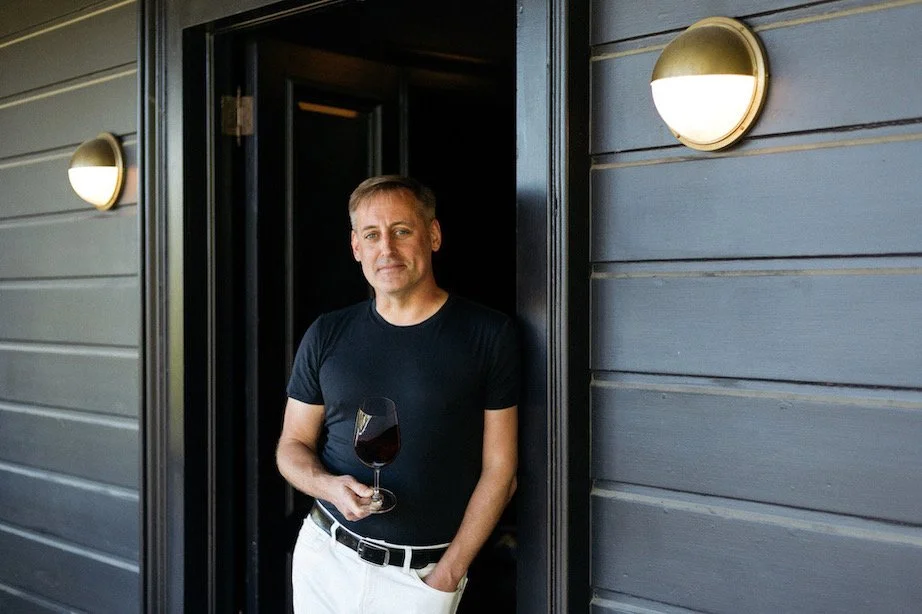
James Molesworth - Senior Wine Editor, Wine Spectator
This Jim sits down with James Molesworth, Senior Editor for The Wine Spectator, to trace James’s unconventional path into wine—from a Francophile, academic household in Queens to blind-tasting Burgundy in a tiny West Village cellar, and eventually orchestrating tastings and writing for one of the most influential wine publications in the world. James reflects on formative mentors, the discipline and humility required to learn both tasting and journalism at a professional level, and how his anthropology background shaped his “observe and report” style of wine writing. He also unpacks Wine Spectator’s mission to educate and entertain, the magazine’s role in the global wine ecosystem, and how landmark moments like the post‑9/11 New York Wine Experience revealed the deep, relationship-driven core of the wine community.
The conversation then widens to a rich exploration of regional evolution and the future of fine wine, focusing especially on Bordeaux and Napa Valley. James explains how Bordeaux’s garagiste era parallels Napa’s cult Cabernet phase, how shifts in farming (organic, biodynamic, agroforestry, soil health, old vines) are reshaping ripeness, structure, and balance, and why Cabernet Franc is becoming more important on both the right bank and in Napa. He talks candidly about climate pressures, changing consumer behavior, and why he remains bullish on Napa’s future—as long as the valley stays rooted in agriculture, terroir, and authentic hospitality. Along the way, James shares insider perspectives on how Wine Spectator chooses which wines to review, the power of storytelling versus scores, and his “bookshelf” model for building regional expertise.
Resources from this Episode
Straight Talk podcast from Wine Spectator
This podcast is sponsored by InnoVint.
Wineries of all sizes rely on InnoVint’s winery operating system to optimize vineyard tracking, manage wine production processes, automate compliance reporting, track costs seamlessly, and make data-driven decisions.
The best part? The software is intuitive, easy to use, and mobile and offline friendly! And with the highest-rated customer service in the industry, you’re guaranteed to have a smooth transition, even right before harvest.
Learn more: innovint.us
Get a demo: innovint.us/request-a-demo/
Join our free winemaking community: innovint.us/join-the-punchdown/
Check out the Fundamentals of Winemaking Made Easy video course
-
Episode 213: James Molesworth - Senior Wine Editor Wine Spectator
Podcast: Inside Winemaking
Host: Jim Duane
Guest: James Molesworth
Recorded: February 2026Jim Duane:
Hey everyone, welcome back to Inside Winemaking. Today I’m joined by James Molesworth, Senior Wine Editor at Wine Spectator. James, thanks so much for being here.James Molesworth:
Thanks for having me. It’s great to be here.Jim Duane:
I thought we could start with your background and how you ended up at Wine Spectator. It’s a pretty unique path.James Molesworth:
Yeah, it wasn’t a straight line. I didn’t grow up thinking I’d be a wine writer. I was interested in food and writing, and those two things eventually came together. I started tasting seriously in my twenties, got more involved in restaurants, and then had an opportunity to do some freelance work that led me toward Wine Spectator.Jim Duane:
When you started tasting professionally, what was the learning curve like?James Molesworth:
Steep. You think you know wine until you start tasting blind every day. Then you realize how much you don’t know. It’s humbling, but it’s also exciting because you’re constantly learning.Jim Duane:
How do you approach blind tasting now after all these years?James Molesworth:
Structure first. I’m looking at acidity, tannin, fruit profile, oak, balance, length. I try to build a grid in my head. You’re not just guessing the wine; you’re assessing quality and typicity.Jim Duane:
Do you think blind tasting makes you a better reviewer?James Molesworth:
Absolutely. It removes bias. You’re not influenced by label, price, or reputation. You’re just evaluating what’s in the glass.Jim Duane:
You cover Bordeaux, California Cabernet, and a lot of other regions. How do you manage the volume?James Molesworth:
It’s about organization and pacing. We taste in flights, usually by appellation and vintage. You build a rhythm. It’s also important to revisit wines when necessary because they evolve in the glass.Jim Duane:
What are you looking for in a great Cabernet?James Molesworth:
Balance and structure. You want ripe fruit, but you also need acidity and tannin to carry it. The best wines have energy and length. They don’t just hit you with power.Jim Duane:
How has California Cabernet changed over the years?James Molesworth:
There’s been a move toward better balance. Alcohol levels are coming down slightly, and there’s more attention to freshness. You’re seeing more site expression, which is exciting.Jim Duane:
Do you think that’s driven by climate, winemaking, or consumer preference?James Molesworth:
All of the above. Climate is always a factor, but winemakers are also making conscious decisions about picking earlier and using less new oak. Consumers are also more open to different styles.Jim Duane:
Let’s talk about scoring. People focus so much on the number. How do you think about it?James Molesworth:
The score is a shorthand. It’s meant to give readers a quick sense of quality. But the note is just as important. That’s where you get the context.Jim Duane:
Do you feel pressure from producers regarding scores?James Molesworth:
Not pressure in the sense of influence. We maintain independence. But there’s always awareness that scores matter in the market.Jim Duane:
What separates a 92-point wine from a 96-point wine?James Molesworth:
Complexity, depth, and length. A higher-scoring wine usually has more layers and a longer finish. It keeps revealing itself.Jim Duane:
Is typicity still important in scoring?James Molesworth:
Yes, especially for classic regions. A wine should reflect where it’s from. That doesn’t mean it has to be traditional, but it should have a sense of place.Jim Duane:
How do you handle tasting fatigue?James Molesworth:
Pacing and discipline. You can’t rush. You take breaks, stay hydrated, and keep your palate fresh. Spitting is essential.Jim Duane:
What’s the maximum number of wines you’ll taste in a day?James Molesworth:
It depends on the wines, but usually between 60 and 100. Beyond that, quality assessment starts to drop.Jim Duane:
Do you ever go back and retaste wines?James Molesworth:
All the time. If something is borderline between scores or showing differently than expected, we’ll revisit it.Jim Duane:
What trends are you seeing in Bordeaux right now?James Molesworth:
There’s a real focus on precision and vineyard work. You’re seeing more parcel selection and gentler extraction. Alcohol levels are also being managed more carefully.Jim Duane:
Are the wines becoming more approachable earlier?James Molesworth:
Some are, but the best still need time. Structure hasn’t gone away. It’s just more refined.Jim Duane:
How do you evaluate ageability when you’re tasting young wines?James Molesworth:
You look at tannin quality, acidity, and balance. If those elements are in place, the wine has the framework to age.Jim Duane:
What advice would you give to winemakers who want to improve their wines from a reviewer’s perspective?James Molesworth:
Focus on balance and site expression. Avoid overworking the wine. Let the vineyard speak.Jim Duane:
Do you think the role of the critic has changed with social media?James Molesworth:
There are more voices now, which is good. But the need for experienced, consistent evaluation is still there.Jim Duane:
How do you maintain consistency in your own scoring?James Molesworth:
By tasting continuously and calibrating with colleagues. We taste together and discuss wines to stay aligned.Jim Duane:
What’s the most exciting region you’re tasting right now?James Molesworth:
There’s a lot of energy in Napa with site-specific Cabernets, and Bordeaux continues to evolve. I’m also seeing interesting things from Washington State.Jim Duane:
Any final thoughts for listeners?James Molesworth:
Taste widely and keep an open mind. The more you taste, the more you learn.Jim Duane:
James, thanks so much for joining us.James Molesworth:
Thank you. This was a lot of fun.