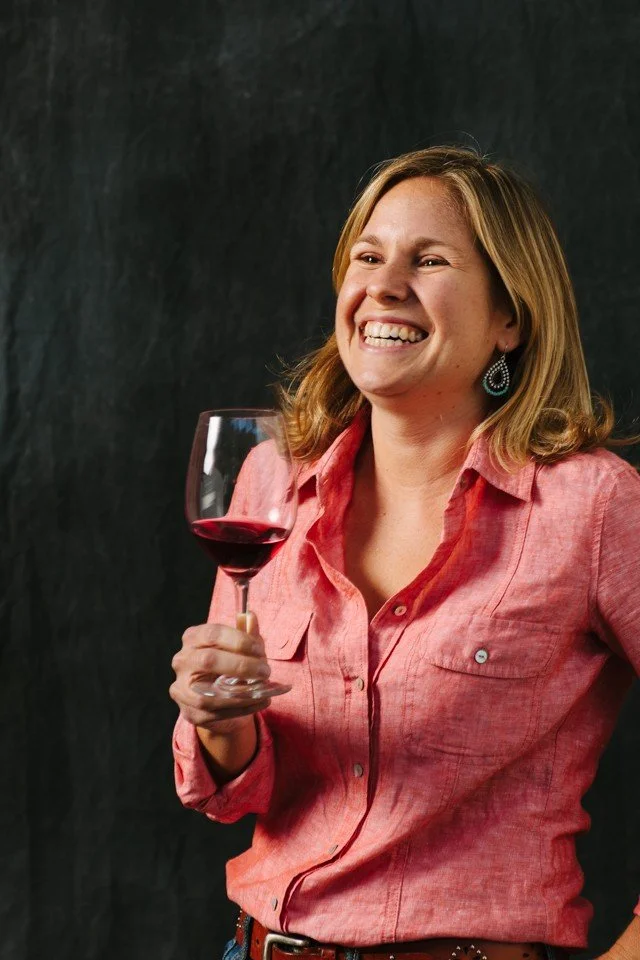
Jillian Johnson DeLeon - Laffort
In this episode, Jim sits down with Jillian Johnson DeLeon of Laffort to dig into the practical mechanics of yeast nutrition, starting with the difference between organic (amino-acid based) and inorganic (DAP) nitrogen sources. They walk through how to calculate the Nitrogren needs for a successfule fermentation across a two-addition strategy, timing the first dose within 24 hours of pitch (or at first signs of cap formation for native ferments) to support the yeast's growth phase, and the second closer to mid-fermentation to carry them through to dryness without triggering Hydrogen sulfide production. The conversation covers dosing heuristics like the one-third organic to two-thirds DAP ratio for that second addition, how nitrogen demand varies by yeast strain and biomass production, fermentation temperature's effect on ester versus thiol expression, the risks of both under- and over-dosing nutrients, and the case for early co-inoculation with malolactic bacteria to avoid stuck ferments and reduce spoilage risk. Jillian also shares her own field-tested Brix-to-potential-alcohol conversion figures and closes with an overview of Laffort's broader product lines, from oak alternatives to vineyard applications.
Resources from this Episode
This podcast is sponsored by InnoVint.
Wineries of all sizes rely on InnoVint’s winery operating system to optimize vineyard tracking, manage wine production processes, automate compliance reporting, track costs seamlessly, and make data-driven decisions.
The best part? The software is intuitive, easy to use, and mobile and offline friendly! And with the highest-rated customer service in the industry, you’re guaranteed to have a smooth transition, even right before harvest.
Learn more: innovint.us
Get a demo: innovint.us/request-a-demo/
Join our free winemaking community: innovint.us/join-the-punchdown/
Check out the Fundamentals of Winemaking Made Easy video course
-
Guest: Jillian Johnson DeLeon Recorded: September, 2026
Jim Duane: Okay, Jillian, I appreciate you being here and doing this. This desire on my part has come from wanting a better understanding of managing fermentations and utilizing nitrogen. We're going to talk about more than just nitrogen, but it was easy in the past when I just threw in two pounds per 1,000 gallons of Superfood and the same rate of DAP, and fermentations worked, and that was great. But I always had this worry that maybe there was residual nitrogen, or that I just wasn't being very thoughtful or precise about dosing nutrients, timing-wise and rate-wise. So what I hope to get from this conversation is an understanding of organic and inorganic nitrogen sources, some of the different things yeast need to ferment well, and the timing of additions, why that matters and how that matters. And obviously, as a representative of Laffort, you're going to talk about your products, so we'll keep this conversation specific to Laffort's products. That sound good? Jillian Johnson DeLeon: That sounds fantastic. Jim Duane: Okay, before we get into that, let people know your technical background up to and prior to Laffort. Jillian Johnson DeLeon: Okay, fantastic. I entered winemaking through UC Davis, but I didn't start in winemaking, I started in neurobiology. Then I found my passion for producing alcohol through beer first, and found the enology program, because enology is really, you know, we get one chance every year, so it's the most challenging. That was a long time ago. Then I hopped hemispheres and did a lot of internships to gain winemaking experience out in the field. I landed in Australia for two different harvests, did South Africa, and then came back to California and settled in Santa Cruz with the wild and wonderful Randall Grahm. Jim Duane: Oh, I didn't realize you were part of that training. Jillian Johnson DeLeon: Yep, I'm part of the Duners. Jim Duane: I'm sure you have stories, but maybe we'll save those for a different episode. Jillian Johnson DeLeon: That could be a whole other podcast. So, from Bonny Doon, I started when we were very conventional. We used everything under the sun for winemaking, and then he sold off two thirds of the company and we went biodynamic, so then I couldn't use anything anymore. I've seen both sides, regular winemaking versus organic winemaking. And then I eventually moved to Napa. Jim Duane: Keep going. Jillian Johnson DeLeon: I was doing some grocery shopping, I was in the produce aisle, and my local Laffort rep in Napa recognized me and said, "You need to come work for Laffort." So I was recruited back in 2010, right when Laffort was splitting from Scott Labs. I don't know if you remember this. Jim Duane: I do not. Jillian Johnson DeLeon: We were included in the Scott Labs handbook for 15 years or so before we split off to offer the full Laffort catalog. So my first couple of years with Laffort, I was just explaining to people that there are two French companies that begin with L. Jim Duane: All right, okay, you got your Lallemand. Jillian Johnson DeLeon: Versus Laffort. All the yeasts in the catalog back in the day just had a little L in the corner, and they were slightly different logos, but you really couldn't tell what was what. Jim Duane: And then when did Lamothe-Abiet come along? Jillian Johnson DeLeon: Oh, we don't talk about that. But again, another L. So I've been with Laffort for 16 years. It's been a wonderful journey. I've learned so much from my customers, watching people use different protocols and different techniques. Jim Duane: This mic keeps falling. I promise I'm not shrinking or growing. Jillian Johnson DeLeon: So yeah, I've been with Laffort for 16 years. I also, on the side, ran my own brand, Onesta, a Rhone varietal-based little wine brand, crafted with love. Jim Duane: When you came to Laffort, did you have a technical specialty within the company? Jillian Johnson DeLeon: No, we hire winemakers to rep our products, so that way we know how to talk to our clientele. So I had to learn all the technical background, but I had used a lot of the Laffort product in the past. Jim Duane: Okay, thank you for that. Let's start by defining organic and inorganic nutrient sources through the lens of Laffort's products, please. Jillian Johnson DeLeon: Okay, so organic nutrient sources actually feed yeast with yeast components. To develop the organic yeast nutrients, we start with a yeast cream, which can be any different yeast strain. So we have a lot of different raw material we can use, and that yeast cream is a live culture to start. Through a very gentle drying process, that's how we make our active dry yeast cultures that you use to inoculate a tank with. Through more aggressive routes, thermal treatment, chemical treatment, we're able to inactivate the yeast, break them into cellular components, and then extract the different fractions for different nutrient components. So we get the amino nitrogen mostly from the intracellular part, the yeast autolysate, and that's rich in vitamins, minerals, and amino acids. And then the inorganic form we base our products off of is DAP, diammonium phosphate. Jim Duane: Why do you call it Thiazote instead of DAP? Jillian Johnson DeLeon: Well, it's designer DAP. Jim Duane: Okay, what's designer Thiazote? Jillian Johnson DeLeon: It contains thiamin, and thiamin is vitamin B1, which is an essential vitamin cofactor that helps the yeast convert the sugar into alcohol, which is really the main role we need them to do, right? I always say the yeast are the real winemakers, the winemakers are there to keep the yeast happy and complete fermentation. Jim Duane: Yeah, set them up for success. Jillian Johnson DeLeon: So Laffort carries regular DAP, but we also have Thiazote pH, which has a very small amount of thiamin. Jim Duane: And we should clarify that when we say organic and inorganic sources, we're not talking about CCOF organic certification. We're talking about organic chemistry, the organic form of this nitrogen versus the inorganic form. So diammonium phosphate would be the inorganic. Jillian Johnson DeLeon: Yes, or you could call it the mineral component, but it really is inorganic. It's man-made. Jim Duane: And then the organic fraction is that nitrogen that's part of amino acids. Jillian Johnson DeLeon: Yeah, amino acids, vitamins, minerals. It's like the complete meal. Jim Duane: Right. In the past, I've sometimes described it as the multivitamin. Jillian Johnson DeLeon: Yeah. Jim Duane: And DAP is kind of like an energy source, like sugar almost. Maybe that's an oversimplification, but for someone who's first learning it, I think that's a simple convention. Jillian Johnson DeLeon: I think so, yeah. I used to call it the Twinkie and the steak dinner. Jim Duane: Okay, there we go. So imagine we go through a process where a new winemaker comes to you and they don't have a technical background, but they have money enough that they'll actually run lab analyses, which is maybe step one. A lot of people don't run their starting YAN, and so they don't know where they're starting out in terms of nitrogen, which is a tough spot, because then you just have to decide how much, if any, nutrients you're going to add. I really try to steer people away from that. So this conversation is going to be focused on the assumption that someone is measuring their starting YAN, yeast assimilable nitrogen, which I know some people say is more complicated than just adding your ammonia plus NOPA, NOPA being the organic nitrogen that's in the grape juice itself. But I just add the two together, I think most people just add the two together to get their YAN, which is just a sum of those two numbers. Is that okay for this discussion? Jillian Johnson DeLeon: Yeah, that's fantastic. For the grape juice, you don't really need to know the difference between the two. We usually say, on average, there's two-thirds amino nitrogen to one-third ammonium. Jim Duane: So that's usually what people see in juice. Jillian Johnson DeLeon: That's typical of what people see in juice, yeah. But for calculating what you need to add to supplement the fermentation, the total YAN is all you need. Jim Duane: So instead of me talking about what I've done in the past, maybe I'll let you guide through the steps you'd take someone through to determine which products to use when, and the timing, rates, and other important fermentation management aspects. Jillian Johnson DeLeon: Okay. Yeah, there's a lot of different options now. Jim Duane: There's too many, there's a lot. Maybe for the sake of this conversation, can we stick with just Nutristart, the organic nutrient blend that has more than just nitrogen, and Thiazote, which is DAP plus a little thiamin? Jillian Johnson DeLeon: Yeah, so using a complex nutrient, where it's got the amino nitrogen, the organic, plus DAP in the product, and then using DAP on the side, or Thiazote. That is great. I always say the combination products are really good because it's easier for your cellar, there's just one product to use, but you don't get to control how much DAP you're using in that instance. So, if you're using Nutristart, what is your typical YAN that you usually see coming in? Jim Duane: Let's call it 100 ppm. Jillian Johnson DeLeon: Okay, 100 ppm is a great example because that's actually pretty deficient in YAN. So in calculating your additions, the Laffort way is saying that if you can separate your yeast nutrient additions into two doses, that'll give you the best outcome. Now, there are people out there who do many more, and they love to micromanage their ferments, and that's fine if you have the time. But at least split it into two. I also work with a lot of large wineries, and they don't have the luxury of splitting it into two, they have to go with one, and it works for the most part. But okay, back to the two. Jim Duane: Can I ask, is there a benefit to three or more dosings? Jillian Johnson DeLeon: If you really want to dial it in, and you have the ability to measure your NOPA in the lab so you know what's left, yeah, it can help. But I've also seen great success with just two additions under the Laffort umbrella. Jim Duane: Okay. Jillian Johnson DeLeon: And it's easier in the cellar. I'm a very practical winemaker. Jim Duane: Right, I mean, it's a busy time. Jillian Johnson DeLeon: So busy. And you want to stay ahead of the nutrients, you really don't want them to stress at all, because that's when you can start to see issues. You won't see it until after ferment, but if the yeast gets stressed, they can have intracellular H2S built up, which then comes out after the fermentation through yeast autolysis. So it's better to stay ahead of it. That first add is for the growth phase, so we're just trying to support the yeast so they have enough nitrogen and cellular building blocks to get through the growth phase. Jim Duane: So growth, let's define this, this is cell reproduction. Jillian Johnson DeLeon: Cell reproduction, so budding. Jim Duane: So the biomass is increasing by reproduction, having more of the yeast cells. Jillian Johnson DeLeon: Yes. Jim Duane: And are they also growing individually, getting bigger, or is it more just reproduction? Jillian Johnson DeLeon: It's more reproduction. Good, I'm glad you clarified that. So yes, biomass, we're reaching a maximum population, and during that initial growth phase we usually don't see a really big Brix drop. Jim Duane: Right. Jillian Johnson DeLeon: You're kind of wondering, is my yeast culture working? I see the foam on top, but... Jim Duane: You've had it, I've had it. Lots of people calling, saying, "I inoculated two days ago, nothing's happening, what do I do?" Jillian Johnson DeLeon: Right, that's exactly it, it's growing. Jim Duane: Have a cigarette, calm down. Jillian Johnson DeLeon: So during that phase, the minimum amount to have is 150 parts per million of YAN, and that's with a fairly low alcohol. When we get up to 14% alcohol, it jumps to 160 parts per million, and so forth. I've also seen the yeast utilize 230 parts per million of YAN during that growth phase, so starting out with a high YAN doesn't necessarily mean you'll have YAN left over for the second part of fermentation. So that first add is all about taking your initial YAN and adding enough supportive YAN to get you to at least 150, or wherever it lands on the recommended chart. Jim Duane: So you've got to feed to support the orgy. Jillian Johnson DeLeon: Got to feed to support the orgy, yes. Jim Duane: We want babies. Jillian Johnson DeLeon: Love that. Then we get through growth phase, they're fermenting, they're doing their job, converting the sugars to alcohol. But they're going to need a little more nitrogen towards the end of fermentation, they go more into survival mode. You'll see on our recommended charts it's a much smaller addition, anywhere from 30 parts per million at the low end up to 80 parts per million of YAN at the high end, depending on the alcohol. Jim Duane: And just to be clear, when you throw out those numbers, 30 and 80 ppm, you're not talking about the rate of the nutrient, you're talking about YAN as a proxy, the nitrogen coming from whatever agents you're using. Jillian Johnson DeLeon: This is where the nutrient calculations, planning out your protocol, get a little complicated, because you're first trying to figure out how much nitrogen, YAN, and then you have to decide which product you're going to use, and then the next calculation comes in of how much of that product you need to get to your target YAN. Jim Duane: Well put, thank you. Does that help? Jillian Johnson DeLeon: Yes. So the other thing I want to bring in is that different yeast strains, you've probably seen on our charts where we talk about alcohol tolerance of the yeast strain, fermentation kinetics, temperature tolerances. Jim Duane: A lot of things I've talked shit about on this podcast in regards to yeast. I'm sure some of them are true, but those catalogs, yours and others, are pretty flowery, I get it, you're selling yeast. Jillian Johnson DeLeon: I sell yeast. Wait, do you use yeast? Jim Duane: No, well, I mean, I use yeast for Chardonnay and rosé, but not for reds. I mean, I have in the past. Jillian Johnson DeLeon: I'm talking to a native fermenter here. Jim Duane: I mean, that's where my work at Seavey, for others, I help a lot of people use yeast, so I'm very familiar with it. Jillian Johnson DeLeon: Okay, so in these charts, your wild yeast don't have charts, but we could guess they're probably moderate, you could go in the middle. We have a column that says nitrogen demand, and it'll say low, medium, high. You might be asking, how do we know how much nitrogen these need? Jim Duane: That's a good question. Jillian Johnson DeLeon: The way we figure that out is how much biomass that strain likes to produce during the growth phase. A low nitrogen demanding yeast has a smaller biomass compared to a high nitrogen demanding yeast that produces a larger biomass. Jim Duane: So that means they actually reproduce less before they switch over to the fermentative part of their life cycle. Jillian Johnson DeLeon: Yeah, part of the fermentation curve. Jim Duane: So you've actually measured it, there's some truth to it. Jillian Johnson DeLeon: University of Bordeaux catalogs all of these things, so there's some truth to it. But you can take a low nitrogen demanding strain, smaller biomass, and if there's a lot of initial YAN there, it will produce a larger biomass. And when you produce those larger biomasses, it then requires more nitrogen for that second add to get through to complete fermentation. Jim Duane: So you've got to feed the troops you've built up. Jillian Johnson DeLeon: Yes. One of the really fun things I learned over the years, probably one of my first couple of years at Laffort, was working with winemakers in Monterey County and trying to sell them yeast nutrients. Going in, they said, "We have over 500 parts per million of initial YAN sometimes in our fruit." It's huge. But it makes sense, there's a lot of other agriculture in that area, so the winemakers believed that the water table there is very rich in nitrogen already. They're fertilizing as they're irrigating, which is why the fruit comes in with such high YAN. But they still get stuck ferments and reduction, because the theory is they produce a very large biomass at the start and still need a nutrient add after that growth phase. For a situation like that, we recommend adding just the organic nitrogen at that second add, just to supplement them with more vitamins, minerals, and a little bit of nitrogen to get through. Jim Duane: I know Christian Butzke did research back in the day at UC Davis to try to figure out how much YAN was needed at different potential alcohol levels, different Brix levels. Is this research based on that, or has more research been done, or are we all just basing our YAN needs off one very old study? Jillian Johnson DeLeon: I don't think it's based off one very old study. I think there are multiple, and different yeast companies, different wine ingredient companies, their charts are very different. Jim Duane: Very different, oh okay. Jillian Johnson DeLeon: Ours seems to be very low, the Laffort one is much more conservative compared to other companies' yeast nutrient recommendations. Jim Duane: Okay, so how should someone think about that first addition and which product to use, organic versus inorganic nutrients? Jillian Johnson DeLeon: I prefer, and the Laffort way is, to use the organic nutrient up front. Sometimes, if you're low enough in YAN, like with 100 parts per million initial YAN on the fruit, you may not be able to use only organic nutrients, you might have to supplement also with DAP to get to that desired 160 parts per million of YAN. But use more of the organic nutrient up front. Jim Duane: Okay, let's take a real world case. It's warm, I'm getting fruit coming in at 25 to 26 Brix right now. What sort of initial starting YAN should I be looking at at those levels? Jillian Johnson DeLeon: Let me consult my chart. Jim Duane: Okay, so Jillian brought this chart, which we're going to try to describe in words here, but I'll also put a copy of this on the URL to this episode, insidewinemaking.com. Just find Jillian's episode and you can look at it. Jillian Johnson DeLeon: So the chart starts out on the left-hand side, it has a column with alcohol percentages, so you can round to your nearest alcohol percentage. It goes from 12% up to 16%, and then it lists the initial YAN level to start the growth phase with. Jim Duane: So that's your target for growth, what you have in your juice, and then you need to supplement to get exactly to that. Jillian Johnson DeLeon: To get to that. And then it has three other columns, each for a different nitrogen demand of the yeast, and that comes into play for that second add, how you calculate how much YAN you're going to add for your second addition. In general, we're going from a total nitrogen need of about 200 YAN at 12% up to 260 at 16%. Jim Duane: It's not a huge range. Jillian Johnson DeLeon: No, it's not. Jim Duane: And that's total nitrogen for the whole fermentation, right, not just your initial needs. Jillian Johnson DeLeon: That's the total nitrogen. Jim Duane: Okay, so what would be initial starting levels between 12 and 16%? Jillian Johnson DeLeon: Initial starting levels, we go from 150 at 12% to 180 at 16%. Jim Duane: Not a huge discrepancy. Okay, so if you've sent your sample off, or measured your own YAN, and it comes back at 100, you look at your chart, say I'm at a potential 15% alcohol, I know I'm going to need about 170 ppm for my initial need, so I need to get 70 parts of nitrogen in at that first dose. Jillian Johnson DeLeon: Yeah. That's going to be hard to do with just the organic. Nutristart itself has 15 parts per million of YAN for a 100 part per million addition. Jim Duane: Okay, I know that's a little confusing, but that's actually a pretty simple way to put it. Jillian Johnson DeLeon: Yeah, and then you can use the M1V1 equals M2V2 calculation to get there, or you can simply go online and use the Laffort nutrient calculator. Jim Duane: Well, that thing gives me more headaches than I find helpful. Jillian Johnson DeLeon: We may have made it pretty complicated, we have, that's for sure. Jim Duane: Units are tough too. Jillian Johnson DeLeon: Yes, but we're always looking for feedback, we're always ready to improve. Jim Duane: Put me on the phone with someone, I'll talk their ear off, that and the restart protocol, I have lots of feedback on that. That's a different episode. Jillian Johnson DeLeon: That's a different episode. Jim Duane: Okay, sorry, where were we? Jillian Johnson DeLeon: Okay, so we're talking about how to calculate that first add. Jim Duane: Right, so if you were to add 100 ppm of Nutristart, you'd get 15 parts of nitrogen from that add. Should we caveat that you wouldn't actually be adding 100 ppm of Nutristart? There's a maximum dosage, what, 60 ppm? Jillian Johnson DeLeon: The maximum dosage of Nutristart is 600. Jim Duane: Oh, okay, yeah, off by a factor of 10. Okay. Jillian Johnson DeLeon: Yeah, you might be thinking in grams per hectare. Jim Duane: Yes, just to really confuse our audience here. Jillian Johnson DeLeon: Okay, so we should stick to grams per hectoliter then. Jim Duane: Grams per hectoliter. So 60 grams per hectoliter is the maximum dose you could add of Nutristart. Jillian Johnson DeLeon: Yes. Jim Duane: To any wine over the life of the wine? Jillian Johnson DeLeon: Yeah. Also, the 600 part per million legal dose is based on the thiamin, because Nutristart has thiamin, and Thiazote pH has thiamin as well. Jim Duane: Okay, I don't want to confuse people more, but we have to clarify, you sell a product called Nutristart, which has some nitrogen in it, the 15% we called. Jillian Johnson DeLeon: Yeah. Jim Duane: And then you also have this product called Nutristart Org, as in organic. Jillian Johnson DeLeon: Yes. Jim Duane: But that doesn't have nitrogen in it, correct? Jillian Johnson DeLeon: Nutristart Org has nitrogen, but it doesn't have Thiazote. Jim Duane: Okay, thank you. So for a 100 ppm addition, how much nitrogen? Jillian Johnson DeLeon: Nutristart Org gives 10.5 ppm of YAN. Jim Duane: Versus 15 for the basic Nutristart. Jillian Johnson DeLeon: Yes. Jim Duane: Okay. A little confusing, because these are both sources of what we're calling the organic nitrogen, the amino acid-based nitrogen. But Org is what you'd use if you were trying to make organic wines, right? Jillian Johnson DeLeon: Yeah. Org is what you'd use if you're trying to make organic wines, because here in the U.S. we cannot use DAP in organic winemaking. That's different in Europe. So if you go onto the Laffort nutrient calculator and choose organic, you'll get a formulation that includes diammonium phosphate, and you can't use that here in the U.S. So it's really challenging for organic winemakers to supplement to the numbers on the chart, it's really hard to get there. Which is probably why, well, organic farming does increase the health of the soil, which also increases the initial YAN in the fruit and must that comes in. But it's also easier to do organic winemaking if you stay at a lower alcohol percentage, 12 to 14%. It's really hard to go above that for organic winemaking, because you can't supplement with enough nitrogen. Jim Duane: Okay, fair enough. All right, I think we clarified that. How much nitrogen are you going to get in a dose of a Thiazote diammonium phosphate product? Jillian Johnson DeLeon: You're going to get 21 parts per million of YAN, big time, for a 100 part per million addition. Jim Duane: Okay, cool. Jillian Johnson DeLeon: And straight DAP is the same amount of YAN as Thiazote pH. Jim Duane: Got it, okay. Also, can I be on the committee that names your new products? Jillian Johnson DeLeon: I've been trying to get on that committee, I got to name one product in the last 16 years. Jim Duane: I want to know who named Mannostab, that's my favorite. Jillian Johnson DeLeon: What about ManoFeel? Jim Duane: Also pretty awesome. Jillian Johnson DeLeon: So good. Jim Duane: All right, should we move on to that second dose? Okay, timing, let's talk about timing first. Jillian Johnson DeLeon: Okay, so let's go back to the first dose to define the timing. We say within 24 hours of the yeast pitch. Jim Duane: So it could go before, it could go after. Jillian Johnson DeLeon: Just within that 24-hour period of the yeast pitch, that's when you want to make sure your YAN is at least at that minimum level on the chart for your potential alcohol. Jim Duane: I've not worked everywhere, but everywhere I've worked has always put in nutrients before the inoculation. I thought that was kind of standard practice, am I seeing it wrong? Jillian Johnson DeLeon: No, I see it across the board. I've even seen people pitch the yeast in at the hopper, that's large-scale winemaking. Jim Duane: They've got to get things going fast, okay, fair enough. Jillian Johnson DeLeon: So I see it all over the place, but yeah, adding the nutrients before, even while you're building the yeast culture up, you're already kind of hooked up to the tank. Jim Duane: Yeah, I mean, that's why I do it. I start the inoculum, start building, rehydrating, doing that whole procedure, get the nutrients in, get them mixed, it's just, you're working on that tank anyway. Jillian Johnson DeLeon: Yeah, you don't forget to add them. Jim Duane: Okay, so for someone doing a native fermentation, when does the green light go for adding your first dose of nutrients? Jillian Johnson DeLeon: Back at Bonny Doon, we'd say as soon as you started seeing a little cap formation. Jim Duane: So the first signs of life of fermentation. That's when I've been doing it, that's good to hear. Jillian Johnson DeLeon: Yeah, you don't want to feed the negative microflora. Jim Duane: I think about that a lot, right, because I know there are some bacterial populations going. In the past I've used SO2 to try to suppress bacteria, now I use the non-Saccharomyces yeast. Jillian Johnson DeLeon: Oh, fantastic, it's one of my favorite innovations for the wine industry. Jim Duane: It's pretty cool. Jillian Johnson DeLeon: It's really cool, it just makes cleaner fermentations overall. Jim Duane: Can we do a quick digression? I'm working with some people using these non-Saccharomyces products, but they're too nervous about getting off SO2, so they're hedging their bets by adding some SO2 and using these non-Sacc yeast. Are they just killing the yeast? Jillian Johnson DeLeon: Well, it depends on which non-Sacc they're using. With Laffort's Égide, there are two different strains, Torulaspora delbrueckii and Metschnikowia. The Metschnikowia is actually sulfur sensitive, where the Torulaspora is not so much. So if you're adding over 25 parts per million of SO2, you're really favoring the Torulaspora growth and not so much the Metschnikowia. So we usually say yes, you can use a little bit of SO2, but try to keep it under 20 parts per million. Jim Duane: Okay, thank you. --- Jim Duane: So native fermentation, first signs of life, that's a good sign, good time, because that's when your Saccharomyces... well, let me ask you this. So that's when the yeast are starting to ferment, create some CO2, you see a little cap, you smell a little bit of this, you get a little fizziness on your tongue. It may not necessarily be all Saccharomyces at that point, there could be other yeast species fermenting. So I've been a little worried, am I adding too early, am I adding nutrients to yeasts that aren't going to be the actual Saccharomyces strain that's going to finish the fermentation? I have these arguments in my head as I'm driving home. Jillian Johnson DeLeon: It's hard, because you can't measure exactly where they are in the growth phase unless you have a microscope and a cytometer. But I'd say somewhere in the middle, because you want to hit that growth phase so they have enough nitrogen. Jim Duane: Right, you don't want to shortchange them early on. Jillian Johnson DeLeon: Yeah, you don't want to shortchange them early on. Jim Duane: What are the potential consequences of shortchanging them, both nitrogen and nutrients, early on? Jillian Johnson DeLeon: You might have a smaller biomass, which then, as the fermentation progresses, can get more stressed out, because there's not enough of the army to finish eating all the sugars and converting them to alcohol. Jim Duane: So in a not-great scenario, you get some hydrogen sulfide production, and in a real tough scenario, you get a stuck fermentation. Jillian Johnson DeLeon: Exactly. Jim Duane: Okay, do we get through that first feeding so we can move on to the second? Jillian Johnson DeLeon: I think we can finally move to the second, there's just so much. Jim Duane: Well, that's why you're here, and that's why I'm not doing this as a solo episode. I tried to do it myself, me and Claude and the Laffort handbook and all that, but I got confused. So I really appreciate that you're here. Jillian Johnson DeLeon: Well, I hope I don't confuse you even more, that will be the goal. Jim Duane: The goal. Jillian Johnson DeLeon: Okay, so the second add is a little less stressful, it's not as much nitrogen. The yeast aren't really reproducing at this point, so you just need nitrogen for building blocks for the cell itself, and to get them through, some vitamins, some minerals. So using a small fraction of that second add with some organic nitrogen, but then coming in a little heavier with the DAP for the second add. Jim Duane: That sounds counterintuitive to some of the Laffort handbook stuff. Jillian Johnson DeLeon: Does it? Well, that's what our calculator ends up doing. Jim Duane: Okay, well, let's talk it through, because I trust you. Jillian Johnson DeLeon: Yes, so adding DAP early on, it's a fast source of nitrogen for the yeast, so it really does signal them to produce a larger biomass, keep reproducing. So in general, we talk about trying to limit the DAP add during that initial phase and waiting for the second. If that's not clear in some of our documents, we probably need to address that. But once your population is established and they're working through the sugar, DAP is really crucial, especially if you're up there smelling the top of your tank and you start to smell those stressy signs. There's nothing like a DAP add that will clean them up. Inside the yeast cell, the nitrogen metabolic pathway kind of converges with the sulfite, or sulfate, metabolic pathway. That's how the yeast create sulfur-containing amino acids. But if there's not enough nitrogen present, it sinks into this H2S pool inside the cell, because there's not enough nitrogen there to keep producing those amino acids. Eventually it gets too toxic for the inside of the cell, and they start kicking the H2S out into the wine. Jim Duane: That's super interesting. Jillian Johnson DeLeon: So it's important to have enough nitrogen around, easily transportable into the cell, once we get into that second phase of fermentation. Jim Duane: Lock up those sulfur molecules, like methionine, or whatever the sulfur-containing amino acids are. Jillian Johnson DeLeon: Yes. Jim Duane: Very cool. How should a winemaker think about how much of the two products to use to hit their initial and secondary YAN targets? Jillian Johnson DeLeon: Very generally, I think each scenario is different depending on your initial YAN and how much organic you're adding in that first add. But in general, for the second add, if you take that, let's say 60 parts per million that's needed, and do one-third organic, two-thirds mineral or DAP, that would be a healthy strategy. Jim Duane: Okay, I like that, that's a simple thing. So say that again, one-third organic, two-thirds DAP or mineral, at the second dosing. Jillian Johnson DeLeon: Yes. Jim Duane: Okay, and that first dosing, what's the simple heuristic for the product mix? Jillian Johnson DeLeon: Let's say the simplest, this could hold true if you don't know your initial YAN, you could say two-thirds organic, one-third mineral. But if you know your initial YAN, you might be able to get away with, let's say Nutristart, which is a combo product, so you're getting a complex nutrient, you could do 100% of that add with Nutristart. Jim Duane: So you'd only use Thiazote or DAP if you just can't get enough nitrogen from your organic nutrient. Jillian Johnson DeLeon: Yeah. Jim Duane: Okay, that should be in bold in the catalog, I feel. Jillian Johnson DeLeon: It should be. But it's also a personal strategy. Jim Duane: Oh, okay, yes. Jillian Johnson DeLeon: Some people don't think the organic, or amino, nitrogen really makes a difference. We've done a number of studies that show that the way yeast utilize amino acids, they put it down many different pathways and are able to produce higher alcohols, more fermentation esters. And if you're working with Sauvignon Blanc, or a varietal that has thiol precursors, you can get more thiols from using an organic yeast nutrient. So if you're into aroma optimization, it's important to use some fraction of the organic source. Jim Duane: Okay, and DAP doesn't provide that. Jillian Johnson DeLeon: Right, DAP doesn't provide that. Jim Duane: And I know you guys even make a nutrient product, what's it called, Nutristart Thiols? Jillian Johnson DeLeon: Right, new rage. Jim Duane: Okay, so that just has some higher concentration of those components to support thiol production. Jillian Johnson DeLeon: It does, and it also has a lot of naturally occurring glutathione, which is a peptide that protects as well, it's an antioxidant, and a higher fraction of some of the sulfur-containing amino acids. So you produce more of those thiol compounds. Jim Duane: Okay, when is it too late to add nutrients? Jillian Johnson DeLeon: That's such a good question, it's really hard, though. As a winemaker, when you're standing there and the tank is at like four Brix, and you just smell the stress and it's slowing down, what tools do you have? It's oxygen or nutrients. So I'd say really try to get it in before 10 to 8 Brix, try to be set and good to go. And then below that, we do have yeast hulls that can help detoxify when things start to get a little sticky. Jim Duane: But that's more of a fining product than a nutrient. Jillian Johnson DeLeon: It doesn't provide nutrients, but it supports the yeast because it's like a sponge, it pulls toxins out, which then frees them up to go about their sugar metabolism again. It's absorbing toxins that might be blocking some of the transporters on their cell walls. Jim Duane: So 10 Brix is a very easy heuristic to remember. Jillian Johnson DeLeon: Say 10 Brix, and if you have to get it in at 8, or even 6, okay, but do smaller adds. Jim Duane: And what products are best at that point, the later add point? Jillian Johnson DeLeon: The ammonium, the easy source of nitrogen. Jim Duane: Yeah, okay, I got confused because that's what I've always thought and known, like if you get stinky, go DAP. But here's the problem, I started with the Laffort catalog, but then I put it into Claude, and I think there was some manipulation and poor understanding of that data, and it was telling me not to use DAP, and I was like, oh my gosh, have I been doing it wrong for all these years? But it's good to know, if you're going to go late, use the simple inorganic mineral, DAP, Thiazote pH, whatever you want to call it. Jillian Johnson DeLeon: Yes, and if you look at our restart protocol that you don't love, it's DAP that we recommend. Jim Duane: We're going to do an episode in December, if you're willing, or you can give it to someone else at Laffort, but I want to go through that whole restart protocol, because I used it last year and it worked. It's very hard, though. Jillian Johnson DeLeon: It's hard, Tina. Jim Duane: Okay, Tina, just down the street. Jillian Johnson DeLeon: She is, she lives right around the corner from here. Jim Duane: Okay, what other important aspects of these nutrient dosings and fermentation management have we not hit upon? Jillian Johnson DeLeon: The importance of really checking your tanks every day, being there and watching the signs. Jim Duane: Okay, what do you mean by checking? Jillian Johnson DeLeon: Looking at your Brix curves, your fermentation curves, to make sure things are dropping at an even pace, but also smelling the tops of the tanks, because you can smell when a fermentation goes from really floral and estery to what we call sweaty. Those stress signs that come out before the H2S is produced, and if you can catch it at that sweaty phase, add a little more nutrient, maybe turn the temperature up, you could possibly turn that fermentation around to a healthy one. Jim Duane: Why turn the temperature up? Jillian Johnson DeLeon: It stresses the yeast less. Jim Duane: Okay, so yeast prefer to be in a warm environment. Jillian Johnson DeLeon: They do, and we always try to slow them down by turning the tanks down. Don't forget to turn that tank temperature back up towards the end of fermentation. Jim Duane: Okay, most winemakers are fermenting reds in the 70s and 80-degree range. Jillian Johnson DeLeon: Yeah, reds, not an issue. Jim Duane: Okay, so more for whites that tend to be fermented cooler. Jillian Johnson DeLeon: Yes. Jim Duane: Then you'd seek to warm a little bit, okay, that makes sense. How much are we brutalizing yeast by fermenting them at 50 degrees Fahrenheit, or using them to ferment at that low level? Jillian Johnson DeLeon: It's definitely a significant stress. A lot of practice out there has started around 65, until they really get going and get out of that growth phase, so you allow them to build the biomass at a decent temperature, and then crank it down slowly over a couple of days to that low 50s, if that's where you want to go. Then towards the end, once you get below 10 Brix, start to turn it up again, and let them finish comfortably. Jim Duane: That's hopeful, I don't think a lot of people do that. Jillian Johnson DeLeon: They should. Another thing people don't know is the colder the ferment, the more you favor ester production by the yeast. In a warmer fermentation, if you have the thiol precursors and you're using a thiol-producing yeast strain, the warmer temperatures, the more thiols the yeast will produce. Everybody tries to do their Sauvignon Blanc ice cold, but you'll get more thiol production if you go more around mid-60s. Jim Duane: Can you do a quick definition of esters and thiols? Jillian Johnson DeLeon: Esters, more simply, it's more of the red fruits, the tropical notes, where thiols are more of the grapefruit, the passion fruit. Think New Zealand Sauvignon Blanc, those boxwoody notes. Jim Duane: Right, okay. What temperature do yeast really start to run into problems on the high side? Jillian Johnson DeLeon: On the high side, when you start to get into 87 and above. We do have one yeast strain, FX10, that's our champion, it can go to 95. Jim Duane: Wow, is that why that yeast exists, is it for high-temperature fermentations? Jillian Johnson DeLeon: No, it just happened to be one of its qualities. Jim Duane: Why do you say it's your champion? Jillian Johnson DeLeon: Especially in Napa, it's the big Cabernet yeast, everybody loves it for Cabernet. It produces some nice red notes, good mouthfeel, high temperature tolerance, and it finishes very clean, with a nice low VA. --- Jim Duane: One of the things we haven't discussed is the consequences of overdosing your fermentations. We talked about building up too much biomass early on and not supporting it through the finish. What if you add too much later on, in your second or subsequent additions? What are the downsides? Jillian Johnson DeLeon: The downside is having nutrients left over, so then you can have microbial spoilage, plenty of nutrients around for, let's say, Brettanomyces. You want to give the yeast just enough to keep them healthy, they consume it all, and then there's nothing left for anybody else to jump in for the after party. Jim Duane: I used to be very confident about this, and now I'm not sure where I got it, but I believed, or heard somewhere, that bacteria tend not to use nitrogen food sources, it's yeast that use nitrogen food sources, which should make sense as to why you mentioned Brettanomyces, because that's a yeast, not a bacteria. Is there truth to the idea that bacteria don't metabolize YAN? Jillian Johnson DeLeon: I'm not sure I can say that for all bacteria, but the other food sources we have for malolactic bacteria, nitrogen is not the focus, it's more the vitamins and minerals. So I think you're on the right track. Jim Duane: Okay, I'm going to keep my mouth shut here, but this is your opportunity to make a pitch for ML nutrients. I'm not a big fan of them, but go ahead and explain why they can or can't be helpful. Jillian Johnson DeLeon: Well, in easy-to-ferment situations, let's say you had a very clean alcoholic fermentation, no sign of struggle, and you want to put the wine through malolactic fermentation with a reasonable alcohol, good temperature in the cellar, not too cold, the ML fermentation should go, no need for nutrients. But if you have challenging situations, higher alcohol, maybe your pH is a little too low, or your yeast struggled and you had to restart the fermentation, that's where ML nutrients come in handy, to support them through a challenging condition. Jim Duane: I think a lot of people, myself included, have cold cellars, we don't have warm rooms. Having a separate warm room for ML is a real luxury most wineries don't have, so I could see how people get into a situation where it just doesn't go till spring. I run native fermentations for primary, but I inoculate for ML, because all my wines have to go to a cool cellar, and I've tried to run native ML in the past and get nowhere. Maybe I'm just not patient enough, but six or seven months in, if I'm smelling oxidation, I'm really unhappy with that. I just like to get stuff done. I tend to do what I call co-inoculation, but I'm not adding bacteria when I add yeast, I add bacteria quite early. I basically finish my second dose of nutrients, usually around 18 Brix, and then get my bacteria in, and I've had great success with that. I know a lot of people are scared because there's sugar there, and they say your VA is going to spike, I've never had that issue. Jillian Johnson DeLeon: It's incredible, the fear of co-inoculation that's out there. The cellars I work with that have converted over to co-inoculation are going on long Christmas breaks without any worry, the wines are tucked away, topped, SO2'd before Christmas. The worry of the ML culture consuming the sugar and creating VA, it's just not reality. I would say, don't try it on your 16% alcohol wines, where the yeast are going to struggle, there might be an opportunity for the malolactic to take off and cause problems. Jim Duane: But what about the idea that in that situation, your Oenococcus, the bacteria you're putting in, are metabolizing the malic acid, so you have less substrate for undesirable bacterial species that become more of an issue if you have a sluggish or stuck fermentation? Because as soon as your primary slows down, that's when bacteria starts growing, whatever bacteria that is depending on your situation. That's why every winemaker fears watching their glucose and fructose not really move, and their VA ticking up in November and December. Jillian Johnson DeLeon: Yeah, and then that's when it's, oh my gosh, I've got to use lysozyme, which nobody wants to use. So I think it's a big benefit, the early co-inoculation, for people using yeast. If you can add it 24 to 48 hours after your yeast pitch, we've shown time after time that it's a really good timing for the yeast and the ML bacteria to coexist. Jim Duane: Well, that's good to hear, and that message is slow to get out, because there's so much resistance to it. I know lots of winemakers who tell me they specifically like a long, slow ML fermentation, and when pressed on why, all they can point to is personal preference, that it brings some sort of texture or flavor, usually texture, but I just think they're full of it, I don't believe it. Jillian Johnson DeLeon: I don't know why, I don't ask too many questions when they present that. But I'll tell you, there are some wines out there, myself, I've actually cleared a histamine issue, but I went through a couple of years where I couldn't touch Chardonnay or Pinot, anything with wild fermentations and wild ML, because I'd have a histamine reaction. Jim Duane: Oh, you mean personally, your body's reaction? Jillian Johnson DeLeon: Yes, my body. I just didn't want to drink those wines anymore, because I'd have one glass and wake up with a full-on stuffy nose the next day, and a headache. I went through a phase of taking Benadryl, and I don't want to have to take Benadryl to drink wine. So I really think using an ML culture reduces the risk of producing those histamines, and gets the ML fermentation done fast and swift. Jim Duane: I'll hold an open mind that there's potentially a benefit for a long, slow ML, I'm just not on that train, that's for other people. Jillian Johnson DeLeon: I'm fair, I agree, concur. Jim Duane: What else do we need to talk about in regards to fermentation, especially primary fermentation? Jillian Johnson DeLeon: With nutrients, it's important to really look at the yeast charts, get to know the personality, the characteristics of your yeast. I think the information is more readily available now, but back in the day people would call and say, "My ferment's stuck, and I used this yeast." What was your starting Brix? That means your potential alcohol is, say, 15, well, this yeast only goes to 13.5. So just some basic things can help avoid big problems. Jim Duane: What do you tell people is a conversion they should think about, for their starting Brix to their potential alcohol? Because you don't know, and everyone wants to know. Every first-time winemaker says, "Okay, this is my Brix, what's my potential alcohol going to be?" And there are variables, having an open-top tank maybe helps you blow off half a percent alcohol, but how do you guide people in thinking about potential alcohol? Jillian Johnson DeLeon: I had to keep crazy charts for Randall, with so much detail on every tank, calculate everything, do reports. So I have like five years of data points, and we used so many different yeast strains, plus wild fermentations. What I found for reds is I'd use .056 to .057, somewhere in between, as the conversion, and for whites, point .605. But that's me, that's not the Laffort recommendation, that's the Jillian. Jim Duane: Okay, what do you use, .06? I know it's not very accurate, there's a big set of error bars up and down. I mean, the biggest thing people need to take into account is what's your fermenter, are you blowing off alcohol every day, or are you doing Chardonnay in a barrel where everything's refluxing and you're keeping every molecule of alcohol that's being produced? Jillian Johnson DeLeon: Right, that's true. Jim Duane: So that's a big part of it. But yeah, I guess I need to go back and do, this is a good use of AI, I can feed it all my old data and get a pretty good picture. I'm going to do that, not during harvest, but after harvest, that's a good after-harvest project. So I can actually know my conversions. I've looked into this on a cursory level in the past, and I find there's a difference vintage to vintage. Is that something you've seen? Jillian Johnson DeLeon: People call and ask about that, what's the conversion rate this year, but I'm seeing really high conversion rates. I never get calls about low, it's always calls about high. Jim Duane: Okay, and there's a difference between a densitometer and a refractometer and a hydrometer, so you've got to learn those. I think anyone making wine year after year would greatly benefit from keeping their own records and figuring out their conversion rate in-house. Jillian Johnson DeLeon: I agree, and the different tanks you mentioned, if you're all open-top, you're probably blowing off a lot more alcohol. Jim Duane: And if you're in something like a macro bin or a T-bin, where your surface area is huge relative to the volume, it's going to be a very different conversion rate. Jillian Johnson DeLeon: Yeah, absolutely. Jim Duane: Okay, Jillian, this is a lot, this is very helpful to me, I have more confidence in my nutrient dosing. Anything else you think we need to talk about? Jillian Johnson DeLeon: I think we covered it, Jim. Jim Duane: Okay, promote your Laffort self, and tell people how to contact you if they want to. Jillian Johnson DeLeon: Okay, you can reach out to our team on the website, we have all of our contact information on LaffortUSA.com. We have two websites actually, this is a great avenue to promote this. We have the international website, Laffort.com, and it's got a section where we release international technical wine articles, so you can go under the In Press menu tab, put your email address in, and you'll get notified every time there's a new technical article. Jim Duane: Is there a catalog or library of them as well? Jillian Johnson DeLeon: Yep, there's a library, so you can read at your leisure while you're waiting for fruit to come in, or bottling, or whatever season this podcast airs in. And then we have a store in St. Helena where you can pick up products, we have a store in Paso Robles, and our main warehouse is in Petaluma. We've got everything you need from grape to bottling. Laffort is a family-owned company based in Bordeaux, we have major subsidiaries in every wine-growing region, and we now have Vintessentials, so we do enzymatic test kits and sell some lab equipment as well. We have a flavor company too, we're now starting to bring in natural flavors through the Ascencia brand. Noblesse is our alternative oak line, and Alma Vitis is our vineyard application brand. So lots of options under the Laffort umbrella. Jim Duane: Very cool, and I can attest that all of the staff are great resources, so you can talk to anyone at Laffort and get your questions answered. Jillian Johnson DeLeon: Thanks, Jim. Jim Duane: Okay, Jillian, good people. Awesome, thank you for doing this. Jillian Johnson DeLeon: Yeah, thanks for having me.
Displaying Jillian_transcript_cleaned.txt.