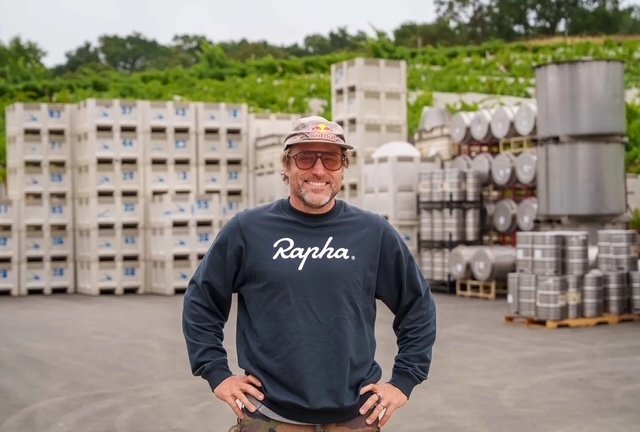
JJ Naab - L'Amitié Wines
In this episode I talk with John “JJ” Julius Naab, assistant winemaker at Matthiasson Wines and founder of Lamitié Wines, about his unconventional path from Chicago brokerage and endurance sports into the wine world. JJ traces his move from finance to Santa Barbara hospitality and DTC sales at Brewer-Clifton and the moment he realized he wanted to make his own wine. We dig into his decision to complete the UC Davis Winemaking Certificate, how that “inch deep, mile wide” technical foundation pairs with on-the-job experience, and what he really learned during his first harvest at Kosta Browne in the middle of COVID and wildfire smoke.
We then dive into JJ’s Chardonnay-focused Lamitié project: why he chose to be known for one thing, his focus on low alcohol, high-acid chemistry, and what he looks for in vineyards like Charles Heintz (clone 4, cool sites, marine influence). JJ explains his press strategy (“the juice isn’t always worth the squeeze”), fermenting Chardonnay in puncheons on full solids, running relatively warm ferments, and then moving the wine to stainless for a second year to tighten texture and enhance reduction in his efforts towards a Burgundy-inspired style that still reflects California fruit.
Resources from this Episode
This podcast is sponsored by Wine Compliance Alliance.
Are you concerned about your winery’s reporting? Do you worry that it’s not being done correctly, or being vulnerable to a TTB audit? Help is here!
The Winery Compliance Training Academy has custom-designed courses created by industry experts with deep backgrounds working at wineries managing production compliance! Our course, The TTB reports all US Wineries are required to file is designed to walk you through the 3 reports all US wineries are required to submit to the TTB. This course is a fit for all winery staff who are responsible for filing reports or label approvals to the TTB.
Check out the Fundamentals of Winemaking Made Easy video course
-
Episode 221: JJ Naab
Guest: JJ Naab
Recorded: August 2026
Jim Duane: Okay, sometimes you go by JJ, sometimes it's John. What do you want this episode to be titled? What do you want your name to be for this episode?
JJ McNab: That's a good question. John Julius.
Jim Duane: John Julius, J-O-H-N.
JJ McNab: Yep.
Jim Duane: Julius, like the mall.
JJ McNab: You can put an air quote for JJ after that.
Jim Duane: All right. So we've talked in the past, and I understand you're from Chicago, but I know so little about you that I was looking forward to talking to you and getting to know you. And then I really want to talk about you building this Chardonnay, which is my new favorite Chardonnay. So welcome, welcome. Please tell me how you got into wine before winemaking.
JJ McNab: That's a great question. I spent about 15 years in Chicago, ten of that working in the brokerage business.
Jim Duane: Financial brokerage.
JJ McNab: Yeah, equities, options, futures, forex, clearing, trading. I'm a type-A person. I love endurance sports, and I fell into triathlon. That led me to excelling at endurance sports and becoming a coach, and I ended up coaching a good friend of mine in one of his Ironmans down in Kentucky. When the brokerage firm I was working for got bought, he asked what I was going to do, whether I was going to stay. I ended up switching careers and moving into the sales and hospitality side of the wine business down in Santa Barbara.
Jim Duane: That's a real change.
JJ McNab: Big change. Loved it. I commuted, two or three weeks out there, a week back in Chicago, and vice versa. Couldn't figure out if I should fly into SF or LA, or just go straight to Santa Barbara. Ended up going SF to Santa Barbara because the Santa Barbara airport is basically the size of a high school, and the drive from LA is brutal. But we did that successfully, and we exited that winery to Kendall-Jackson about 27 or 28 months after purchase. At that point I was hooked on wine, and I loved the sales and hospitality side, and I'm super competitive, especially in endurance sports, where you have to put in the work. There's no shortcuts. You show up and try to get better every day. You'll make mistakes, you'll figure things out, but hopefully you're making positive progress. After that experience, I was sitting there wondering what my role really was. I loved wine, but I didn't know where I fit in. Kendall-Jackson had someone for every function, so even as a 1099 you tell them what you did and then you exit, and you're left wondering what to do next. So I went back to school.
Jim Duane: Were you doing hospitality at the winery?
JJ McNab: Mostly direct-to-consumer and hospitality, working with the tasting room manager. When we purchased the winery, we made a decision not to furlough anybody, to work with what we had and help navigate.
Jim Duane: Sorry, who's "we"?
JJ McNab: Some investors purchased Brewer-Clifton, and one of my friends, Ken Fredrickson, who you've talked about, brought me up. Ken gave me a shot helping run the direct-consumer and hospitality side of Brewer-Clifton down in Lompoc.
Jim Duane: You start laughing when you say that. I've been there. I get it.
JJ McNab: There's a Saab dealership there, I think, still. But it was a great experience. In life you get not what you want but what you need, and that really sparked a desire to figure out how to make my own wine, which is a lot harder than people think. I'm sure you can speak to that more than me. It takes a lot more money and time to get there. When I left the brokerage business, it wasn't about making X dollars or the house with the white picket fence or joining a country club, keeping up with the Joneses. It was about kicking all that aside and focusing on the day-to-day and finding the love in that. So it took a lot longer, a lot more money. After we sold Brewer-Clifton, I decided to figure out how to make and sell my own wine, and I actually love selling wine as much as, maybe more than, winemaking.
Jim Duane: Don't hear that a lot on this podcast.
JJ McNab: No. I feel like most winemakers are both introverts and extroverts. We're outgoing and can turn it on when we have to, but then there are moments where you just want to be in the cellar, or with family and friends or a tasting group, having intimate moments where you can relax, because in public or at events you're always "on."
Jim Duane: Okay, so how and when did you move north?
JJ McNab: Brewer-Clifton sold in May of 2017. I went back to Chicago and worked for several years with one of the investors from Brewer-Clifton. Meanwhile I went back to school. There are two ways to skin the cat of making your own wine. If I was 20, I'd go to Davis, travel the world, meet everyone, work in all the epic cellars, spend 15 years living out of a suitcase building a rolodex of knowledge. But in my mid-30s, that path made less sense, so I had to go get some technical training. You need to learn enough to know that you don't know anything, because a lot of people are armchair experts.
Jim Duane: The Dunning-Kruger effect. When you're new, you think you know it all.
JJ McNab: Exactly. I did the certificate program at Davis, which was great, a lot of it taught by actual industry people, not just professors. It's great if you have a tank for every fermentation during harvest, but what do you do when that isn't the case, or things don't go to plan, or you don't have all the tools? Where I work now, at Mathiasen, we're constantly having to think outside the box. But you need that technical foundation, and there are so many good resources: ASEV, AWRI, textbooks, the internet, now ChatGPT. You can ask any question and it'll take you down a rabbit hole on a reduction issue, and then you just need the reps of working in the cellar, understanding fermentation kinetics, smells, sounds. I'm attuned to a pump going dry, a leaky airline, reduction in the cellar.
Jim Duane: I can hear a leak half a mile away in the middle of the night. It's true, you train yourself for that. It's not innate.
JJ McNab: You have to be detail-oriented, and that's part of getting the on-the-job experience to supplement the technical side.
Jim Duane: Do you mind if I ask about the UC Davis certificate program? I get a lot of questions about it, and I haven't done it myself. What was it versus your expectations?
JJ McNab: I love numbers, conversions, math, so I'm probably a freak for that stuff, it just makes sense to me. I went in with an open mind, wasn't sure what to expect. Some of it was challenging, like when they give you problems where you're the winemaker and have to figure out what happened. Until you've actually been there and done some things, it's hard to walk through thinking about what bucket of what addition went into what tank. But overall it was a great, highly rewarding experience, very broad. They hit everything a little bit, so you get a wide spectrum, an inch deep and a mile wide. The analogy is: if you want to be a mechanic, you learn how to take a car apart and put it back together, learn what part is what. You're not doing a master's on how to build the best turbo or the most fuel-efficient tires, that's for a race car driver, and you may never get there. It parallels well with real-time experience. When they're talking about fermentation, stuck ferments, feeding, sanitation, that's what you're doing in the cellar at the same time. So overall, I give it a solid A.
Jim Duane: Thank you for that. I've gotten a lot of wishy-washy responses, but that was the most detailed and positive.
JJ McNab: It's for people from all over the world. I remember we did a blind tasting where you had to buy a wine and provide descriptors, and the wine they chose was something from the supermarket, because everyone could get it.
Jim Duane: Right.
JJ McNab: Half the people were like, "This is awesome, it's so good," and the other half were trying to be sommeliers about a sixteen-grams-per-liter red wine. No one cares. Just taste it, talk about it, think about it. So yeah, solid A.
Jim Duane: Okay, I got this question on an interview once. You have a tank during fermentation, near the end. Brix have stopped dropping. One day you check the Brix, and it's gone up. What could it be?
JJ McNab: Towards the end, whole cluster?
Jim Duane: No whole cluster.
JJ McNab: No whole cluster.
Jim Duane: It's a good answer, you could be pushing sugars out of stuff that wasn't broken open yet, but that's not it in this case.
JJ McNab: Soaked up, not pressed?
Jim Duane: Nope.
JJ McNab: Nothing's pressed, nothing's there.
Jim Duane: Let me think. No, it is pressed off.
JJ McNab: Oh.
Jim Duane: That helps guide toward the answer.
JJ McNab: So you press off, and the sugar goes up.
Jim Duane: And you hadn't checked it by RS yet, you're just doing Brix because it's still in that zone before you need to check RS.
JJ McNab: So you're at negative one, and you taste it, and it tastes sweet.
Jim Duane: Tastes sweet, and Brix keeps going up a couple days.
JJ McNab: Keeps going up.
Jim Duane: Slowly, but going up.
JJ McNab: I'd guess an addition error, but I don't know.
Jim Duane: That was my guess too. The correct answer, which I didn't get either, though I did get the job, is that there's a hole in the tank and glycol is leaking in.
JJ McNab: Oh yeah, you have to check that glycol when you do a breakdown.
Jim Duane: Glycol jackets are on the outside.
JJ McNab: I'm a Chardonnay producer, so I don't have glycol on my fermentations. But that's a good one. I've heard of one winery that had a leaky tank on the inside. They had a really hard time welding it shut.
Jim Duane: So you were doing this while living in Chicago, back and forth?
JJ McNab: Living in Chicago, working with Brewer-Clifton, traveling back and forth. We sold the winery and I stayed on for a few months for transition, institutional knowledge, that kind of thing. Then I worked with one of my friends, an investor at the winery, on some of her projects, which was a great experience, but it wasn't what I wanted, which was working in wine, selling wine, hosting people, providing experiences, connecting with customers. Pushing hospitality and service is one of my favorite things, because it's all about the details, and I'm a fairly binary person, either a hundred miles an hour or zero. In hospitality you have to try to bat a thousand, and you're never going to. You could seat a thousand people and one person has a bad experience and goes to Yelp and complains, and you do your best to correct it, but things happen. I like things that are difficult but also fun, and wine is about being with people and connecting. On the back of my label I have "It's so good to be together," a quote from my grandfather. Growing up, at the beginning of the meal we'd say grace, and at the end we'd hold hands, even if we were warring factions at the table, and look each other in the eye and mean it: it's so good to be together. That's wine. It's being with everybody. Selling that, versus selling brokerage products where you're talking about real-time data, collocated servers, your fills and commissions, there's no soul in it. It's black and white: is my fill good, what was my price. With wine I can talk about terroir and fruit and try to figure it out. I love deductively tasting wine, stripping it down to see the qualities I do or don't like. It's all in the details, and you have to be really focused and in the weeds, which is cool.
Jim Duane: So at what point did you first come to Napa? I ask because that's where you live and work now.
JJ McNab: I flew to Sonoma County. I'm an identical twin, and he lives in the East Bay, doesn't really like wine, he likes beer, he's got three kids.
Jim Duane: It was a real shock when I ran into him at your wedding, it was you but not quite you.
JJ McNab: Yeah, we wore similar outfits too, which definitely didn't help. He loves beer, three beautiful kids, they just got a dog, he's living the life in the East Bay. I moved out here because that's where family was. I didn't feel like going to Europe, and I have friends who own a ranch in Petaluma where we got married. I got quarantined during COVID in early 2020 when I flew out. I had to figure out how to interview, intern, start finding that on-the-job experience, and that process was interesting with the questions people ask about what they think is important. Now, seven or eight years later, I don't really care about most of what people ask in interviews, that's probably a whole rant on its own.
Jim Duane: I like this. We're going to get into that in a minute.
JJ McNab: I interviewed at a few places, friends of mine, fifth-generation dairy farmers, and ended up accepting a position at Kosta Browne. I started in July of 2020, but I was basically living on their dairy farm during most of COVID because there was nothing else to do. I flew my bike out and was riding all up and down Northern California, waiting for harvest to start, since no one was hiring for anything else at that moment. Tasting rooms were closed, and if you said hi to people at the grocery store they'd look at you funny. It was an interesting harvest, my first, with fires and COVID both, a big challenge, at a more corporate place, so I think other people probably bent some rules.
Jim Duane: Yeah, we wore masks for two hours on the first day, and that was it, 2020.
JJ McNab: Yeah, we had to wear masks or buffs the whole time, you could see your breath, we felt ridiculous. But the team at Kosta Browne, they're awesome, they were just following the rules to stay out of trouble. It was a great experience.
Jim Duane: Did you want to work specifically with Pinot and Chardonnay?
JJ McNab: No, I just needed a job. I was trying to explain to the cellar master at the first winery I interviewed with, who was worried about not having experienced Europeans that year, that I had a lot of other relevant experience, trying to explain the values quadrant of trust and performance, and it went over his head. Didn't get that one. Interviewed at the second, there were twelve interns, so I figured I'd better just keep quiet, I'm just one body among eleven others.
Jim Duane: I can't imagine a worse winemaking job than managing twelve interns.
JJ McNab: We had some great people I still talk to. The winemaker there, Julian, was awesome, and Bobby and Jamma, a cellar master and cellar worker, now have their own brand called Joseph Jewell. Sam Buckingham and his wife have another label, Spur Road. There was also a guy who showed up three weeks late, got hurt his first day, and filed a workers' comp claim. I can only imagine the HR team dealing with that one.
Jim Duane: What did you learn that first harvest that was most eye-opening, since that was your first hands-on experience with wine?
JJ McNab: I was really impressed by the volume, the amount of wine they produced even in a limited year with smoke and fires, and the consistency of quality at that scale. Looking back, I can make a couple barrels of Chardonnay and give every one full attention, check Brix and temp and malic on each barrel. But when you're running a large operation with a lot of people doing the daily tasks, are they pumping over at the right time, doing the right additions to the right tanks, is the forklift driver careless and ripping a valve off a tank, it's incredible to see the quality they achieve at that scale. I tip my hat to those winemakers. Most of that first harvest I was on a forklift, moving barrels around, and at the time I wasn't stoked about it, I wanted to work with the wine, punch down ferments, do dig-outs, get sweaty. But probably the best thing that happened to me is being highly comfortable on a forklift now, since if you want to be a winemaker at a smaller place, you're doing that yourself. It's fun doing tight maneuvering, especially at Mathiasen, where it's very small and people are yelling "stop, stop, stop," and I'm like, I know my edges.
Jim Duane: What I like about the forklift is you've got front, back, sides, up and down, it's like driving but five times harder.
JJ McNab: The worst is during harvest when you're receiving fruit, draining, pressing, barreling down, and moving barrels all in one or two days. We don't have a big barrel room at Mathiasen, so we take a lot of barrels to a separate warehouse near the airport for secondary and aging. You get in your car to go home and start using your blinkers to get back, and when you lay in bed you're still swaying like you've been on a boat all day. The interns always want to do the forklift, and I tell them, trust me, it's not that great. It's all liability and no one says great job, but if you drop a punchin and it rolls into the road, that's real consequences. It's a dangerous thing in a small place, but yeah, being on the forklift was good.
Jim Duane: I have a come-down at the end of harvest, in two stages. First when the energy drops, you stop picking so you're still busy but not at the peak. I don't love that. Then further down, in November and December, when you're not on the forklift every day and you come home and have to move something heavy by hand, you're like, I'm back to human power again, which sucks.
JJ McNab: We have a guy who's worked with us for years who has freakish Hulk strength, he'll just push a whole PT to get it onto a pallet jack to drain it. It's always helpful to have a Hulk, and he's a great winemaker too.
Jim Duane: Tell me the path of how you came to work at Mathiasen. Kosta Browne was 2020.
JJ McNab: Yeah.
Jim Duane: That job probably ended at the end of harvest, I assume.
JJ McNab: Right before Christmas, around December 20th. We were fortunate they kept a couple people on late, but it was a light year, so there wasn't much to do. Super stoked they kept us that long. Then on January 1st I was hiking Mount Saint Helena with my wife, going up, and Jill and Steve Mathiasen were coming down. My wife asked if they needed anyone reliable and hardworking to work in the cellar, and they said they were good but would let us know. Two weeks later, that warm, drought winter of 2020 to 2021, not much photosynthesis, the vines coming up early, they needed help pruning. Their vineyard manager had just quit, and they said they needed help, fifteen bucks an hour, let's go. I was ready. I interned in the vineyard that whole year. Caleb Mosley came on and replaced Jack around February, and I had the best time farming with Caleb for a year, really getting to know the vineyards and how hard that work is. A lot of respect for wine growers. Our job in the cellar is pretty easy by comparison. I interned in the vineyard the whole year, then transitioned into the cellar. It was an early-ish harvest, we were pressed off before the end of September, and then I went and worked with Andy Erickson on an Atlas Peak Cabernet project starting October 1st, through Christmas. That was cool to see, high-end mountain Cab, a much different style from Mathiasen, blue lighting on every tank, real attention to sanitation.
Jim Duane: I do like to sanitize.
JJ McNab: That thing hanging up there, they'd say don't break this, and you'd try, but it's not that easy. After that, the business at Mathiasen was growing, they'd purchased a warehouse and needed someone who could drive a forklift.
Jim Duane: Sorry, you're talking about Mathiasen now?
JJ McNab: Yes, they purchased a warehouse where we now store our barrels, and needed someone reliable to run it. I was even more grateful for those six months on a forklift. They hired me on, and I was cellar foreman, then cellar master, then assistant winemaker. Cellar master and assistant winemaker are kind of the same level, but externally it's easier to explain to people what you do. This is my seventh harvest, I've been there since 2021.
Jim Duane: A lot of people who listen to this podcast will be familiar with Mathiasen, it's a popular brand, and I've had Steve on the podcast, and Caleb Mosley from when he was farming with them. Tell me all the wines you make, not every year, but this year, can we do a quick run-through of the grapes you're working with?
JJ McNab: This year there's a lot changing in the marketplace, but the traditional varietals: Chardonnay, we have several from Sonoma and Napa in different styles, we make sparkling wine, we've made Vermentino in the past, we do Chenin Blanc. Today, or tomorrow morning, we're processing some Chenin from Alder Springs, which we're excited about, doing it two different ways, some macerated, different clonal selections.
Jim Duane: Isn't Alder Springs going away?
JJ McNab: I don't know.
Jim Duane: I thought I saw an email about it.
JJ McNab: I don't know, I don't remember an official email. The fruit showed up today, so we're going to make some killer Chenin Blanc.
Jim Duane: I apologize if that's not true, I've heard some stuff, but I don't remember, I got fruit from there years ago and we were on the list.
JJ McNab: It's a tough market for growers. Even us, in 2023 we fermented 31 different varietals.
Jim Duane: Thank you for getting me back on track.
JJ McNab: We've had to scale back some of it, it's fun making the wine, but you have to make sure your sales match what you're producing.
Jim Duane: Well, with the Chenin, I'm hopeful Alder Springs isn't going away, and I'm glad you got fruit.
JJ McNab: It looks great, super stoked. The initial juice chemistry looked great. It came in later in the day so we did five gentle presses today and will hold it for the morning. So: Chardonnay, Chenin Blanc, sparkling wine, Sauvignon Blanc, Cab Franc, Merlot, Cabernet Sauvignon. We did Refosco in the past, but that's getting phased out, none this year. We've made Vermentino, Riesling, and Trousseau Gris from Joseph Phelps in the past, that vineyard's gone now, but it made an amazing wine. There's just a lot. I have my own Chardonnays, two of them. We have an intern making Pinot, Syrah, Cab, and Chardonnay. We do Sauvignon Blanc several ways, amphora, tank, and barrel. We're doing Greco di Tufo in amphora on the skins, we'll leave it for nine months and see what happens, it's really tannic right now, interesting to watch it evolve as an orange wine. And Bulgarian, can't forget that.
Jim Duane: That's fun though, as a winemaker who only works with a limited number of grapes, I have some jealousy of that breadth.
JJ McNab: It cuts both ways. It's great working with all these varietals, and we're constantly tasting and talking about wines that inspire us, or techniques we want to try, trying to figure out what best showcases each vineyard, because we try not to be heavy-handed in the cellar. It's really about showcasing the farming, and organic viticulture is really important to us, it's not on the labels, but we believe it gets us the best fruit, which is a competitive advantage. It's about stepping back and steering rather than overworking the wine. With so many different wines you get a lot of different at-bats, right now we've tasted probably fourteen or fifteen different white ferments. But I also appreciate your world, where you have one focus and can really dial in the details and push for greatness because you're so hyper-focused on one thing. It's like a sprinter versus a climber in the Tour de France, I respect both. With my own Chardonnay brand I get to focus just on Chardonnay, but also have fun with all these other wines at Mathiasen. There's a lot of technique we borrow from other high-end wineries in different styles that we incorporate, which is cool, and sometimes we just try something and see what happens, and more often than not it works.
Jim Duane: You mentioned the Chenin came in with perfect chemistry today. You don't have to give exact numbers, but what makes a really great chemistry for white wine, in your mind?
JJ McNab: I don't want to speak for Steve and Jill's full philosophy, Chenin is Jill's favorite grape, but for white wine, we tend to shy away from bitterness, that's not something we prefer. We want a little more acidity, a little more minerality or fruit, but not bitterness on the finish, so probably a lower pH, and we don't squeeze very hard, mostly champagne presses. The juice isn't always worth the squeeze on whites, once you start checking the tails and the pH and tasting it. Just for fun sometimes we'll do a hard squeeze and ferment it separately to see what it tastes like.
Jim Duane: And what does it taste like?
JJ McNab: Never great, no surprise, it goes into the lees bin or gets turned into RO product.
Jim Duane: I've never worked with Chenin Blanc. What's an ideal pH for it in the style you guys work with?
JJ McNab: Under three point two, we've never gone higher.
Jim Duane: I picked Chardonnay today at 3.69 pH.
JJ McNab: Oh.
Jim Duane: A lot of potassium this year.
JJ McNab: High potassium. My Heintz fruit, which I picked last week on Wednesday, was 21.7 Brix with a 3.08 pH.
Jim Duane: You're in the under-three-one club, congratulations. Okay, you said something to me a couple years ago, off the cuff, about your titratable acidity being super high, and you said you were thinking about adding acid. I'd never picked a grape with that much acid. I was excited to taste your Chardonnay.
JJ McNab: Yeah, my Heintz TA was like nine.
Jim Duane: That's what you said, nine, and I was like, holy shit, and you picked it.
JJ McNab: Yeah, it was ready.
Jim Duane: Let's put that in context, were you planning to go through full malolactic?
JJ McNab: Yeah, full ML, delayed, so the diacetyl gets chewed up, but I still want some freshness and acidity in the wine. I'm comfortable with lower pH, though not Riesling territory, not sparkling-chemistry low.
Jim Duane: Do you remember how high the malate was if your TA was nine?
JJ McNab: I don't know offhand, they just put my juice panel results in this afternoon and I was running out the door. The Brix came in at 21.7, so that puts us around 13 percent alcohol with good acidity.
Jim Duane: So this low-alcohol, high-acid style is similar to Mathiasen's. Is that coincidence, or have Steve and Jill influenced your winemaking?
JJ McNab: Certainly they've been an influence, and I'm also inspired by the great white Burgundies. My friend Ken Fredrickson and I were having dinner one night, probably back in 2011 or 2012, watching a Bears-Packers game. He asked red or white, and I joked that red is real wine, white is what you slap in a box at the tailgate. He came back with a glass of white wine, and I was blown away. It was Domaine Roulot Meursault Perrières 2009. I was floored, and ever since I've been all in on Chardonnay and white Burgundy. When I think about wines that inspire me, I don't love really high-octane, big, broody, rich wines. I love cooking, and I want freshness and acidity that starts the palate. Jill and Steve are in that world too, though my wine is a bit different from their Chardonnay from Linda Vista. One of my mentors, and this is advice for anyone trying to get into the business: you have to be technically focused, get on-the-job experience, and find a mentor. It's invaluable. I recently had a situation come up that I'd never thought about, mentioned it to my mentor, and they said they wouldn't do it, then walked me through why. My barrels were delayed six weeks and I didn't have them for fermentation, I had a neutral puncheon and asked if I could just rack the dry wine into my impact barrel once it arrived. Their answer was to avoid it.
Jim Duane: Do you mind telling me what they said? I'm curious.
JJ McNab: It was two people. My good friend Ryan Hodgens said to pump the brakes, that barrels can sour or the wine ends up less integrated if you rack finished wine into a fresh barrel rather than fermenting in it, something about the tannins and temperature during fermentation that helps it cure properly. The barrels were delayed because the container was delayed, that's just the vintage, you work with what you have. So I chose to sit on them, a lot of money tied up doing nothing for a year, and I'll use them next year. My other mentor said he's seen it happen a few times too, and suggested maybe steaming or hot-rinsing the barrel, soaking it for an hour or two to try to break it in a little, but that goes against the purpose of the barrel, which is to have an impact, that's what you're paying for. It's like a chef using half the salt a recipe calls for. So it'll have less wood impact, which is interesting, it becomes part of the vintage story, a selling point for why this wine's different from last year.
Jim Duane: Thank you for walking me through that. How upset were you about having to sit on that barrel for a year?
JJ McNab: Not really mad. It's more about things being in my control. My barrel rep said we'll put your order in earlier next time, fair point. They did everything they could, drove them up in the back of her Toyota. I actually thought I'd use them for a pick on Tuesday, but I only got one ton, just one puncheon's worth, so it was too much wood for that little wine, and I chose not to use it.
Jim Duane: I feel like we're a little ahead of ourselves. Take me back to when you decided you wanted to make wine, and why Chardonnay for your own production?
JJ McNab: Three things. One, it's a known grape. Everyone knows Chardonnay. If I said we make the best Ribolla Gialla, half the people wouldn't know what that is. You need familiarity if you're going to sell something.
Jim Duane: This is reverse Dan Petroski, he liked making wines nobody knew what they were supposed to taste like.
JJ McNab: I love Dan and those wines, his hide-shard is really nice. But you want familiarity, half the battle is that if you spend your time creating a market, the total addressable market probably isn't that big to begin with, and if it does take off, the big players will come in and blow you out. The second thing is that Chardonnay responds so well to technique, fermentation kinetics, barrels, aging, site, clonal selection. You can steer it in a certain direction stylistically. A lot of people equate Napa Chardonnay with that high-butter, diacetyl, vanilla-spice style, which plenty of people dislike, and as a salesperson you get to give them the Pepsi Challenge, have them try something and realize, wait, this is Chardonnay, and it changes the way they see the world. That person becomes a customer for life and tells ten friends. I always laugh when people say they don't like Chardonnay but love Burgundy. So you want familiarity, and a style you personally like. I love the bigger, richer style, like John Cornwell, Hudson, Kongsgaard, but also the newer style coming from Mathiasen, Arnot-Roberts, Ceritas, Sandhi, the Sphere wines, some of the newer, upcoming Chardonnay producers doing really killer wines. I think there's room for it all, but I look at what I want to drink. There was a third thing I was going to mention, it'll come back to me.
Jim Duane: Okay.
JJ McNab: Harvest brain.
Jim Duane: No, totally get it. What are your criteria in the vineyard when you're looking for grape sources?
JJ McNab: Soil is important, clonal selection.
Jim Duane: Do you have an ideal soil?
JJ McNab: It depends. I think the first step is drinking the great Chardonnays you like and finding those sites. When I first started buying fruit from Charlie Heintz in 2024,
Jim Duane: This is Charlie Heintz Vineyards in Sonoma.
JJ McNab: Right, on a hill above Occidental. Everyone said it's a hard time to start a wine brand, why are you doing it. In my previous career, you buy low. In 2022, if I'd asked to buy expensive Chardonnay fruit, people would have laughed me out of the room, everyone wanted more fruit and prices were climbing. I wouldn't have been able to source an amazing vineyard to start a brand, but with demand softening and more supply opening up, it became an opportunity to get into some of the best vineyards in the world and benchmark my wine against others'. It wouldn't have happened without the downturn, and unfortunately the growers are usually the ones left holding the bag in those situations, but it's a great vineyard, sandy loam soil, eight miles from the ocean, heavily marine-influenced, very hard to farm, kind of like Carneros but maybe harder, with wind, cold, vertebrate pressure. If you try to farm organically out there, it's really hard. So find the sites and wines you like and start learning about them. I love limestone, or the Kimmeridgian soils in Chablis. There's a lot that goes into a great Chardonnay vineyard, but I typically like something cooler, so it can hang longer without massive spikes, because calling picks is brutal when things move fast.
Jim Duane: Yeah, we always get these heat waves in Napa, things move three Brix in a week.
JJ McNab: It's beef jerky, you missed it.
Jim Duane: Like me trying to cook a steak tonight, from rare to well-done real quick.
JJ McNab: Clone-wise, are there certain clones you were most excited to work with, or was it more about the vineyard?
JJ McNab: As you know from my chemistry, I love clone 4.
Jim Duane: That's right, big cluster, big acid, slower ripener.
JJ McNab: High acid, Wente is the second-highest-acid clone, clone 4 being the first. So full flavor with freshness, acidity, balance, and some restraint in terms of horsepower.
Jim Duane: In your mind, is picking at a certain Brix and potential alcohol what you mean by restraint?
JJ McNab: It's all of it. I probably run higher acid than most, but there's stuff where you're walking the vineyard and tasting and there's nothing sweet yet, so you wait. The clusters this year were tiny, a lot of hens and chicks, so things squeezed a little more than I expected. I usually squeeze very light, about 130 gallons a ton, just enough for a puncheon, but this year I got a little more. The pH didn't change, so I got more free-run, which is great. Normally big clone-4 clusters, but this year they were like little grenades. It'll be interesting to see where the wine goes.
Jim Duane: Anything special about your winemaking? I feel like you're a guy who does pretty basic, clean winemaking and focuses more on the source of the fruit, but I don't want to put words in your mouth.
JJ McNab: No, I think as a winemaker the cool thing is you get to do whatever you want, hopefully something commercially viable for your route to market and your price point. If you want to make natural wine with no added sulfur and some flaws, knock yourself out, it's a lot of work for not a lot of money. I believe in a sound, clean wine, but I'm not dogmatic about sulfur usage or going for a reductive, flinty, matchstick style. I'm totally fine with a slow ML if that's where it wants to go.
Jim Duane: That's what I love about your wine, the reduction, that's the entry point, the slate, the flint, it's so seductive.
JJ McNab: There's some technique behind that. You basically just press into a barrel and let it ride.
Jim Duane: So no settling in tank beforehand?
JJ McNab: No, all the solids go straight in. But you want to taste it, because if the lees aren't great, we had a Sauvignon Blanc lees the other day that we racked, and it was stinky, there's good noble reduction and then there's baby diaper.
Jim Duane: Right.
JJ McNab: If you're getting baby diaper, get it off. But if it tastes great, tart, interesting, you leave it. I run a hotter ferment, so I have a shorter fermentation curve than most, and ML usually happens pretty quickly, though if it's long and slow that's fine too. I don't love wines that read as both oxidative and reductive at once, that butterscotch, flabby, old-tasting quality alongside reductive notes, it's confusing.
Jim Duane: Right.
JJ McNab: We don't want anyone to be confused when they taste the wine. Noble reduction is what we're after, but if it goes squirrelly and gets out of hand, you have to fix it.
Jim Duane: How long do you hold this on lees post-fermentation, before bottling?
JJ McNab: Two years total, a year in puncheon, then racked to stainless drums.
Jim Duane: Interesting, what's the thought there?
JJ McNab: A few things. I don't have a lot of room at Mathiasen, it's already small and only doing puncheons, so having two years of puncheons around isn't practical. Getting them out and freeing them up for the next vintage helps, and going to steel also mentally prepares me for bottling when the wine's ready the following spring. I take all my solids to steel too, so it's a late stir, giving it one last bit of weight before it sits on the lees in the drums, more lees-to-wine ratio. Otherwise there's no batonage, just press, stir, rack the next year, and try to incorporate those lees along with the new vintage.
Jim Duane: So at this point are you making Chardonnay from two different vineyards?
JJ McNab: Yes, I have the Apple Wine, which is my cuvée Cherise, named for my grandmother and my sister, and the cuvée Rosemary, from the Charles Heintz vineyard, for my other grandmother and my niece. Two wines right now.
Jim Duane: Are they both for sale?
JJ McNab: Just my '23 and '24, I'll release the '24 in the spring. We tasted the Heintz yesterday with some of Ted Lemon's Charles Heintz, which was really cool, and the day before I had the Marin Layer. It's fun walking that vineyard and seeing all the different producers making wine from it.
Jim Duane: How satisfied are you with your first wines?
JJ McNab: I'm proud of it. It was a lot harder to reach that milestone than I ever thought. But I like hard things, mountains were made to be climbed. I used to race Ironmans and the Leadville 100, all sorts of stuff where you're digging deep.
Jim Duane: Leadville.
JJ McNab: I got a big belt buckle.
Jim Duane: Whoa, that's serious.
JJ McNab: That's when I got out of Ironman, you don't get a tattoo, you get a big belt buckle if you go fast enough. I like challenges, things that are hard.
Jim Duane: Are there any tweaks you're making in subsequent years, going back to the same vineyard, beyond changes in the vintage itself?
JJ McNab: Production methods, picking, all about the same. I'm looking at coopers, trying to find a little more weight and texture, not wood flavor specifically. It's hard to dial in when you only do puncheons, since each one is a full ton and expensive, you can't try four different barrels the way you could with standard barrels and two tons. My first vintage I didn't filter, my second vintage I did.
Jim Duane: Was that because of residual malate, or just to clarify?
JJ McNab: No, I use Champagne-style green bottles, so it has to be totally crisp. I might start playing with different malic approaches too, depending on where the acids land in the final wine. Other than that it's pretty chill winemaking, you pick it, ferment it, keep an eye on it, let it hang out. Chardonnay tastes amazing one day and not great another, then six months later it's the best wine in the world. It's a bit of a head game, you just have to stay the course.
Jim Duane: Those are hard days, when you taste your wine and don't like it. It really bothers me.
JJ McNab: There's so much that goes into it, the kind of day you're having, your mindset, whether it's a root day or whatever. That's why I like tasting wine with friends, I'm usually in a good mood, and wine always tastes better with other people. But yeah, it's rough when you taste it and think, what's going on? One of my close mentors, John Kongsgaard, told me if you don't like it, walk away for six months, don't taste it, just top it, take care of it, and wait. With your first, second, third, fourth wine, you start to understand what really matters and what doesn't. With your first one you obsess over every little thing, it's like having your first kid, you're helicoptering, and by the third kid you're more relaxed.
Jim Duane: Kongsgaard is well known for his Chardonnays, the "death and resurrection" method, letting them go without sulfur, more oxidative, then resurrecting them before bottling. How much did you explore that method?
JJ McNab: I don't do that with Lamitié, but I do with Mathiasen, on one of our most underrated Chardonnays, Michael's Vineyard, totally nondescript, west of downtown Sonoma, clone 4, insanely rocky soil, they break farm equipment every year, they finally paid to get all the rocks out. We do a death-and-resurrection style on that, which is cool.
Jim Duane: Could you explain that for people who aren't familiar?
JJ McNab: No sulfur, maybe a little at the crusher just to keep Oenococcus and other competitors in check until the yeast gets going, then you delay sulfur so the wine goes through a tired, headachy phase.
Jim Duane: And it's topped up during that time, so you're not getting oxygen exposure.
JJ McNab: Correct. You barrel-ferment, fill it up as it finishes fermentation, confirm it's dry and through malolactic, since we're not blocking or chilling it, and let it ride. It's almost a two-year wine, about twenty-two months. By the end of that time the wine has gone through a lot of phases, and then you hit it with SO2 and it totally changes, freshens up, becomes lively, gets this nutty character, it's an unbelievable transformation, but you have to be brave, because for those twenty months it's a ride.
Jim Duane: For your own wine at Lamitié, did you not want that risk, or is it just not the flavor profile you're after?
JJ McNab: I'll probably explore some of that eventually, but stylistically I don't want the nutty, oxidative-and-reductive-at-the-same-time character, so I steer clear of it. As soon as ML is done I wait a month or two for the diacetyl to settle, give it a big hit of sulfur, and with the low pH I can ride it from there. A lot of people I've talked to know about the death-and-resurrection method but don't actually try it, it takes a lot of confidence, but when it works those wines show so much better with age.
Jim Duane: For the Chardonnay you have bottled now that I've tasted, was there a certain point where it took on reduction, or did it come in quickly after fermentation?
JJ McNab: It was there pretty early, even during primary fermentation, and I think a lot of it comes from the wood selection on some of the barrels, you get wood-driven reduction too, which helps tighten the profile. Going to steel for the second year really focuses it further, like zooming a flashlight in on the side of a house until it's a tight beam. I've had wine that wasn't reductive at all going into the drum, and then six or eight months later it's a whole different, surprising wine.
Jim Duane: I'm thinking about how I could try that, I'd need more stainless drums to hold Chardonnay that long. I'd do tanks if I could.
JJ McNab: I'd probably do tanks too if I had enough volume.
Jim Duane: Tying up a tank for that long would be tough.
JJ McNab: That's basically what they do in Burgundy, rack everything to tank and hold it over before bottling, probably more for logistics.
Jim Duane: Anything else we should talk about, anything else you're excited about going forward? Sticking with just Chardonnay at Lamitié?
JJ McNab: Just Chardonnay. Looking at the brand and my vision for it, I want to be known for one thing and be really good at it, so that in twenty years, if someone needs a great Chardonnay, hopefully my name is on that short list. The other thing I'd say, for interns and people asking how to break in: I didn't fully realize it at the time, but Napa is like the NFL, the barrier to entry is high, and you can't really mess around. It's a tryout. I actually like it when interns are a little greener, so they're learning my protocols rather than showing up assuming they know better because they did it differently somewhere fancier. Internships are rare, especially at great places, but it's a tryout, and when someone's assistant winemaker is leaving, you go straight to your Rolodex. A lot of the best jobs never get posted, we hire from our phone book of friends. So live it, eat it, dream it, connect with everybody, work hard. What matters to a winemaker isn't just whether you're great at chemistry, it's whether you show up on time, work hard, are fun, get along with the team, the things that can't be taught. The people I've seen succeed as interns and go on in this business all had that.
Jim Duane: And they'll remember if you drive over the extension cords every day.
JJ McNab: Or worse, the pressure washer cord, wrapped in a protective sleeve, if you run it over you have to unwrap the whole thing, takes an hour.
Jim Duane: Did you grow up in Chicago?
JJ McNab: No, Philadelphia.
Jim Duane: Tell me what your childhood smelled like in Philadelphia.
JJ McNab: We actually ordered some today, Old Bay seasoning, Maryland blue crab, I was technically born in Baltimore. We lived in row homes, and for block parties they'd close off the alley with cars at either end, put picnic tables in the center, and have mounds of steamed crab and Budweiser.
Jim Duane: Tell people where they can find information on Lamitié.
JJ McNab: Lamitié Wines, it means friendship in French, L-A-M-I-T-I-E, wines dot com.
Jim Duane: All right, super easy. Thank you so much.
JJ McNab: You're the best.
Jim Duane: Good luck with the rest of harvest.
JJ McNab: Thanks, man.