Tommaso Martignon - Seve Consulting
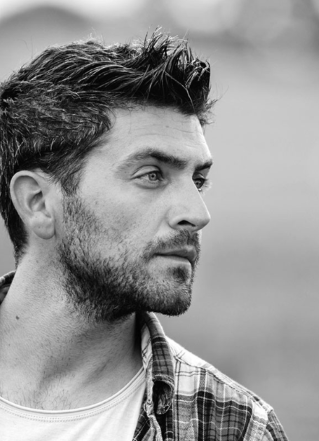
This episode features Tommaso, a vineyard consultant whose career spans from Venice and Montalcino to Burgundy, Bordeaux, and other renowned wine regions. Tommaso discusses his background in viticulture, the technical aspects of working in different European vineyards, and how he manages various grape varieties and regional challenges. The conversation highlights real-world issues such as vineyard management, adapting to climate change, and the critical decisions involved in harvest timing and vine care.
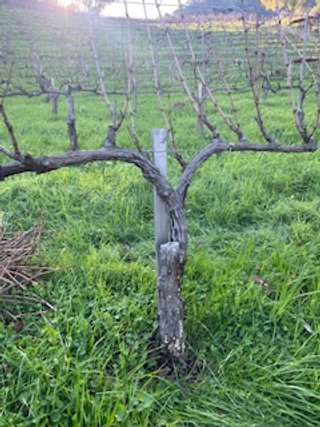
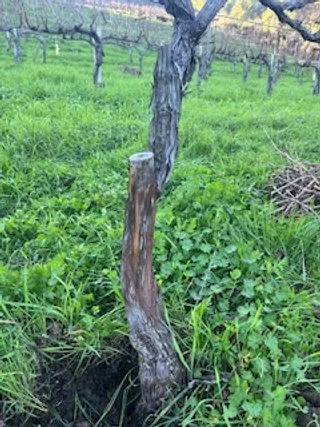
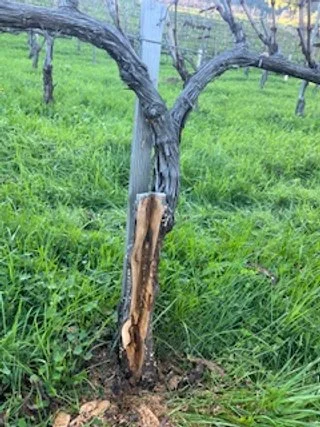
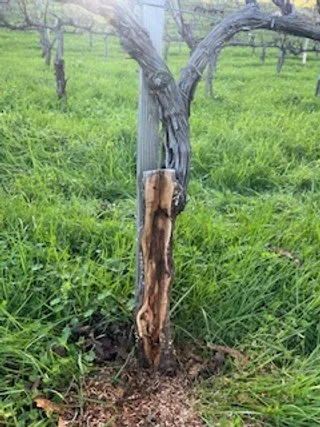
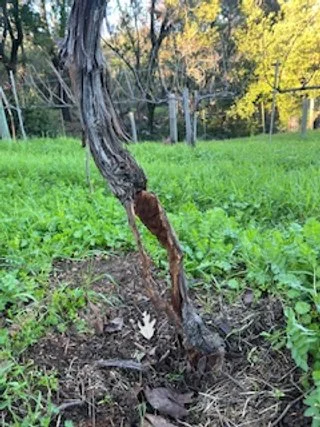
A significant part of the discussion focuses on the curretage technique, a method for removing diseased wood from vines using specialized tools. Tommaso explains the origins of this approach, how it is applied in European vineyards, and its role in combating trunk diseases. The episode also covers Tommaso’s work as a viticultural consultant specializing team training for vineyard surgery, adapting vineyard design to environmental pressures, and practical steps for maintaining vine health. This episode is well-suited for listeners interested in the technical and operational side of vineyard management.
Resources from this Episode
This episode is sponsored by Harvest Pillar concrete trellis posts. Want to know why more growers are going for concrete? It’s because Harvest Pillar is the last trellis post you’ll ever need.
Check out the Fundamentals of Winemaking Made Easy video course
-
Episode 210: Viticulture, Trunk Disease, and Curettage with Tommaso Martignon
Podcast: Inside Winemaking
Host: Jim Duane
Guest: Tommaso Martignon
Recorded: January 9, 2026Jim Duane:
Tommaso, welcome back to California and welcome back to Napa. It’s a pleasure to have you here and to see you again. We met for the first time last year, but for listeners who may not know you, could you start by sharing your background and how you came to work in wine?Tommaso Martignon:
Thank you very much. I’m really glad to be here. I’m happy—and a little bit nervous.Jim Duane:
That’s good. I like that. That’s honest.Tommaso Martignon:
I was born in Venice about 40 years ago. I grew up quite close to the city, which is a beautiful place, and I studied at the University of Padova, not far from Venice. I completed a bachelor’s degree in viticulture and enology.Jim Duane:
Was that focused on agriculture?Tommaso Martignon:
Yes, viticulture and enology. We studied vineyard management, chemistry, biology—everything you need to know to take care of a vineyard and make wine. I’m an enologist by training, but I never really worked as an enologist. I’ve always worked in the vineyard.Jim Duane:
What was it that drew you specifically to vineyard work?Tommaso Martignon:
I was always interested in plants and plant physiology, and at the same time I was a wine lover. That passion came naturally, and I realized that viticulture combined both interests.Jim Duane:
How specific was the University of Padova to regional viticulture and varieties? In France, schools are very region-focused. In California, it’s more general.Tommaso Martignon:
Padova is quite regional. In Veneto you mainly have Prosecco and the Verona area with Amarone and Soave. Those were the varieties we focused on. We also studied Cabernet Sauvignon and Merlot, which we called “international varieties,” but Italy has so many indigenous varieties that the focus is very regional.Jim Duane:
As you move north toward the Dolomites, is it more white wine country?Tommaso Martignon:
Yes. Prosecco—now called Glera—is the main variety. Amarone refers to the wine style, not the grape. The varieties are Corvina, Corvinone, Molinara, and Rondinella. Amarone is defined by the drying process, not sweetness. The sweet version is Recioto.Jim Duane:
At that point, were you planning to stay and build a career in Veneto?Tommaso Martignon:
Not really. I realized toward the end of my studies that I was more interested in viticulture than enology, and in exploring different viticultural styles. That’s when I decided to go to France.Jim Duane:
You spent time in Montalcino before France. Tell me about that experience.Tommaso Martignon:
That was my first job after graduating. From 2008 to 2010, I worked on a small property where I did everything—tractor work, vineyard management, and vinifications. Montalcino is a large appellation with a lot of forest, mostly oak, and it actually reminded me of Napa in that sense.Jim Duane:
How was it working with Sangiovese there?Tommaso Martignon:
It’s a late-ripening variety with large clusters, and in some areas it’s difficult to fully ripen. Crop reduction and canopy management were important. Exposure mattered a lot—north-facing sites produced more acidic, tense wines, while southern sites produced riper styles.Jim Duane:
What about harvest decisions? Were you often forced to pick because of weather?Tommaso Martignon:
We waited a lot. Harvest often started in early October or later. The challenge wasn’t over-ripeness—it was achieving full ripeness at all.Jim Duane:
Eventually you moved to France, starting in Burgundy.Tommaso Martignon:
Yes, I worked in Gevrey-Chambertin and also managed vineyards in Chablis. The plant density—10,000 vines per hectare—was shocking to me. The climate was also extreme compared to Tuscany, with very cold winters.Jim Duane:
You were pruning in those conditions?Tommaso Martignon:
Yes, pruning and burning canes. At the time it was considered sanitation, though now we know it doesn’t really prevent trunk disease.Jim Duane:
What else stood out?Tommaso Martignon:
Attention to detail—bud counts, shoot thinning, canopy separation. In Burgundy, shoots are carefully separated to avoid overlap, improve airflow, and make vineyard work more efficient.Jim Duane:
Did you fall in love with Chardonnay and Chablis?Tommaso Martignon:
Absolutely. It taught me how strongly a variety can express place.Jim Duane:
After Burgundy, you moved into training and consulting.Tommaso Martignon:
Yes. I worked with a company focused on pruning and shoot-thinning training across Bordeaux and later other countries. I eventually managed 50–60 clients and worked across Europe.Jim Duane:
That work is very seasonal though, right?Tommaso Martignon:
Mostly winter and spring, but we also developed work around curettage—vine surgery to manage trunk disease—which extended our involvement.Jim Duane:
At some point you started your own firm.Tommaso Martignon:
Yes, in 2021 I started SEVE Consulting. I work from Champagne down to Languedoc, across Burgundy, Rhône, and Bordeaux. Climate change affects each region differently, so solutions must be adapted.Jim Duane:
In Napa, we’re rethinking spacing, canopy design, and heat management. What challenges are you seeing?Tommaso Martignon:
In Bordeaux, heavy rain events cause fungal contamination from soil splash. We raise the fruiting wire 20–30 centimeters to reduce contamination and limit heat reverberation from the ground.Jim Duane:
So canopy height stays the same, but fruit is higher.Tommaso Martignon:
Exactly. This helps reduce mildew pressure and sunburn from reflected heat, especially in stony soils.Jim Duane:
How much of your work focuses on fungal issues and trunk disease?Tommaso Martignon:
Almost all of it is connected. Vineyard design, training systems, rootstock choice—everything affects the number of cuts over a vine’s lifetime, which directly impacts trunk disease risk.Jim Duane:
Is that related to sap flow and dead wood?Tommaso Martignon:
Yes. Large cuts create dead wood that disrupts sap flow and invites fungal colonization. Dense wood varieties like Cabernet Sauvignon are more sensitive than Merlot.Jim Duane:
Let’s talk about curettage. How would you define it?Tommaso Martignon:
Curettage is the excavation of decayed wood from inside the trunk. It was codified over 100 years ago by Jules Guyot and inspired by ancient olive tree practices. Today we use small chainsaws, but the goal is the same—remove infected tissue.Jim Duane:
Watching you work felt like watching a sculptor.Tommaso Martignon:
It does look like sculpture sometimes.Jim Duane:
How do you identify problem vines?Tommaso Martignon:
Look for large cuts. Remove bark beneath them and observe the boundary between live and dead wood. Inside, you’ll see different colors: light brown dry wood, white healthy tissue, dark brown fungal tissue, and yellow spongy decay.Jim Duane:
And that spongy tissue smells like mushrooms.Tommaso Martignon:
Exactly. That tissue is full of fungal spores and must be removed.Jim Duane:
What happens after surgery? Do you apply anything?Tommaso Martignon:
No. Fungi thrive in dark, humid spaces. Once exposed to air and sunlight, they die. The vine heals naturally.Jim Duane:
That’s surprisingly simple.Tommaso Martignon:
Yes. Sometimes vines need support afterward, but no treatments are applied.Jim Duane:
One last question—how does climate affect decay speed?Tommaso Martignon:
Cold, wet climates accelerate decay. Hot, dry climates slow it. That’s why pruning strategies differ by region.Jim Duane:
Where can people find you?Tommaso Martignon:
The best way is email: tommaso@seve-consulting.com. I also have a website with basic information.Jim Duane:
Tommaso, thank you so much.Tommaso Martignon:
Thank you.