-
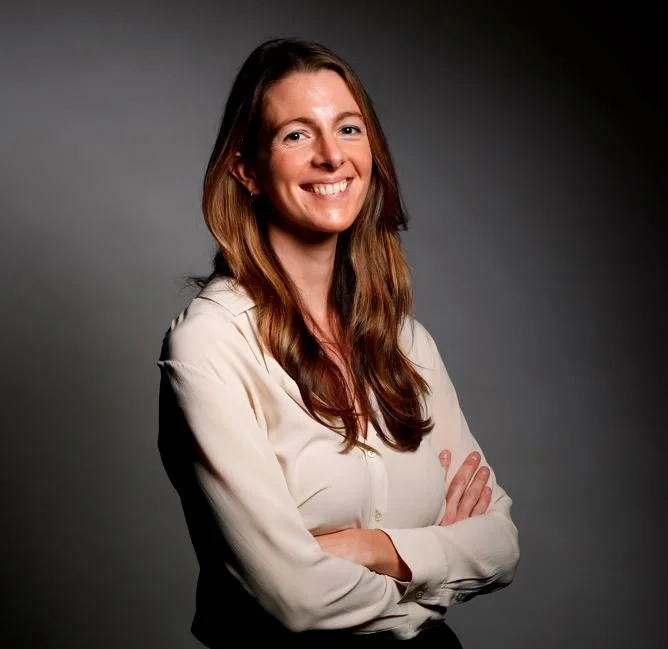
Episode 206: Esther Mobley – Senior Wine Critic, San Francisco Chronicle
Podcast: Inside Winemaking
Host: Jim Duane
Guest: Esther Mobley
Recorded: September 30, 2025Jim Duane:
Esther, thank you for doing this. I’ve really been looking forward to this conversation.I work alone in a windowless cave for half the year, while you’re out all through California tasting not just wines, but drinks and the whole world of beverages, and talking to more consumers. You have more insight into that.
My main goal today is to understand what people are into, what the market wants, what’s popular, and what’s not. I also want to talk about your journalism and your role at the Chronicle.
Esther Mobley:
Good. Let’s do it. I’m happy to be here. Thanks for having me on.Jim Duane:
Let’s start with your background. I know you worked at Wine Spectator in New York years ago, but give us the quick version of how you got into wine and how you ended up at the Chronicle.Esther Mobley:
Right after college, I moved to Napa to work a harvest at Round Pond. It was a late harvest year, so there was a lot of time to kill and a lot of field trips.One of those trips was to Seavey. It was your first year there, I think. Eric Camarda and Jeff Strekas brought me. I remember tasting the wines and really loving that rustic, chewy profile.
That harvest was my first real introduction to wine. I had no prior knowledge or interest. I’m from Boston. It was just a way to get outside and work with my hands and do something different.
Jim Duane:
Why Napa and wine in the first place?Esther Mobley:
It really was just a lark. I was an English major, graduated in 2011, didn’t know what I was going to do with my life, and wanted to travel and do something fun.Back then, harvest internships felt harder to get than they do now. I connected with Helen Keplinger, who went to my college, and she helped me. She told me to apply through the UC Davis job board and emphasize that I’d been on a college crew team.
I promised I could wake up early.
Jim Duane:
That’s a good selling point.Esther Mobley:
It worked. I got the harvest internship, and it changed everything.I fell in love with Napa, California, and wine. I learned to drive a forklift, did leaf pulling, worked in the cellar, and started tasting wine seriously for the first time.
Wine struck me as this incredible marriage of intellectual rigor and something very physical and primal. You’re dealing with nature, but also analysis and interpretation.
After that harvest, I went to Mendoza and worked at Bodega Rolland in the Uco Valley.
Jim Duane:
At what point did you realize production probably wasn’t your long-term path?Esther Mobley:
After Mendoza, I moved back to Boston and worked at a restaurant called L’Espalier. There was a serious sommelier team, daily tastings, and exams. I learned a lot there.I knew I still wanted to be a writer. That led me to an internship at Wine Enthusiast. I barely got to write anything, and when the internship ended they asked me to stay on as an intern, which I declined.
Helen Keplinger again connected me to James Molesworth at Wine Spectator. I eventually landed a job answering phones for Tom Matthews. It was a literal foot-in-the-door job, but I hustled for assignments.
About eight months later, I was promoted to assistant editor. I handled front-of-book features and pitched stories constantly.
Jim Duane:
And then the Chronicle came calling.Esther Mobley:
I was in Napa reporting when I saw on Twitter that Jon Bonné was leaving the Chronicle. It was March, gloomy in New York, beautiful in California, and I thought, why not?I applied, and in 2015 they took a chance on me. My original title was wine, beer, and spirits writer. Over time it evolved into senior wine critic, which is kind of a strange title for what I actually do.
Jim Duane:
I don’t really think of you as a critic.Esther Mobley:
You’re not wrong. I don’t score wines. I’m fundamentally a reporter.Wine is an incredible lens for understanding geology, climate change, immigration, wealth, and culture. The “critic” title gives me a little more latitude to opine, but reporting is really the core of what I do.
Jim Duane:
When you arrived in Napa, people were excited.Esther Mobley:
They really were. It felt like a debutante ball.I was intimidated but grateful. Producers were welcoming, and there were places I remembered vividly from earlier visits, like Seavey and Cain, that I was excited to revisit.
Jim Duane:
One of the things I love about your work is how much you cover regions outside Napa.Esther Mobley:
I only cover California, almost exclusively.We’re the only newspaper in the country with two full-time wine writers, and we’re located in the most important wine region in the Western Hemisphere. It would be a mistake not to lean fully into covering California wine deeply.
No one else has the same journalistic resources to do this kind of work.
Jim Duane:
Immigration and climate change have become big themes in your reporting. How did that develop?Esther Mobley:
After 2016, the Chronicle made a push to cover immigration more thoughtfully. I spent months reporting on vineyard workers, women in vineyards, H-2A labor, and farmworker housing.Climate change coverage intensified after the 2017 wildfires. Suddenly it wasn’t just about warmer temperatures. It was existential. Could we grow grapes at all? Could families live here safely?
I’ve reported on the Winkler Index, UC Davis research, alternative varieties, and rootstock trials. It’s an ongoing story.
Jim Duane:
That was existential for winemakers too.Esther Mobley:
Exactly. And those are the stories that matter. Wine is never just about wine.Jim Duane:
Thinking chronologically, you wrote my favorite piece you’ve ever written in 2018 about the cult winery renaissance. I’m going to butcher it if I try to summarize it, so would you mind describing that story a little bit?Esther Mobley:
That was a really fun one to report.At the time, there was this sense that the era of cult wineries had ended. Those wineries that had emerged in the 1990s and early 2000s—tiny production, high prices, mailing lists only—were thought of as a relic of a different moment in wine.
But I kept noticing that something interesting was happening. A new generation of winemakers was reviving that model, but doing it differently. They weren’t necessarily chasing scores or luxury in the same way. They were focused on personal vision, small scale, and often working with vineyards that weren’t famous.
Jim Duane:
It felt more values-driven than status-driven.Esther Mobley:
Exactly. It wasn’t about spectacle or exclusivity for its own sake. It was more about creative freedom.Many of these winemakers had worked at established wineries, learned the system, and then stepped away to do something deeply personal. They were comfortable being small. In some cases, they wanted to stay small forever.
It felt like a renaissance because it echoed that earlier cult winery moment, but with very different motivations.
Jim Duane:
That story resonated with a lot of producers.Esther Mobley:
I heard that afterward. I think it resonated because it named something people were already feeling.There was also a lot of burnout at the time. People were questioning scale, growth, and whether success had to mean more cases, more distribution, more everything.
That story let people see another path and feel validated in choosing it.
Jim Duane:
You’ve also written a lot about natural wine, which is a topic that can get producers pretty worked up.Esther Mobley:
Yes, very worked up.What interests me about natural wine isn’t really the category itself. It’s what the conversation around it reveals.
Natural wine became this lightning rod for anxieties about authenticity, tradition, and change. People weren’t just arguing about sulfur levels. They were arguing about identity.
Jim Duane:
And generational differences.Esther Mobley:
Absolutely. Younger drinkers were encountering wine through natural wine bars, often without the baggage that older consumers brought to wine.For many of them, wine didn’t come with rules. It wasn’t intimidating. It was social and expressive.
That scared some people in the industry, but I think it also offered an opportunity to rethink how wine is presented and talked about.
Jim Duane:
You’ve also covered non-alcoholic wine and cocktails.Esther Mobley:
Yes. That’s another area where the reaction often tells you more than the product itself.Non-alcoholic wine isn’t going to replace wine. That’s not the point. But it reflects changing attitudes about health, moderation, and inclusion.
People want options. They want to participate without necessarily drinking alcohol every time.
Jim Duane:
It’s not a threat, but a signal.Esther Mobley:
Exactly. It’s a signal that drinking culture is evolving.Wine has always been adaptable. It’s survived prohibition, industrialization, globalization. This is just another moment where it needs to respond thoughtfully.
Jim Duane:
How do you think wine producers should be thinking about consumers right now?Esther Mobley:
I think curiosity is the most important thing.Producers who are curious about who’s drinking their wine, how people are encountering wine for the first time, and what language resonates are the ones who will stay relevant.
That doesn’t mean chasing trends. It means listening.
Jim Duane:
Listening instead of reacting defensively.Esther Mobley:
Yes. Defensiveness shuts down possibility.Wine doesn’t need to be everything to everyone, but it does need to be welcoming. The more open the culture is, the healthier it will be.
Jim Duane:
You get to see wine through such a wide lens—culture, labor, climate, economics. Does that ever feel heavy?Esther Mobley:
Sometimes. But it also feels meaningful.Wine is one of those rare topics that allows you to talk about really big issues in a very human way. You can tell stories about people’s lives, work, and values through wine.
That’s a privilege.
Jim Duane:
Before we wrap up, is there anything you’re particularly excited about in wine right now?Esther Mobley:
I’m excited about people caring again.Despite all the challenges—climate change, declining consumption, economic pressure—I still meet so many people who care deeply about what they’re doing.
They’re thoughtful. They’re creative. They’re asking hard questions.
That gives me hope.
Jim Duane:
That’s a great place to end.Esther, thank you so much for taking the time. I really enjoyed this conversation, and I appreciate the work you do and the perspective you bring to wine.
Esther Mobley:
Thank you. This was really fun. I appreciate the invitation.
Esther Mobley - San Francisco Chronicle
Join me as I sit down with Esther Mobley, Senior Wine Critic for the San Francisco Chronicle. Esther shares her fascinating journey from an English major to a wine journalist, starting with a harvest internship in Napa Valley and subsequently working in Mendoza, Argentina. Her career path led her through Wine Enthusiast and Wine Spectator before landing at the Chronicle in 2015, where she has since become a prominent voice in wine journalism.
Throughout our conversation, Esther discusses her approach to wine writing, emphasizing her role as a reporter who explores wine through broader lenses of society, climate change, immigration, and culture. She explains that her job goes beyond traditional wine criticism, focusing instead on telling compelling stories about the wine industry in California. The episode offers listeners an insider's view of wine journalism, tracing her professional evolution and her unique perspective on covering the dynamic world of wine.
Resources from this Episode
This episode is sponsored by Harvest Pillar concrete trellis posts. Want to know why more growers are going for concrete? It’s because Harvest Pillar is the last trellis post you’ll ever need.
Check out the Fundamentals of Winemaking Made Easy video course