Elias Fernandez - Shafer Vineyards
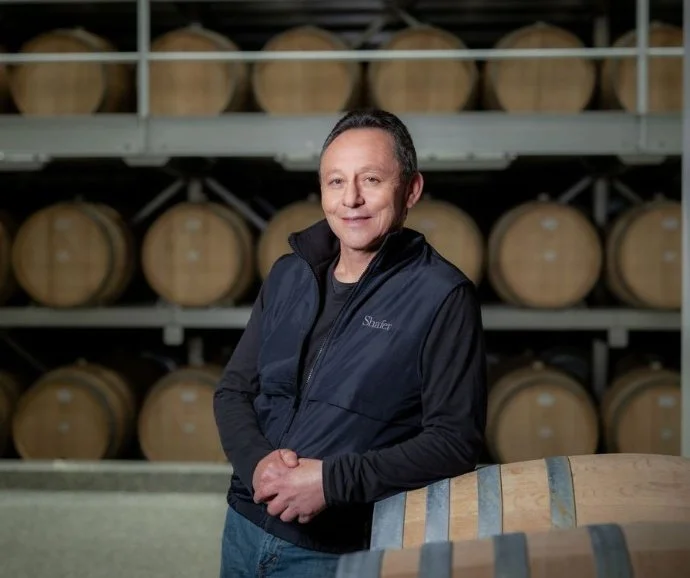
This episode features a conversation with Elias Fernandez, longtime winemaker at Shafer Vineyards in Napa Valley. Fernandez, who was raised by migrant farm workers in the Napa Valley, traces his path from studying enology at UC Davis to joining Shafer in 1984, where he became winemaker in 1994. He discusses the winery's evolution under John and Doug Shafer, its shift toward estate-only vineyards with additions like Wildfoote and Altimeter, and the current portfolio, including Hillside Select, TD-9, the One Point Five, and the Wine Spectator–acclaimed Relentless Syrah. The conversation also covers his hands-on approach to extended maceration, his early and enthusiastic adoption of non-Saccharomyces yeasts and crossflow filtration, and his use of AI-based tools like Tule for vineyard water management. Fernandez closes by reflecting on mentoring his son, now assistant winemaker at Shafer, and on the importance of introducing younger generations to wine.
Resources from this Episode
This podcast is sponsored by Wine Compliance Alliance.
Are you concerned about your winery’s reporting? Do you worry that it’s not being done correctly, or being vulnerable to a TTB audit? Help is here!
The Winery Compliance Training Academy has custom-designed courses created by industry experts with deep backgrounds working at wineries managing production compliance! Our course, The TTB reports all US Wineries are required to file is designed to walk you through the 3 reports all US wineries are required to submit to the TTB. This course is a fit for all winery staff who are responsible for filing reports or label approvals to the TTB.
Check out the Fundamentals of Winemaking Made Easy video course
-
Episode 219: Elias Fernandez - Shafer Vineyards
Guest: Elias Fernandez
Recorded: July 2026
Jim Duane:
Okay, so when I was developing this podcast, or at least the idea of what would become the podcast, back in 2014, I was in the hospital. My second daughter had just been born, and the only paper I had was the hearing test they'd just performed on her.
I was holding her, and my wife was in bed, so I couldn't get up. I didn't want to wake everyone, so I took the paper, turned it over to the blank side, and wrote out the idea for the podcast. I made a list of about 30 people I'd like to ultimately have on the show.
Today I get to cross Elias Fernandez off that list. I'm very excited to be here — this has been a long time coming.
Elias Fernandez:
Well, great. I'm glad I was on that list — the blacklist!
Jim Duane:
So it's my second time here at Shafer. Last time I was talking with Doug, right? But I'm excited to talk to you, because you're the winemaker, and that's the core of the show.
So maybe to set the scene a bit — I know you grew up in Napa. Can you talk about how you came to be here at Shafer in the first place? Sure, and give us a sense of the time period.
Elias Fernandez:
Okay, so let's go back to around '77, '78. I got my driver's license, and I remember driving into Napa and maybe seeing two or three headlights. Quite a different story today.
Jim Duane:
Where did you grow up?
Elias Fernandez:
I went to high school in St. Helena. I grew up on Rutherford Crossroads — basically where Frog's Leap is today.
There was a gentleman named Laurie Wood, who transitioned from walnuts and prunes into the wine-growing business and was one of the founders of Freemark Abbey. I kind of grew up on his ranch, because my parents were migrant farm workers who worked for him.
So anyway, I went to St. Helena High School. In high school, I was working at Louis Martini Winery in the summer. Carolyn Martini — a good friend of one of my best friend's mothers — said, "Hey, I need some high school kids to come help," and asked me to go to work. That was my first entry into a winery, though I had no idea I'd eventually get into wine.
It was 1979, time to graduate from St. Helena High School. I got a scholarship in music, so I went to the University of Nevada, Reno, on a music scholarship, playing jazz trumpet.
Jim Duane:
Trumpet, okay. Was that the goal for a career?
Elias Fernandez:
No, it was just — I needed to go to college, needed to figure out what this was all about. Back in those days the Hispanic community was very small — maybe two to three percent of the students at St. Helena High School. Quite different than it is today.
All my Anglo friends were going to college, so I said, "I'm going too." I went to the University of Nevada, Reno. When I'd come home on vacation or weekends to see my parents, I realized I'd grown up in a beautiful place — I just hadn't appreciated it until I went away.
Jim Duane:
Reno, of all places.
Elias Fernandez:
Right. And then I finally realized I had to get serious about what I wanted to do with the rest of my life. I was still working at Louis Martini every summer, even during that first year of college, to make money for school.
Jim Duane:
In the cellar?
Elias Fernandez:
I was helping with bottling — anything they needed. I fixed broken pallets, drove a little forklift, stacked cases — all kinds of stuff, but not really the winemaking side. Still, it caught my interest, and I asked Mike Martini at the time, "Where does someone go to learn about wine?" He said, "You go to UC Davis — it's only an hour away."
So I looked into transferring right away, and by the end of that first year I'd transferred to UC Davis, got into the wine program, and the rest is history. It went fast.
Jim Duane:
Who were some of the professors you remember at Davis back then?
Elias Fernandez:
Roger Boulton, of course — the famous Roger Boulton. Ann Noble, who created the Aroma Wheel. Dr. O was still there, and Dr. Singleton, the father of phenolics. They were all my professors, basically in their heyday.
I totally loved it. When you're a musician, you're usually good at math and science, so I was pretty good at that. But I realized right away that wine wasn't just math and science — there was a lot of history in it too. All the archaeological findings tied wine to civilization. It was pretty cool.
Jim Duane:
Did you have much of a connection to Napa back then? I mean, your family was still here, so you'd come back for holidays and vacations — but was Davis its own world? I ask because when I was at Davis for two years, I went to Napa maybe twice. I got pretty insulated — I just stayed in Davis.
Elias Fernandez:
Yeah, it was before your time, and we didn't travel here very much at all. I was basically just going back and forth between Davis and home — I was the one doing all the traveling — but I wasn't really visiting, per se.
Jim Duane:
It wasn't career building.
Elias Fernandez:
No, not at all. There were maybe twenty-five students in the program at the time.
Jim Duane:
I think it's back to being that small again.
Elias Fernandez:
Yeah, yeah.
Jim Duane:
Where did you learn to taste wine — to drink it, to appreciate it?
Elias Fernandez:
Well, first let's start with viticulture. My parents were migrant farm workers, so I grew up learning how to prune vines, drive a tractor — all that, because my dad did it. He'd get me out of bed on the weekend — icicles on the wires, freezing, pruning. I got the viticulture side of it from working with my parents, not the scientific part, but the doing of it.
Then, my freshman year at Davis, a bunch of us would get together to try wines of the world. On Friday nights, everyone would bring a wine in a brown paper bag, a baguette, and a cheese of their choice, and that would be dinner after the tasting. That's where I got to learn to taste wine with my fellow comrades.
Jim Duane:
Okay. So right after Davis, did you come straight to Shafer, or was there anywhere in between?
Elias Fernandez:
I did an internship at Schramsberg in 1982 while I was at Davis. Then, in March of 1984, it was time to graduate and look for a job. I saw a little job posting in the department — it said a family-owned winery was looking for help — so I applied.
I called John Shafer, and he answered the phone and said, "If you're interested, come down and see us." So I drove up on a Friday and interviewed, since I was about three weeks from graduation and figured I'd better start figuring out what I was going to do.
I met with John, and with Doug and his wife at the time, Betty. When I drove up the driveway and saw the expansive Stags Leap Palisades, I thought, "Holy smokes, I never knew this was back here." Growing up here, you don't really see it from the road. I thought it would be really cool to work at a place like this — not thinking I'd actually get the job.
Jim Duane:
So you weren't cocky going into the interview.
Elias Fernandez:
No, no. So I did the interview, and of course they said, "We're interviewing other people, we'll let you know." I went back to Davis, and about a week later one of my professors brought me a note saying a gentleman had called the department wanting me to call him — John Shafer.
I called him back — put my twenty-five cents in the pay phone, since there were no cell phones or pagers back then. John said they'd like me to come in for a second interview, how about next Tuesday? I said I couldn't — it was finals week, I had to finish my finals. He asked, "When will you be done?" I said Friday. He said, "Can you come Monday, or if not, Friday afternoon?" I said sure.
So I came in, and he asked me two things: how much I wanted to make, and I said, "I really don't care, John. I just want to get my hands dirty — I have a fresh idea, and I'm not really in a position to negotiate." The second question was what I wanted to be doing ten years from now, and I said, "All I know is I want to do something in wine. I've gone through the program, I love everything about it, I just want to get my hands dirty and do it."
He said, "Well, how would you like to start on Monday?" I said, "What?" He said, "Yeah, we'd like to have you join us." So that was the beginning — forty-two years ago.
Jim Duane:
Very cool. Do you remember what you made per hour back then?
Elias Fernandez:
$6.50.
Jim Duane:
All right.
Elias Fernandez:
$6.50 — not $650.
Jim Duane:
All right. So was your position defined at that point, or were you just the guy who'd come help do everything — vineyard, winery?
Elias Fernandez:
Well, Doug Shafer was the son. He'd been working at Lake Spring —
Jim Duane:
— at the same time?
Elias Fernandez:
A little bit ahead of me. He arrived here probably six months before I did, because he'd gone to Arizona to teach and decided he didn't like it as much. His dad had started the winery around the same time, had hired a winemaker, and it didn't work out. So he told Doug, "Why don't you come help — I'll get a consultant and we'll make wine." Doug came on, and I joined him — it was just the two of us and John, basically.
---
Jim Duane:
I got to meet John a couple of times, years ago. Such a sweet man.
Elias Fernandez:
Sweet man, for sure.
Jim Duane:
I read the book — I'm not sure if John or Doug wrote it — about this property and the business. I was really impressed with how he came from Chicago, built the business, but retained so many connections that Chicago became a big hub for sales. I know it was a big market.
Elias Fernandez:
For sure. He was originally from Hinsdale — a lot of people who come here today, when I tell them that, they say, "Oh, I know where Hinsdale is." He brought his family out in the early '70s and started a new life here. It was his passion to build a world-class winery that intrigued me, and that's why I stayed here so long — it was all about quality, not quantity, and about always improving.
Doug Shafer and I made a lot of mistakes, but he always said one thing: "What did you learn from it? Don't make it again — move on." We'd think, "We're going to lose our jobs," but no.
Jim Duane:
So did you work under a consultant in the early days?
Elias Fernandez:
Yeah. Tony Soter was here, and Chuck Ortman was a consultant too, but it was really Tony Soter who helped us out the most. One thing I always remember him saying: "Wine has a language, and you need to learn what it's trying to tell you. When you smell a glass of wine, it's talking to you — you have to learn what it's saying." That's stayed with me — even today, as a mentor to younger people, I tell them the same thing.
Jim Duane:
So when I've got hydrogen sulfide, what's my wine telling me?
Elias Fernandez:
Exactly, exactly.
Jim Duane:
Do you remember any of the mistakes you and Doug made?
Elias Fernandez:
Oh yeah, you never forget those. How about rebottling wine?
Jim Duane:
Ooh, okay — because of Brett, or because of sulfides?
Elias Fernandez:
Sulfides.
Jim Duane:
Sulfides. Yeah.
Elias Fernandez:
This was before people really understood the forms of sulfides that don't smell like anything but are still there — and then they come back to haunt you. So we rebottled some wines.
Jim Duane:
What kind of wine was it?
Elias Fernandez:
A red — a Cabernet. Probably, in those days, a lot of elemental sulfur was used, which we now know can be a problem. It was a time when there wasn't as much knowledge about wine as we have today. Now it's common knowledge, but back then it was rare. So we had to rebottle some wines.
Jim Duane:
I'm very curious about fermentation management back in those days, before you had Laffort and Scott Labs and all these suppliers providing technical knowledge — not just through handbooks, but through seminars and so on. How did you guys think about managing fermentation, and about adding or not adding nutrients back then?
Elias Fernandez:
Let's see — in the early days there really weren't nutrient additions, because the knowledge wasn't there yet. It was in the late '80s that it really caught on. What was her name — Lisa —
Jim Duane:
Vanderwater?
Elias Fernandez:
Vanderwater, right. She was the first one to push nutrients, so I went to some seminars and learned about it and thought, "Okay, this makes sense." It was hard to grasp at the beginning, but as the years went by and more people got into it, it got easier. Today we feed some nutrients into the juice, and other times we don't, if they don't need it. ETS was also in its early stages back in the late '70s, early '80s, so I went to a lot of seminars — that's where I picked up little things to make things better.
Jim Duane:
Right — because you go to UC Davis or any enology program, but then the continuing education is —
Elias Fernandez:
— important, yeah, especially for young winemakers. I always tell them: go to seminars. You might already know ninety percent of it, but that other ten percent gives you ideas you can use. I did a lot of that in the early days.
Jim Duane:
Were you plagued with more stuck fermentations back then, since you weren't feeding as much nitrogen?
Elias Fernandez:
Well, the other thing is we used to pick at lower sugar — lower alcohol — so there weren't as many stuck fermentations. It was later, when we had to push ripeness to get rid of more herbaceousness, especially with reds, that we had to be more aware of nutrients, because of the higher alcohol.
Jim Duane:
So your career spanned the '90s and 2000s — you saw the swing in ripeness.
Elias Fernandez:
Yeah, I saw the swing in a lot of things — sulfur, no sulfur, and then back to sulfur again.
Jim Duane:
Did you feel pressure at Shafer to make riper wines during any of those periods?
Elias Fernandez:
Well, I was curious why people like Robert Parker loved the wines that were riper, with a bit higher alcohol. My goal was always to get rid of herbaceousness, so we started opening up canopies, picking a little riper, and doing fewer acid additions — but not going overboard. By the early '90s we were about as ripe as we wanted to get. But other people kept going way past us.
Jim Duane:
Well, I know with the Sunspot vineyard, for instance — it's called Sunspot because it gets a lot of sun — there's an ability to get very ripe flavors if you want to.
Elias Fernandez:
Yeah.
Jim Duane:
So how do you balance that? Or, let's back up — who set the style for the wine you all were making? Was that John?
Elias Fernandez:
No. John wanted us to pick early, because he came from a grower's background, where you got knocked down if the sugar was too high or too low. So he was always pushing Doug and me, and Doug and I were always tasting wines together and saying, "We need a little less herbaceousness — let's open the canopy more," trying to limit it a bit.
Jim Duane:
How did you and Doug evolve into your different roles?
Elias Fernandez:
That's a good question. It came from John telling Doug he needed to run the business, and that took a lot of his time — he needed someone he could trust to handle things. Thinking about it from Doug's shoes, that had to be difficult, so I tried to make it easier for him.
One day we went to lunch at the Depot — it's where the caviar place is today —
Jim Duane:
Down in the town of Napa?
Elias Fernandez:
No, in Yountville.
Jim Duane:
Yountville — the one that Thomas Keller owns, near Ad Hoc?
Elias Fernandez:
Yeah, something like that. So we went to lunch, and I told Doug I knew what was going on — he was stressed out from running the business and traveling so much. I said, "Look, I'm here to make your life easier. You can trust me — anything I do, I'll tell you." I was serious about it — I kept telling him everything, to the point where he finally said, "You don't need to tell me everything." I made it easy for him to feel that.
I think that was the turning point. In 1990 I became co-winemaker, and in 1994 I was made winemaker. From there I just took it and ran with it, continuing the style we'd been building.
---
Jim Duane:
Has the business grown in terms of volume produced over the years?
Elias Fernandez:
It has, from the early days for sure. Since the sale, we've purchased more vineyards and so forth.
Jim Duane:
Tell me about that — I don't know about it.
Elias Fernandez:
So, at the entrance to Shafer there's a vineyard called Wildfoot, which was owned by Jean Phillips, the founder of Screaming Eagle. We'd been buying her fruit for many years — Bevan was making a wine from it. After the fire of 2017, she was ready to get out, since being on that hill alone had gotten too scary. She approached us and asked if we were interested, so we purchased it.
Jim Duane:
Is that right by Silverado Trail?
Elias Fernandez:
It's right at the entrance, where you come in — on that hill, right on the front side, next to Odette, and back on the back side too. So that's one of our newest vineyards. Then, up on Atlas Peak, we bought a vineyard called Altimeter — it was fruit that had been going to Chappellet. The vineyard came up for sale, so we bought it.
Those were the two recent ones. We already had land in the family that John Shafer had planted. So by 2026, we should be one hundred percent estate.
Jim Duane:
Oh, very cool. And you've got Chardonnay in Carneros too, right?
Elias Fernandez:
Right — Red Shoulder Ranch, in Carneros. That's where all the Chardonnay comes from. I actually have Syrah planted there now too, trying to get more black pepper into it — you get more of that in the cooler regions.
Jim Duane:
So was there a goal to ultimately become estate-only?
Elias Fernandez:
Yeah, there was, for sure — having full control lets us make the style we want to make.
Jim Duane:
Tell me about your relationship with the team in the vineyard.
Elias Fernandez:
Being of Hispanic origin and fluent in Spanish helps a lot in the vineyard, and the fact that I grew up doing what they do means I understand it — it makes a quick connection, and that connection is where all the quality starts.
Jim Duane:
Do you have an estate team, or do you use a farm labor contractor?
Elias Fernandez:
A bit of both. We have a team of twenty-two employees in the vineyard who do most of the work, but when things get busy, we bring in management help, like Piña Vineyard Management.
Jim Duane:
So how many acres are estate at this point?
Elias Fernandez:
About 240 acres in the valley — mostly hillsides, plus the Carneros slopes. A lot of hillside work.
Jim Duane:
Do you see expansion in the future, or does this feel like the right size for the winery and production facility you have?
Elias Fernandez:
I think, given what's going on in the wine industry right now, we're actually downsizing a little, and I think we'll probably stay there. Now that we have our own vineyards, it's going to be just about right.
Jim Duane:
Okay, so take me through the portfolio today. You've got the Chardonnay from Red Shoulder Ranch — is that the only Chardonnay?
Elias Fernandez:
That one Chardonnay is actually about seven different clones blended together. It's non-malolactic, so it's the fresher style that's coming back — I think people are looking for fresher wines now, and it's always had a following. I really enjoy making that one, just to show off the purity of the Chardonnay.
Jim Duane:
With that non-ML style, are you trying to build volume through stirring, or longer aging, or something else?
Elias Fernandez:
Not longer aging, but aging on the primary lees, and a lot of stirring — to try to fatten it up.
Jim Duane:
Okay. So that's the Chardonnay. Any other whites?
Elias Fernandez:
Oh — yes, I almost forgot. Just this past Friday, we bottled our first Sauvignon Blanc.
Jim Duane:
Okay.
Elias Fernandez:
Only 460 cases, but it turned out pretty well. I'm happy about that.
Jim Duane:
At that small a level, is that just for the wine club?
Elias Fernandez:
Yeah, for now. We hope to expand it a little down the road.
Jim Duane:
Okay. So — Chardonnay, a tiny bit of Sauvignon Blanc, and Syrah. Just one Syrah?
Elias Fernandez:
Just one. It comes from our vineyard at the base of the Vaca Mountains, a property we own, blended with a bit of Carneros Syrah. It spends about 28 months in one hundred percent French oak.
Jim Duane:
Wow, okay — that's a lot of new oak and a lot of time. How did you arrive at those parameters?
Elias Fernandez:
The intensity of the grapes — they're pretty intense, and they can handle it. It's almost like the Hillside Select, which is one hundred percent Cabernet — if a wine is full of volume and intensity, it can handle and soak up the oak, and it actually adds to the whole package.
Jim Duane:
Forgive me, I don't remember the details, but you got big acclaim for that Syrah — it's called Relentless, right? That was about ten years ago, 2008?
Elias Fernandez:
It was Wine of the Year.
Jim Duane:
For which publication — was that Wine Spectator?
Elias Fernandez:
Yes — it was their top wine of the year.
Jim Duane:
That's pretty cool.
Elias Fernandez:
Yeah — Syrah, from Napa. Syrah needs a lot of help, because a lot of people don't understand it, so that acclaim was really helpful.
Jim Duane:
I know a lot of producers on the Central Coast who'd love that kind of acclaim to help move some Syrah. Okay, so what's next?
Elias Fernandez:
A lot of people probably know Shafer was known for making Merlot — we made a lot of it, until the movie Sideways came out and hurt the whole Merlot market. So we reduced production for a while and started a wine called TD-9, which had a lot of Merlot in it — more of a Bordeaux blend.
But now we're starting back up with a little Merlot, because a lot of people were asking why we'd stopped. I said, "Okay, we'll make a little bit" — we'll never be back to the 14,000 cases we used to make, but it's back.
---
Jim Duane:
Thinking just in the winery — what are you doing differently with Merlot, in terms of handling the grapes or the process, compared to Cabernet?
Elias Fernandez:
Most of the difference is in the vineyard — it doesn't want as much sun, and you have to be careful with water timing. But in the winery, it's fermented cooler than the Cabernet. Did you know Denis Malbec?
Jim Duane:
We did meet him, yeah.
Elias Fernandez:
He's a French guy who worked at some of the premier first growths. We were talking about Merlot one day, and he said, "I ferment Merlot at a lower temperature." I asked why, and he said it's more delicate than Cabernet in its aromatics, and the fermentation races along. That stuck with me, so I tried it, and he was right — it turns out better fermented cooler than Cabernet.
That's basically the main difference. I extend the maceration anywhere from twenty-five to forty-five days, like most of my Bordeaux reds.
Jim Duane:
Sorry, I heard "extended maceration" — I have questions on that, we'll come back to it. What's "cool" to you for fermentation? Peak temperature, I mean — since "cool" is relative for different people.
Elias Fernandez:
Right. We pick the grapes at night, so it's already cool coming in, and peak temperature for Merlot is around 82 degrees.
Jim Duane:
Okay.
Elias Fernandez:
Versus Cabernet, which is 86 to 90.
Jim Duane:
All right. Not many people do extended maceration on Merlot — I don't hear that too often.
Elias Fernandez:
Right — you have to have the right vineyard, and be very careful with the seeds. I pay a lot of attention to that.
Jim Duane:
Are you doing anything for seed removal? I know that's very hard to do.
Elias Fernandez:
No, what I do is visualize the seeds — tasting, but also looking at them — because Merlot seeds can be very bitter. You have to pay a lot of attention to it, more so than with Cabernet most of the time.
Jim Duane:
You can obviously wait for higher or later ripeness — is there anything in the vineyard you do to help get riper seeds?
Elias Fernandez:
Water deficit, I think, is important — but not too much. It helps things ripen faster and sooner, and it really depends on the vineyard. I've made Merlot in a lot of places, and there are only certain places that really let you do that well.
Jim Duane:
Do you like hillside vineyards for Merlot? What's your ideal situation?
Elias Fernandez:
I like both, actually. There's some flatland Merlot I have that works really well — well-drained soils, which you'd normally think should be Cabernet.
Jim Duane:
So take me through your thinking on extended maceration — doesn't have to be specific to Merlot, we can talk Cabernet too. I get a lot of questions about this, and I have some experience with it, but I'm curious what you're thinking. Once you're at dryness — you're obviously in a closed-top fermenter, closing things down to prevent oxidation — are you touching the cap at all, wetting it, or leaving it alone?
Elias Fernandez:
I leave it alone. I let it sink. I'm a terroir guy, and I really feel that to get real terroir you need the skins, the juice, and the seeds together, because that's what carries the character of the soil. I really believe in getting that right in the vineyard before the fruit even comes in.
Jim Duane:
I want to put a point on that — you can't do extended maceration with fruit that doesn't have great tannin and great seeds. You'll just get a very astringent wine.
Elias Fernandez:
Exactly, you're right. So it's about getting all of that right in the vineyard so it produces a balanced wine. Once it's ready — and I'm tasting those fermenters regularly — some years it's twenty-five days, some years thirty-five, and this year it was forty-five days.
Jim Duane:
And what are you tasting for — what's your cue to say, "Okay, that's it, let's drain"?
Elias Fernandez:
I'm tasting for when the wine, toward the end of fermentation, has a kind of tannic weight that just sits there, not really flowing. I'm waiting for it to feel like it's moving on the palate, because that's how it's going to translate in the bottle. I'm really paying attention to when it feels like it's moving along the path of your tongue, toward the back.
Jim Duane:
After that much time on the skins, are you pressing everything, or taking free-run only?
Elias Fernandez:
I press it all — I don't separate.
Jim Duane:
So you press and recombine everything into the same lot.
Elias Fernandez:
Exactly. So you've got to be very fastidious with your press.
Jim Duane:
That makes sense — you've got to get those things right going into it, so it makes your life easier on the other end. That's very helpful, thank you. Would you say it's the same characterization for Cabernet as for Merlot — wanting to feel that movement on the palate?
Elias Fernandez:
Oh, for sure. People don't always understand it, but when you're tasting a wine like that every couple of days, you start to notice, "Oh, it's moving, it's there." That's because of the migration from the seeds, which is also why I don't pump over a lot — I just let it fall a little on its own, because I don't want to overdo that part of the tannin. I just want enough to make it travel on the palate.
Jim Duane:
Very cool. Cabernet is obviously a huge focus for Shafer — how many different Cabs are currently in the portfolio?
Elias Fernandez:
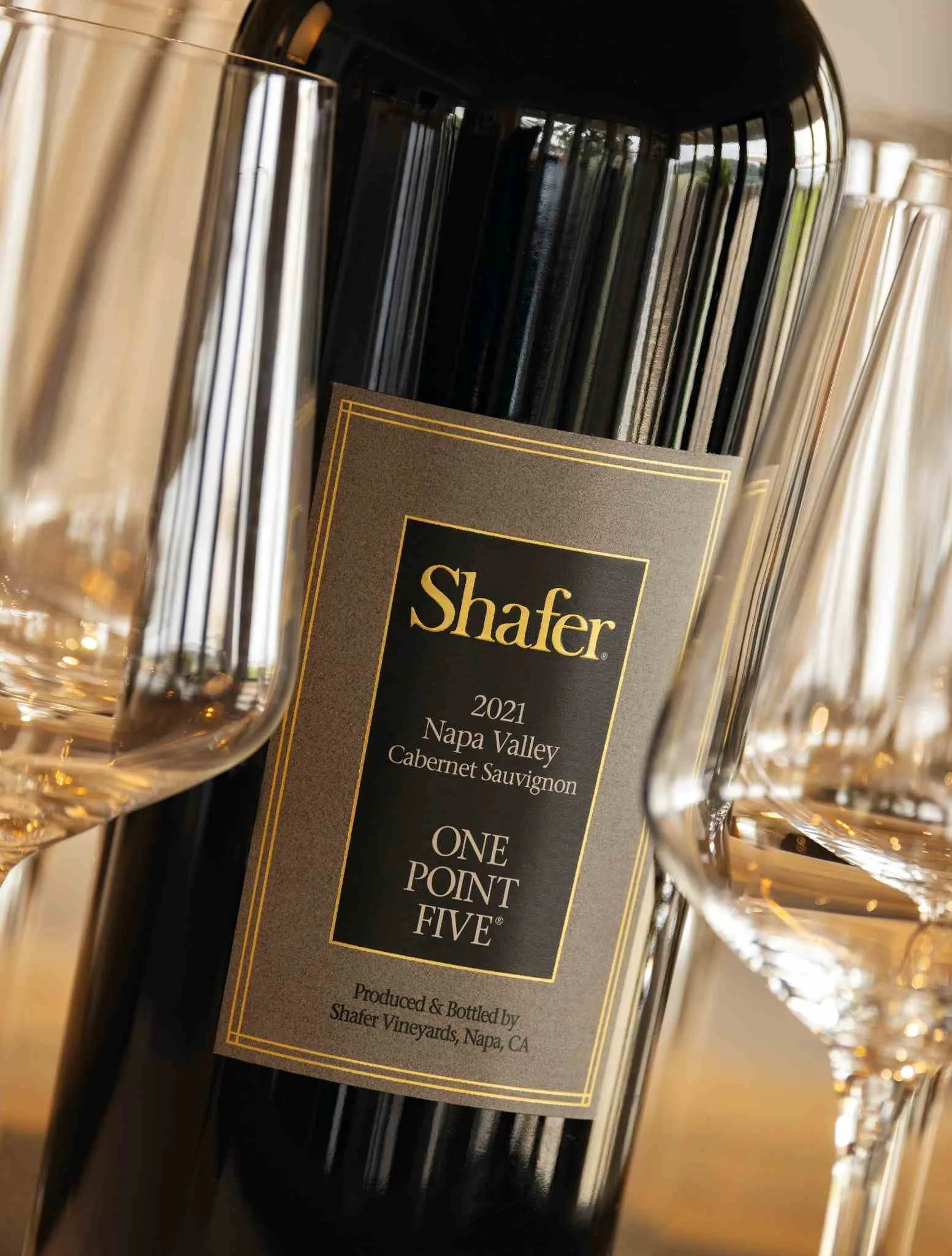
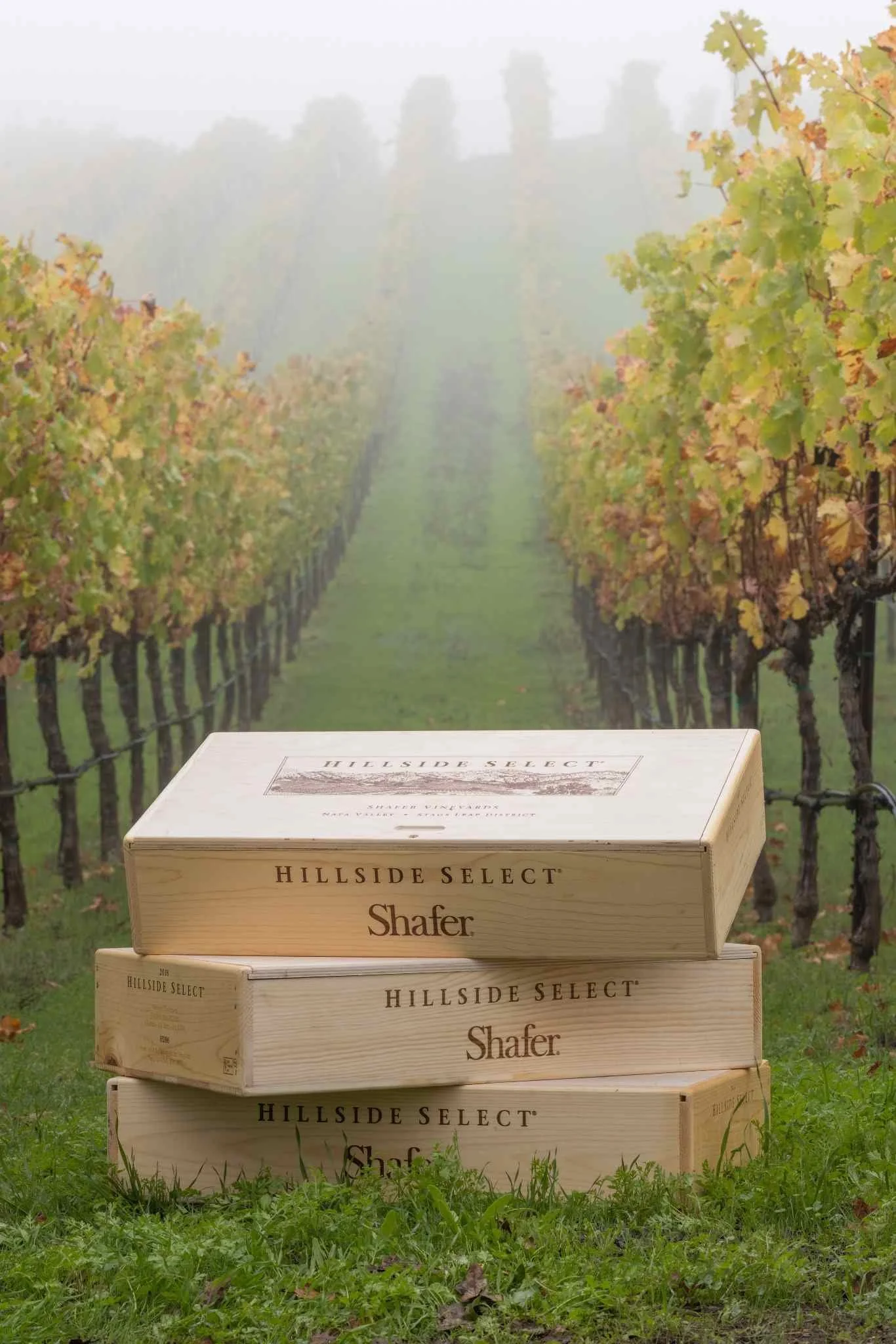
So, TD-9 is now a Cabernet — 75% Cab, the rest Merlot and Malbec. That's the first one. Then there's a wine called One Point Five, named after the one-and-a-half generations here, Doug and John, who ran this place. And then there's Hillside Select, the flagship wine, which comes off our hillsides here.
The One Point Five spends about eighteen months in one hundred percent French oak — it comes from some of our estate grapes, some other vineyards, and some fruit I've purchased over the years, though eventually we'll be one hundred percent estate. It's extended-macerated from twenty-five to forty-five days, depending on the lot, and it's a wine that ages beautifully. I blend in a little Merlot, Malbec, or Petit Verdot — just very small amounts, to give it a bit of lift. It's done really well for us.
Jim Duane:
And Sunspot is a vineyard designate limited to what you can grow in those specific parcels?
Elias Fernandez:
Right — Sunspot we usually reserve for Premiere Napa Valley, and the rest goes into Hillside Select.
So here on the property we have about seventy-five acres of Cabernet, all different clones, exposures, and rootstocks, depending on the soil. It's kind of like an investment portfolio — sometimes stocks are up, bonds are down. Same thing with clones. It allows us to be consistent with Hillside Select, year in and year out. It's been a wine that's done great for us over the years.
Jim Duane:
Tell me about the soils in this area.
Elias Fernandez:
The soils are of volcanic origin — twelve to twenty-four inches of topsoil, and the rest is hard rock. When you drive into Shafer and see the palisades up above, that's basically what it looks like underneath — that's what the vines are struggling through.
Our vines here produce anywhere from one and a half tons to, in a good year, two and three-quarter tons. They struggle. We put a lot of emphasis on cover crops to return nutrients to the soil and keep the vines happy — really shallow, rocky soils.
---
Jim Duane:
What sort of vine architecture are you most interested in now? I've seen the evolution a lot of people went through — from California sprawl to VSP, and for a lot of people VSP ends up leaving the grapes a bit overexposed, though it really depends on the site and orientation.
Elias Fernandez:
Right, all of that's interesting. When I arrived here it was all California sprawl. We moved to VSP to try to eliminate some of the herbaceousness, and yes, it depends on the row orientation — for VSP you want that morning sun on the morning side and to protect the other side. It also depends on the soil — if the soil can't support enough leaves, VSP isn't the right choice.
Here we mostly use VSP, and rootstock like St. George, which is aggressive — you wouldn't plant that in the middle of the valley, but you can here, and it helps protect the grapes on the afternoon side. I also work a lot with my vineyard crew on suckering — telling them not to sucker as much on the afternoon side, to leave some for protection. In the early days it was all about removing every sucker, but we've learned over time how to better protect the grapes. We want enough sun, but not too much — we want a tan, not a sunburn.
Jim Duane:
Are you experimenting with shade cloth?
Elias Fernandez:
We haven't, at this point — we've done it more through canopy management.
Jim Duane:
I feel like that's a loaded question — it's obvious I'm not too excited about shade cloth, so I have to be careful how I ask it. It works for some people, but it's got to be the right situation.
Elias Fernandez:
Yeah, exactly.
Jim Duane:
What other evolutions are top of mind for you in viticulture and in the vineyard, as you redevelop blocks and think about the future?
Elias Fernandez:
First of all, AI is here in the vineyard — a lot of people don't believe that, but it is. We use Tule — they were the first company to do the app on the phone. We used to use pressure bombs for everything, to measure the water deficit of the grapes, because water deficit is important to making good-quality wine. Vines want water, but not too much — just enough to survive, reproduce, and make good wine.
When Tule's AI came out, I was a little skeptical at first — it can't be that easy, just a camera on a phone walking through the vineyard — so I ran both methods side by side for a long time, and eventually realized, yeah, it's pretty good. Now I use it a lot in our vineyards.
Jim Duane:
I know Tule had some older equipment that was measuring evapotranspiration.
Elias Fernandez:
Right, and that's good too, but it's only measuring in one location, and in vineyards like ours, with a lot of topography differences, you need to get a feel for the whole site. Between that and double- and triple-line poly irrigation, you can bring a vineyard to a place where the quality is consistent no matter where you go — that's very important.
Jim Duane:
So what exactly are you measuring with your phone? I'm not familiar with it.
Elias Fernandez:
It measures bars — it's an AI application that's learned what leaves look like at certain bar levels.
Jim Duane:
So the bar — the water pressure inside the plant — just by visually looking at the vine, it's correlated to the water deficit.
Elias Fernandez:
Exactly.
Jim Duane:
And you think it's pretty good?
Elias Fernandez:
It's pretty good.
Jim Duane:
So are you just up there walking around with your phone?
Elias Fernandez:
We put them on ATVs for our vineyard crew — once a week they drive through, and the data comes to my computer. We talk about it, and I also ask them how the vines look, and most of the time we make calls based on both.
Jim Duane:
What time of day are you out?
Elias Fernandez:
It's important to do it at the same time every day, just like with a pressure bomb — but the advantage is you can cover hundreds of acres instead of walking the whole property yourself.
Jim Duane:
Does it give you the same kind of readout as a pressure bomb — like negative 10 to negative 15 bars?
Elias Fernandez:
Same reading.
Jim Duane:
And everyone freaks out when they see negative 15 bars, but then you go look at the vine and —
Elias Fernandez:
It looks pretty good — it won't last long, so you'd better water it, but yeah, it's exactly the same information.
Jim Duane:
So that's where you've seen a great transition — modern technology helping with winemaking and quality decisions.
Elias Fernandez:
Yeah, and in the winery too — things like TankNet and sensors that were never around back in my day. I remember using old metal thermostats that would just click on, and you wouldn't always know if that related to what was on the dial. Now I've got fifty-two tanks that can buzz me in the middle of the night — whatever sleep I'm getting, I don't get much. But it's good.
Jim Duane:
What does your staff look like in the winery currently — what's your crew?
Elias Fernandez:
My crew is six people now. As of about two years ago it was four, so we're up to six. We do everything — we bottle in-house, the whole thing. I grew up learning how to bottle wine, so we invested in equipment and do our own bottling — a whole different facet of winemaking that everybody hates.
Jim Duane:
I grew up trying to avoid bottling.
Elias Fernandez:
I actually love it — when it goes well.
Jim Duane:
When I was at Stags' Leap, my office was in the same building as our bottling line, up on a mezzanine level, so I got used to the clinking sound when it was going well — and you'd notice right away when it stopped, if it wasn't break time or lunch.
Elias Fernandez:
Yeah, I deal with all that. My son is actually the assistant winemaker here now.
Jim Duane:
Oh — tell me about that.
Elias Fernandez:
He handles a lot of it now. I'm trying to teach him the things that could go wrong, what to watch for.
Jim Duane:
So is there an idea of a legacy handoff happening?
Elias Fernandez:
Well — let me tell you a story. A few years ago I hired an assistant winemaker, and he was hired away within six months. Everyone knew I wasn't going anywhere — I'm not planning to retire. So I told management I had an idea, and I hadn't even asked him yet. I said, "My son's been working all over the world — Australia, Chile, Argentina. He worked for Tony Soter at Willamette, and he's assistant winemaker at a small winery in Chelan. I think it might be a good time for him to move to a bigger winery — what do you guys think about asking him to come be assistant winemaker here?" They all said yes.
A lot of people would have said no, because sometimes you just don't want family involved, but they'd seen how I told my son I'd treat him like everybody else — just do your job, be respectful of others, and you'll be fine.
Jim Duane:
So is that working out?
Elias Fernandez:
It's been great having him here. I feel like Doug Shafer now, in a way — you need somebody you can trust, because in winemaking there are so many things that can go wrong. You need someone who genuinely wants what's best for the wine.
Jim Duane:
You said it quickly, but I heard it — you said you don't plan on retiring.
Elias Fernandez:
No, I don't. I know life brings situations that eventually force that decision, but I'm not going to make that call on my own — I'll wait for that one.
Jim Duane:
You're going to run it out. I like that. What would be your goal for number of vintages?
Elias Fernandez:
At least fifty.
Jim Duane:
Okay.
Elias Fernandez:
I've got eight to go.
Jim Duane:
Okay. So we'll talk — you'll have to come back and do another interview.
Elias Fernandez:
Yeah.
Jim Duane:
Do you have other hobbies — anything you'd do more of if you had the time?
Elias Fernandez:
I have an acre and a half of vineyard in front of my house that I take care of myself, mostly. I do it because it reminds me of my childhood, growing up with my parents, and it keeps me tuned into the vineyard — I get to prune, get to do all of it. I really enjoy it, though it takes a lot of time, and the older I get, the harder it gets. I also love cycling in Napa Valley — going out and riding around in the hills. I love that too.
---
Jim Duane:
Tell me a bit about the transition for the business itself. Did it bring new resources? You mentioned the Wildfoot vineyard — I've been through three transitions myself, and it's not always easy. What did it look like here?
Elias Fernandez:
It's never easy, of course, because it's change. But the good thing is that Shinsegae, our owner — a luxury Korean company — invested a lot of money in the winery. We got new tanks, a whole new crush pad, which is amazing.
Jim Duane:
What kind of toys did you get on your crush pad?
Elias Fernandez:
I got optical sorters, a new stemmer — a basket stemmer from Bucher Vaslin, a square box design.
Jim Duane:
I don't know that one.
Elias Fernandez:
It's really cool — it's not a Rotovine.
Jim Duane:
Not the Rotovine.
Elias Fernandez:
No, not the Rotovine. And I got all the bells and whistles that go with it — sifting tables and so on. You basically end up with grape caviar at the end, which is awesome.
Jim Duane:
Are you wanting to crush the grapes at all, or pop them open, or do you want a lot of whole berry?
Elias Fernandez:
I love a lot of whole berry, definitely — it helps extend the fermentation, and since I'm doing extended fermentation anyway, it helps a lot.
Jim Duane:
How are you moving grapes into the tank?
Elias Fernandez:
They're pumped — through a four-inch line, like a peristaltic pump. You do get some breakage, but I need a little juice to be able to pump over.
Jim Duane:
Right — a lot of people run into that, where you open the valve and nothing comes out at first, and you just have to wait.
Elias Fernandez:
You'll have to wait, yeah.
Jim Duane:
The thing I don't like about that is if you do a sulfur addition calculated for the full tank volume, but the tank isn't full yet, it's not mixed properly.
Elias Fernandez:
Right, exactly — it's not mixed.
Jim Duane:
Are you trialing any of the non-Saccharomyces yeasts?
Elias Fernandez:
I use nothing but that.
Jim Duane:
Oh, okay.
Elias Fernandez:
I don't use sulfur at all.
Jim Duane:
All right, nice.
Elias Fernandez:
I was one of the first to try it. One thing about me — because I went to UC Davis, I'm an experimenter. I've always been someone who believes in trying new things, so I went from doing a couple of tons one year to doing the whole harvest that way the next. No sulfur at all at the crusher now — the first sulfur addition comes after malolactic.
Jim Duane:
So malo is probably happening during extended maceration, then?
Elias Fernandez:
Yes — after the extended maceration.
Jim Duane:
So by the time it gets to barrel, it's already dry, both primary and malo?
Elias Fernandez:
Everything's dry.
Jim Duane:
What have you noticed that's different about the wines using those non-Saccharomyces yeasts?
Elias Fernandez:
At the end, your total sulfur levels are much lower.
Jim Duane:
Much lower overall.
Elias Fernandez:
One of the things about wine is sulfites — having lower levels is always good. That's one of the reasons I went for it.
Jim Duane:
Do you use it for Chardonnay as well?
Elias Fernandez:
I do it for everything. It's especially important to build that in the vineyard for Chardonnay. I was a little skeptical at first, but then I thought, this makes total sense. I've been doing it now for about eight years — before it really got popular. Now it's more common.
Jim Duane:
I love not having to use as much sulfur — one less safety training for me.
Elias Fernandez:
Exactly. There you go.
Jim Duane:
Anything else you're evaluating in the winery, microbiologically or otherwise?
Elias Fernandez:
Let me think — in the early days, pad filtration was big, and I hated it — such a pain. That was the worst part of bottling, filtering the wine beforehand. Then I moved to DE filtration, which I loved for years — but eventually that became a problem too, so I had to learn something else. I always liked it because I didn't have to tight-filter the wine and could keep a clean cellar.
Then crossflow came along — the ultimate way to get the wine clean as a whistle. I was a little hesitant and scared at first, but now I love it. It's been really interesting how much that's changed. Early on, I did a trial with crossflow and it heated the wine up too much — that was the early technology. Now it's much better.
Jim Duane:
One of the best things about crossflow is you lose a lot less wine.
Elias Fernandez:
For sure.
Jim Duane:
And there's confidence in knowing your filtration is going to work when it's time to bottle — you're not just going to be plugging pads.
Elias Fernandez:
No, for sure — you're not worrying about making your bottling day. I remember plugging up membranes — it was horrible. So yeah, I've been able to see that whole transition. I don't know what's next, but I'm sure there's always something down the road — a lot of new stuff happening in the vineyard with UV light and things like that, to help keep pesticide use down. We use as much organic material as we can.
Jim Duane:
Have you tried any of the UV treatments? Tell me more.
Elias Fernandez:
I tried ozone in the early stages, but the machinery never held up in the vineyard because of the bouncing.
Jim Duane:
Okay — this is for powdery mildew, I assume?
Elias Fernandez:
Yeah. Ozone's great — a lot of people use an oxidate now, which is basically hydrogen peroxide, kind of the same idea. I think having an ozone machine on a tractor would be great, but no one's come up with something that really holds up to all the movement yet.
Jim Duane:
All right. Anything else we need to talk about before we wrap up?
Elias Fernandez:
One more thing. As you know, the wine industry is in a bit of flux right now — people are drinking less. But I really think it's up to those of us who are older — I'm calling you old too — to teach younger people, even those outside the wine industry, the beauty of wine, and why we got into it in the first place. How it affects all of our senses as human beings — visually, sensually, through taste and smell, through socializing.
You meet incredible people who love wine and love food, and food and wine need to come together, need to be in the same setting. So my message to anyone listening, whether you're winery people or people outside the industry with great cellars — bring young people in, and teach them what good wine tastes like, because we need that help. Otherwise, places like Shafer won't survive another hundred years — you just can't, without people who understand what wine is about. So that's all.
Jim Duane:
That's a beautiful place to end. Thank you, Elias.
Elias Fernandez:
You're welcome.