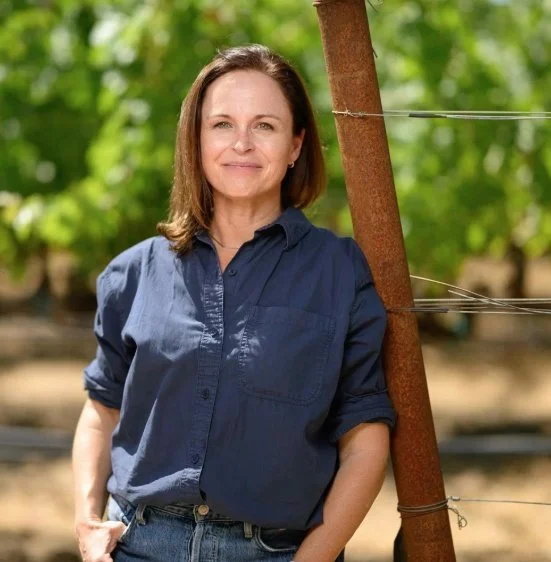
Jennifer Williams
Jennifer Williams joins Jim to talk about her work as a contract winemaker, leading Arrow & Branch and co-owning Zeitgeist Cellars with her husband, Mark Porembski. They dig into the design and philosophy of the new Arrow & Branch custom crush facility in Oak Knoll—its flexible tank mix, “white glove” service model, and how it’s built to handle challenging vintages and a range of client brands. Jennifer explains the stylistic goals and vineyard sourcing for Zeitgeist, including heritage whites like Chenin Blanc and Trousseau Gris, and a Cabernet Franc program that uses barrel fermentation and moderate maceration to shape tannins. Along the way they get into pick-date decisions and herbaceous character in Cabernet Franc, managing slow malolactic fermentations, the realities of custom crush pricing and client expectations, and how small Napa brands are navigating a tougher wine market through relationships, thoughtful growth, and authentic visitor experiences.
Resources from this Episode
This podcast is sponsored by InnoVint.
Wineries of all sizes rely on InnoVint’s winery operating system to optimize vineyard tracking, manage wine production processes, automate compliance reporting, track costs seamlessly, and make data-driven decisions.
The best part? The software is intuitive, easy to use, and mobile and offline friendly! And with the highest-rated customer service in the industry, you’re guaranteed to have a smooth transition, even right before harvest.
Learn more: innovint.us
Get a demo: innovint.us/request-a-demo/
Join our free winemaking community: innovint.us/join-the-punchdown/
Check out the Fundamentals of Winemaking Made Easy video course
-
Episode 220: Jennifer Williams
Host: Jim Duane
Guest: Jennifer Williams
Recorded: August 2026Jim Duane:
Jen, I don't know if we've ever actually sat down and talked before. I had Mark, your husband, on the podcast talking about Napa Valley's smallest winery, Anomaly Cellars. That was many years ago. But I'm excited to talk to you today. Thank you for having me here. Welcome to the podcast.
Jen Williams:
Thank you for having me. I'm excited to do this with you. You are a legend in the winemaking podcast space, so I feel honored to be part of it.Jim Duane:
Thank you very much. Set the stage. I want to know how you got into wine in the first place, please.Jen Williams:
Sure. So I got into wine on the vineyard side. I was pursuing an agricultural degree and found winemaking basically through some of the people I had been going to school with. A lot of people I went to Cal Poly San Luis Obispo with, and a lot of families would send their kids down there for their agricultural degree. At the time, they didn't have an enology or a viticulture program, or a soils program, so I took—Jim Duane:
They were classes, exactly. Not a degree program.Jen Williams:
Yep. So I took the classes I could, and pursued internships when I was in Paso Robles, and would come up here and work on the weekends. So I entered it from the vineyard side and kind of moved into winemaking from there.Jim Duane:
How do you work on the weekends in Napa? Was that all tasting room stuff?Jen Williams:
No, it was all viticulture. So it was coming in, mostly on holidays, and working with some of the vineyard manager friends I had, doing tractor work or marking out vineyards or sampling. One of the internships I had was at BV in the '90s, and it was all vineyard sampling.Jim Duane:
Okay.Jen Williams:
Yeah. So that was really my introduction to the Napa Valley and the lay of the land. I was able to drive all over, packing their fields.Jim Duane:
Oh, that's cool. When you're working for a big winery that's getting fruit from all over the place—Jen Williams:
It really was cool. Yeah, it added context to the parameters of the valley, the different microclimates, and what can be grown here and what was grown here.Jim Duane:
Did you have an idea that you wanted to ultimately live and work here?Jen Williams:
Yeah, as soon as I discovered it, I fell in love with this place. Part of that is just how communal the industry is, surrounding food and wine. Good people, smart people, driven people. I was really attracted to all those things.Jim Duane:
Okay, I remember a long time ago going to an ETS seminar where I met you, and I think you were working at Spottswoode at the time, right? Spottswoode for a stint.Jen Williams:
Yep, I did almost a full decade at Spottswoode.Jim Duane:
Oh, really?Jen Williams:
I started at Spottswoode as an intern and worked up into a winemaking and vineyard management role.Jim Duane:
I've had some of the other people who've been winemakers at Spottswoode on. Who were you working under?Jen Williams:
I was working under Rosemary Cakebread.Jim Duane:
Okay.Jen Williams:
Rosemary is one of my steadfast mentors. I worked with her the entire time I was there. She was part of the fabric of Spottswoode, and had been part of that fabric prior to my coming on as well. When I first started with Spottswoode, I also did a partial internship at Araujo, with François Péchenard, and at Spottswoode with Rosemary Cakebread. So I have them both as my mentors, and then I went on and stayed with Spottswoode after that.Jim Duane:
Okay.Jen Williams:
Yeah.Jim Duane:
So Spottswoode is similar to Seavey in that it's mostly an estate, up-valley. Spottswoode is maybe about double the size of Seavey, I think closer to 10,000 cases. Would that be right?Jen Williams:
Not at the time, back then. I'm not sure where they are now. I think the reds we were targeting were around half that, probably, and then the Sauvignon Blanc would come on around 800 to 1,000 cases, and that might have grown since then.Jim Duane:
When did you start at Arrow and Branch? I know that's a big part of your story and what you're doing now.Jen Williams:
So I've been with Arrow and Branch for gosh, fifteen, maybe sixteen years now. I think this is my sixteenth vintage with them. It started as a very small brand, just a couple barrels, and now we are at their winery, which is in the Coombsville district of Napa. They've gone from barrels to a brick-and-mortar winery, which they're very proud of, and I'm proud to be part of too.Jim Duane:
I didn't actually know that this building was Arrow and Branch. I've driven by it hundreds of times, but it's a beautiful old barn. I love the design of the winery. Did you get to be a part of designing it?Jen Williams:
I did. That's a fun extra thing you get to do as a winemaker, remodeling wineries, buying equipment or tanks, that sort of thing is always really educational. To be able to do it from the ground up feels like next level. It's really exciting, and then to work in it and see how those decisions play out in real time is fortunately gratifying, because that can go either way. There can be some things that work out, and obviously some things you could have done differently. But to have a couple successful vintages under our belt here is really great.Jim Duane:
What were some of your priorities in the design and layout of the winery?Jen Williams:
So this facility is custom crush as well as a home for the Arrow and Branch wines.Jim Duane:
And you knew that from the beginning, right?Jen Williams:
Yes. So it does double duty. It's a bigger winery permit and a bigger footprint than what the wines for Arrow and Branch alone would need. The family who owns Arrow and Branch wanted this to be a custom crush facility with intention, so it's not just Arrow and Branch's facility. When we have extra space, we can fit in some clients. It's really a custom crush facility for clients, and we get treated as an equal client to any of the others here. The main thing I was trying to do is, you just can't know exactly what a vintage is going to give you or what the clientele is going to need. So we wanted everything to have some flexibility, and it is a luxury facility. We provide what we call white glove service, so everything we do, the equipment, the work, is top notch. We want anyone custom crushing here to be able to make a successful and competitive vintage every single year, no matter what. It's not going to be the facility that's the reason they can't make a competitive vintage. I think that's one of the things when we design facilities now: we have to design them for the worst year. I don't want to say we have more worst years, because we don't, but we have more things being thrown at us each year.Jim Duane:
It's a nice way to put it.Jen Williams:
Just some extreme weather patterns that have been coming our way. So we really wanted this to be a facility that can weather all the weather.Jim Duane:
So you got to think about your bottlenecks: how much fruit you can process in a day, how many tanks you have, their sizing. I assume there are only certain clients you can take given lot sizing and things like that. What is an ideal client?Jen Williams:
Oh gosh—Jim Duane:
Someone who pays their bills and communicates?Jen Williams:
Someone who's nice to work with. I think I've gotten too old to work with people who are difficult. We have professionals here, people who know how to work within a community of custom crush and who know how to make fine wine. So it's all like-minded individuals and good people.Jim Duane:
Was that part of your task, to go out and find clients?Jen Williams:
Sure.Jim Duane:
A little winery marketing.Jen Williams:
Yeah. That was a group experience, but that's definitely something I was involved in.Jim Duane:
What kind of tank sizing do you have, and how did you think about that mix?Jen Williams:
Yeah, kind of looking at what an acre of Napa Cabernet might produce, and looking at typical sizes a winery of our size would normally do, and then going up and down from that. We have some tanks that are bigger than I'd probably ever need for Arrow and Branch, and some that are much smaller, so there's a mix. Like I said earlier, it's really about having flexibility for whatever gets thrown at us.Jim Duane:
What were you thinking about in terms of the skew between whites, rosés, and reds as you were designing and building?Jen Williams:
Yeah, I think white wines really help with the fluidity of the workflow at a custom crush facility. White wines don't make a facility a whole lot of money, but they're really important for keeping your employees busy during certain times. And they don't take up tank space, because everything we do here is barrel fermented, so we're not using tank space that way. They're out the door within a year, year and a half typically, sometimes six months. So there's a lot of advantage to them for our workflow.Jim Duane:
Ideally, and I realize maybe you don't get to choose this, how many clients would you want in a facility this size, outside of your own production for Arrow and Branch?Jen Williams:
We have the perfect amount right now. I think we're at six or seven different brands here, in addition to Arrow and Branch, so a total of eight. I'm kind of guessing right now.Jim Duane:
So that keeps you busy. Are you the client relations manager?Jen Williams:
We have a nice team who handles that here, but yeah, we try to keep everyone happy.Jim Duane:
It's very pertinent now, since fruit's starting to come in at the—I'd say end of August, but it's the middle of August because it's early.Jen Williams:
Right.Jim Duane:
But now is really when you have to work. You've got to play the whole logistics game. And I assume peak for you this year is probably early to mid September once reds really start rolling.Jen Williams:
I think you're right. I think we've got our first red scheduled for late next week, and then it'll ramp up from there.Jim Duane:
Let's roll back a little. You said when you started with Arrow and Branch it was just a couple barrels, so that's not quite a full-time job type of situation. Tell me about the transition from a full-time job into what you have now.Jen Williams:
Yeah, I transitioned from full-time work into contract winemaking in 2011, and I've been doing that ever since. Contract winemaking is working with clients to make their wine for them, helping them source vineyards, find places to crush, choose barrels, and figure out sales avenues, that sort of thing. It's really a full package type of thing you get to do as a contract winemaker. Arrow and Branch was one of my first clients coming out of full-time work, and then I had a couple of others, and those have all evolved over the fifteen, sixteen years I've been doing this.Jim Duane:
And when did you and Mark start Zeitgeist? I was going to say Anomaly, but that's not it.Jen Williams:
Zeitgeist is the brand my husband Mark and I have together, started in 2005. So we've been doing that for twenty years now. We started as a very small brand too, and as it's grown, I think we're at about 1,500 to 1,800 cases now. That's based on all the great vineyards we have access to. We were able to see the vineyards next to the well-known vineyards, like near Dr. Crane, for example, or near Vine Hill Ranch, and look at other fruit in really great terroir. They're lesser-known vineyards in some cases, and sometimes they're not. It's really about finding good grapes, good vineyard land, and oftentimes it's lesser known.Jim Duane:
How would you describe the style of Zeitgeist as a brand?Jen Williams:
I think the style is with some restraint. I'm not saying the wines aren't ripe, they are very ripe, modern, competitive wines, but we exercise a little restraint when it comes to picking dates. And then the whites, we also make some whites, and I call them heritage wines. They're part of California's heritage: the varieties we use used to be prominently planted in the Napa Valley and aren't anymore. So we have Chenin Blanc and Trousseau Gris. Trousseau Gris used to be called Gray Riesling a long time ago, and it used to be pretty prominently drunk around here, in the '50s and '60s, and maybe into the '70s too. We make those in a very fresh, clean style.Jim Duane:
Does that mean no barrel?Jen Williams:
A little bit of barrel on the Chenin. We do Chenin Blanc with a little new oak, some low-toast new oak, but the Trousseau Gris is all no barrel, either all stainless or all very neutral.Jim Duane:
Does it taste like Riesling? I didn't know it was a synonym.Jen Williams:
There's zero relationship to Riesling.Jim Duane:
Okay.Jen Williams:
I wouldn't even call it Riesling-like in flavor, so I'm not totally sure where that name came from.Jim Duane:
What does it taste like? I'm not familiar with Trousseau Gris.Jen Williams:
Well, it's a gray grape, so we press it. The grape is kind of a brownish, pinkish color when we harvest it, and when we press it clean, the color is golden, light golden. The flavor is, I don't know, most akin to a Pinot Gris type thing. It's got a ton of personality, but it's also neutral enough that everyone likes it. So it's unique, but very drinkable.Jim Duane:
Is that a wine that's pretty quick in and out of the winery?Jen Williams:
It is, yeah. Six months from picking to bottling.Jim Duane:
Any anomalies to working with it in the cellar? Does it behave like an aromatic white?Jen Williams:
It doesn't. The nerdy details are, it's difficult to press, and it's prone to reductiveness, but we've figured that out. We've been working with it for almost twenty years now.Jim Duane:
What do you mean by difficult to press? Doesn't give yield?Jen Williams:
It doesn't give yield at certain pressures, and then you find the one pressure where it just presses out.Jim Duane:
Huh. Okay.Jen Williams:
And it's because the grape itself is almost spongy, almost thick.Jim Duane:
Okay.Jen Williams:
So not super juicy.Jim Duane:
So you just have to push harder and harder until you get to the sweet zone?Jen Williams:
No. This is, I feel like we're in the weeds on something not many people are going to be that interested in.Jim Duane:
No, it's all right. It's nerdy, I like it.Jen Williams:
If you push it too hard, it won't extract, it won't juice out. And if you press too low, it won't juice out either. So there's a middle ground where it juices out best.Jim Duane:
So you just have to be patient and slowly press and find that spot.Jen Williams:
You go past that point and then return to it and finish out the press.Jim Duane:
Okay, and you said it's reductive.Jen Williams:
It's prone to it if you're not careful.Jim Duane:
Does that mean you ultimately don't want a bottled wine that's reductive?Jen Williams:
I personally really love reductiveness, so I have no problem with some of it, and it's not so prone that it's considered a fault by any means. But it's present on occasion.Jim Duane:
Do you just have to give it some air, or get more serious?Jen Williams:
No, it's just about nutrition, and how it's pressed, how it's settled, because it's a pulpy grape, so it settles a little slower and there are a lot of solids in the juice.Jim Duane:
Okay. I know you guys produce a Cabernet Franc from the Sleeping Lady Vineyard, because I took my Deep Winemaking group there a couple weeks ago. You were very kind to give us a bottle of that wine, which we had after touring the vineyards. That was a real fun treat for the whole group. It was a spectacular wine. You guys did a great job.Jen Williams:
Thank you, thank you. Yeah, it's a great vineyard site. Incredible farming, I'm sure you saw that with your group.Jim Duane:
That's why we went there.Jen Williams:
Yeah. Good people, great land, great microclimate. And the Cab Franc, I just really love. We've been doing that one with barrel fermentation.Jim Duane:
Okay, like popping heads.Jen Williams:
Yep, popping heads and doing it that way.Jim Duane:
Why?Jen Williams:
Why, besides—Jim Duane:
The fact that you just like extra work.Jen Williams:
Yeah. We wanted to moderate the tannin profile a little bit. Sleeping Lady is a vineyard that often almost performs like a mountain site.Jim Duane:
Really?Jen Williams:
I think so, just a firm through-line in the body. So when we were playing with the Cabernet Franc, it was a way to play with the tannins, and it worked out. We really like that effect.Jim Duane:
Are you doing long macerations? I kind of equate that with barrel fermentation, but I guess that's not necessarily true.Jen Williams:
Our macerations with the barrel fermentation aren't really long, but they're not done in eight days either, or at low Brix. Most of our tanks macerate for, I don't know, twenty-one to twenty-eight days, typically twenty-one to thirty.Jim Duane:
And how warm do those barrel ferments get? I know it depends on the environment, but what's your ideal?Jen Williams:
Where we do this, we've been doing it at another winery that has a warm room, so we're able to put them in there. They get pretty warm, low 80s.Jim Duane:
So I have you pigeonholed in my mind as a Cab Franc winemaker.Jen Williams:
Wonderful, I'll take that.Jim Duane:
I was going to ask if that's true and how you feel about it. So now we know how you feel about it, that's great.Jen Williams:
Yeah, yeah, yeah.Jim Duane:
Have you fallen into that, or was it something you were consciously working toward?Jen Williams:
I think it was just because the vineyards became available. The initial Arrow and Branch vineyard is their Coombsville property, which used to be owned by Tony Soter, and that's all Cabernet Franc, all from the '90s. So it's getting old-vine status now. When they purchased a neighboring property, we planted it out with more Cabernet Franc clones. So now we have a property that's only five or six acres planted, but we've got three different clonal selections and rootstock selections there, which is really fun.Jim Duane:
Do you have a favorite clone, or a couple?Jen Williams:
I wouldn't say that. There are a few out there that are really great to work with, and it's great to have a diversity of them.Jim Duane:
Okay.Jen Williams:
Yeah.Jim Duane:
What do you like about Franc that's different from Sauvignon?Jen Williams:
I think I maybe inaccurately equated it to Pinot, like the Pinot of Bordeaux, because Pinot can be a little difficult to work with sometimes. Sometimes when you taste it, it tastes really great, and then the next week you wonder what happened to it, and the week after it's back to being great. I think Cabernet Franc, going through its life cycle in barrel, can do the same thing. I really like that challenge. I'm not saying it's a challenging grape to make, but it has some nuances to it.Jim Duane:
Pam Starr did say on the podcast that she thinks Cab Franc is more finicky than Pinot Noir.Jen Williams:
Good, yeah, maybe I got it from her. She's another good Spottswoode alum.Jim Duane:
That's right. But probably before your time.Jen Williams:
Before my time, yeah.Jim Duane:
I've started to make some Cab Franc over the past few years, and one other thing I really like about it is pick date matters so much. I feel like it's maybe more important than Cabernet Sauvignon. Bordeaux grapes seem to have a big pick window, but with Cabernet Franc an earlier pick date really has a big flavor and aromatic impact.Jen Williams:
For sure.Jim Duane:
How do you think about greenness, not necessarily methoxypyrazine bell pepper, but some of the other qualities? When we make our Cab Franc, we call it more like red bell pepper, or sometimes leafy. It's not green in the very negative sense you could use for Cabernet Sauvignon, but it has an earthy flavor, or sort of a—Jen Williams:
Non-fruit direction.Jim Duane:
Yeah, I want to say vegetal, but that sounds off. There are better words I'm not using.Jen Williams:
I think it's prone to those savory qualities. I see it often as a savory herb, or that whole lavender component where you get the floral and the perfumy along with a kind of herbal note. I do agree with you that pick date matters, because you can get those greener characters. I'm a fan of a touch of herbaceousness in both Cabernet Sauvignon and Cabernet Franc. I want both varieties to taste like they should, with a bit of personality from their roots. I don't turn away from that, but I also want the wines to be voluptuous and fruity.Jim Duane:
How much blending into your Francs are you doing?Jen Williams:
Blending?Jim Duane:
Yeah, other varietals, any at all. I'm talking about Zeitgeist and Arrow and Branch separately.Jen Williams:
For Arrow and Branch, we do a red blend, a right bank blend, which is Merlot, Cabernet Franc, and a little Cabernet Sauvignon and Petit Verdot when we have it.Jim Duane:
Is it dominant in one grape?Jen Williams:
It's dominant in Franc. That's the main blend, and then we sprinkle it around here and there in some other wines, some vintages more than others, some vintages it doesn't work. Do you sprinkle yours around too?Jim Duane:
We just have one purchased vineyard, one block, so it's 100% Cab Franc. We don't have much chance to mess around with it.Jen Williams:
Sure.Jim Duane:
But I like that. It's maybe a bit more of a challenge, since you don't have as many tools to work with after fermentation. That's fine.Jen Williams:
Sure. Yeah.Jim Duane:
So for Arrow and Branch, did the owners come in specifically wanting to make Cab Franc, or did they purchase the property and the Cab Franc was there, so it was the natural starting point?Jen Williams:
I think it was kind of a natural starting point. They found this lovely property, and it had the added bonus of having grapes on it. They're already collectors, of rare American coins, and they've also been collecting Bordeaux and other wines for a long time. In fact, the owner, Steve, was in Wine Spectator at one point as part of a collector series, I used to have this clipping in the back, highlighted. So he's always been collecting wine in addition to the other things he collects, like the coins, so it wasn't a big stretch for them to go from buying the property to making wine there.Jim Duane:
Gotcha. What is the story behind the name Arrow and Branch?Jen Williams:
It's because he is a coin collector. On most American coins you have an eagle holding an olive branch in its talons and a clutch of arrows, and it's basically a symbol of peace and the willingness to defend that peace. That's where the name came from, from the coinage, and in fact all the labels for Arrow and Branch have bits of that coinage on them. They're all pieces pulled off of American coins.Jim Duane:
And what wines are you making for Arrow and Branch?Jen Williams:
We make quite a few vineyard designates, and then a couple of blends: the red right-bank blend I told you about, and a Napa Valley blend of Cab. Then vineyard designates from several different vineyards: Dr. Crane, Tofanelli, Las Piedras, Vine Hill Ranch, Meteor Vineyard, I feel like I'm missing one in there, and some Sauvignon Blanc as well.Jim Duane:
Where do you like to grow Sauvignon Blanc in Napa?Jen Williams:
The Sauvignon Blanc we make here is off Atlas Peak, from the Stagecoach Vineyard, which is a great site for it. It has so much personality. Again, really fresh, vibrant, bright acidity. But there are a great number of sites in Napa for Sauvignon Blanc, and I look for well-drained soils, like I would with the reds.Jim Duane:
I know you've pulled in some Chardonnay and haven't harvested any Sauvignon Blanc yet. Generally that's not the case, but maybe it's because your Sauvignon Blanc is up on the mountain at a higher altitude.Jen Williams:
I think you're right. The Sauvignon Blanc is up there, and we've got Chardonnay coming in from Russian River and some other places, so there's a lot of variation in the microclimates where we source this fruit.Jim Duane:
When you designed this winery, how did you think about barrel storage and compartmentalizing for temperature, knowing you didn't have all the money and all the space in the world?Jen Williams:
Right now we've been approved for a second phase build-out, so we have another round of barrel rooms and fermentation space coming in the next year or two. Right now what we have is two different barrel rooms at two different temperatures, which is great. We can put whites in one at 55 degrees if someone wants to ferment there, or use the other room at a bit warmer temperatures as needed.Jim Duane:
How do you handle the compromise with the warm room specifically? I understand the cold room is for long-term storage, great for all wines, but do you need that warm room space such that you have to turn down the temperature at some point later in the year?Jen Williams:
Yes. Right now it's not an exclusive warm room, it's a multi-purpose room, a portable tank room. All the tanks can come out. The room can be heated, cooled, or humidified, so it can do all the things we need, as long as it's not the middle of harvest. So we have a multi-purpose room for those weird situations, malo that won't finish, or fermentations in barrel that need to complete in March or something like that.Jim Duane:
Yeah.Jen Williams:
Yeah.Jim Duane:
Okay. Got it.Jen Williams:
I wish I had more rooms like that. Don't you love having that flexibility?Jim Duane:
One of the things I've been struggling with lately, with some people I'm working with, are recalcitrant malolactic fermentations, especially in Chardonnay. What are some of the ways you help Chardonnay along when it's not going easy?Jen Williams:
Gosh, I guess the main thing for me would be just protecting it from air and letting it do its thing, regular toppings every couple weeks, monitoring it. If it's moving, even slowly, and we can do the extra toppings, I feel okay with that. Keep it fresh.Jim Duane:
So you're okay with long, slow malos as long as they're moving.Jen Williams:
Yeah, I am, as long as we're not talking about over a year.Jim Duane:
Right, six, eight months.Jen Williams:
Yeah.Jim Duane:
I'm the same way, as long as it's moving I'm okay. I get more paranoid about residual sugar and primary fermentations that aren't moving, because that points to other issues. But with malo, I'm cool to be patient, so long as we're not stopping.Jen Williams:
Yeah, I hear you.Jim Duane:
What else are you thinking about now, as you have this new facility coming on in the future?Jen Williams:
There are all sorts of different situations and challenges the wine industry is dealing with right now, so that's the main thing we're thinking about: ways to engage with more people visiting here, ways to offer great, genuine, authentic experiences within the winery. We're looking at different ways to attract future custom crush clients as we grow. Those are all big-ticket items for the future, and we're entering that whole design phase again for building out more winery here.Jim Duane:
What do you find is attractive to a potential winery client?Jen Williams:
Having the right staff in place, people having confidence in the staff and in the management, those are all important things. The right tank sizes, the right price, those are all important right now.Jim Duane:
How do you figure out price? You have to look at what everyone else is doing and try to fit in with that, but it's very competitive right now. I know a bunch of wineries looking for clients, and price is one of the main tools.Jen Williams:
I mean, price has really become, I feel like the industry has changed so much in the last three to five years. If you look back five years ago, it's just such a different place than it is right now, so things like price have become more important to the conversation.Jim Duane:
We don't have to talk about specific numbers, I'm not interested in that. But how do you structure the pricing? Do you tend to work per ton, per case? What's the best way?Jen Williams:
We've set it up as a per-ton price and try to make it as inclusive as possible, so I'm not running around nickel-and-diming everyone all the time.Jim Duane:
What would be included in that everything-inclusive price?Jen Williams:
We don't have a bottling line, so it doesn't include bottling, but it includes getting the wine from receipt of grapes to ready-to-bottle, that's the objective.Jim Duane:
Do you ever get any weird requests for winemaking procedures that are a little outside your normal spec?Jen Williams:
I can't say, but yeah, there are a lot of different ways to make wine, and you definitely see it when you're in a role like this.Jim Duane:
I know you can't talk about them specifically, these are some of my favorite stories, people wanting to put their press or the grapes back in the tank after they've pressed. I love the weird stuff.Jen Williams:
Yeah, we haven't gotten anything too weird, not yet. This will be our third harvest, so maybe this will be the year we get something really weird. You'll be my first phone call.Jim Duane:
Okay, I want to hear the awkward stuff. Are you mostly working with other consulting winemakers in a technical sense, or are you the winemaker for some of the brands coming here?Jen Williams:
Mostly consulting winemakers. I have a couple of the brands here myself, but mostly we have other people coming in.Jim Duane:
I'm a little jealous of that, because at Seavey I'm kind of out on an island physically. I don't get to talk to a lot of other winemakers during harvest, that's one of the reasons I do this podcast, but I have to roll it up during harvest and focus on grapes. I'm jealous when I hear about everyone getting to actually talk to other people during harvest.Jen Williams:
I know, isn't that the idea of it being collaborative? Going to a winery and having it be collaborative is really exciting. I get excited about that too. When you're on an estate, you have to make your own collaboration.Jim Duane:
Right, there's just not a lot of people to talk to.Jen Williams:
I know.Jim Duane:
Okay, what are you thinking about for Zeitgeist? I know it's hard to run a small brand, I'm in this game too. What are some of the things you and Mark have done right to grow this business? I remember when I talked to Mark you weren't making these same volumes.Jen Williams:
No, we've been growing for sure. We've been adding more single vineyard wines, which seems to be what people want, so we're happy to deliver, because that means more vineyards, and that's my favorite thing, collecting all the vineyards. I think one of the things we're doing right is making great wine and trying to offer it at a fair price. And one of the things I'm super proud of is that Mark does pretty much all of our sales and tastings, and he's a really fun guy to hang out with. We get a lot of customers coming back and saying that was the best visit they've had in the Napa Valley, or that they really like how we reach out and bring them in. So I think the outreach, the customer interface, is something he's developed over time, and I'm really proud of that. As for our brand, people like to visit with us, I say that in air quotes, because really they're visiting with him. I don't do that part.Jim Duane:
Where is Mark hosting tastings now?Jen Williams:
We're able to host here, so we host most of our tastings here.Jim Duane:
Okay.Jen Williams:
Yeah, which is wonderful. This custom crush facility also has legal tasting space, so there's a little tasting room in the back, and pretty soon there'll be a bigger one after we get it built out.Jim Duane:
Is that part of phase two?Jen Williams:
It's part of phase two.Jim Duane:
Oh, nice. It's a great spot in the valley.Jen Williams:
Yeah, it's right below Yountville and just north of Napa, so it's got good accessibility.Jim Duane:
What is Mark doing now?Jen Williams:
Mark is 100% with Zeitgeist right now, and he's got a couple of small clients he's working with too.Jim Duane:
Is he still making the Anomaly wine?Jen Williams:
He's not making Anomaly anymore, so the focus has really come back to Zeitgeist, and like I said, a couple of small ones.Jim Duane:
Is he on the road?Jen Williams:
He is on the road, yeah, less so this time of year. But spring, summer, and the shoulder seasons, he's out visiting accounts.Jim Duane:
Do you guys have focus markets outside of California?Jen Williams:
Yeah, we're here and there throughout the United States, probably five or six really good markets, and those are growing.Jim Duane:
Were those built on connections you already had, or did they just develop over time?Jen Williams:
It's always about connections, isn't it?Jim Duane:
Sure, but sometimes it's connections because you grew up there, and sometimes it's just building momentum and continuing.Jen Williams:
Yeah, a little bit of both. Mark's from the East Coast and I'm from California, so those are kind of our roots, and then we have different people throughout the country where we've found good spots for wholesale distribution.Jim Duane:
What's the long-term goal for Zeitgeist?Jen Williams:
We're just keeping going, keeping our focus on making really good quality wine at a fair price, and seeing where it goes from here.Jim Duane:
I got asked this question recently and didn't have a good answer, so I'm going to pose it to you, and if you don't have a good answer either, that's okay. It was something along the lines of, if you look out ten years from now and look back, what are some things the wine industry did right during this difficult time, a shrinking market, a tough situation? Any thoughts?Jen Williams:
I'll have more thoughts in ten years, when it's crystal clear. But right now I'd say part of it is taking care of our customers, relationships really matter. A lot of this isn't a transactional business, we have relationships with our customers and we enjoy that. I think that's number one, and I'd look back and say that's probably a really important source of getting through a difficult time. After that, it's about making sure you can continue to deliver quality, though I don't know what that means for pricing anymore.Jim Duane:
Part of my answer was, and I don't know if this is possible, but I think the whole wine and restaurant relationship needs to change. Wine pricing in restaurants, and restaurants aren't going to want to lower their prices for wine because they make money off alcohol. But I kind of like the European model, where wine isn't two, three, four times the retail price.Jen Williams:
Yeah, are we going to talk about the three-tier system now?Jim Duane:
That's the thing, how could you break it up like that? It seems next to impossible.Jen Williams:
It is, and I don't have the energy for that.Jim Duane:
I don't want to get into politics. What are you excited about going forward?Jen Williams:
Excited about potential opportunities, different fruit becoming available, figuring out the next puzzle. I think that's exciting, a challenge we can hopefully overcome.Jim Duane:
When you're thinking about aging for your red bottlings, how do you figure it out? I know you have to schedule your bottling line a long time in advance, but when you have different vintages, like 2022 recently, which was much softer, a different beast from what we're used to, do you have the ability to shift your aging, or do you feel locked into tradition? How much flexibility do you have?Jen Williams:
I think there's some flexibility. Having access to your own facility gives you some flexibility. If you had your own bottling line, you'd have even more.Jim Duane:
Maximum flexibility, but most people don't have that.Jen Williams:
No, most people don't. I don't know, I think... would you want your own bottling line, if you had the space and it was a possibility?Jim Duane:
—Jen Williams:
I don't know. I think it's so much work and time to keep it up to date. If I was only bottling, we bottle about five days a year.Jim Duane:
Yeah, so—Jen Williams:
If you're only bottling five or six days a year, it would be great to have, but can you do the best job operating it only five or six days a year? Can you keep a skilled crew?Jim Duane:
Yeah, that's the thing, you need the skilled operator to do it.Jen Williams:
And keep it from being mothballed. I think that would be a really hard challenge. So I'm very sympathetic to wineries who don't have their own bottling line and rely on trucks, and I feel like the trucks these days are incredible.Jim Duane:
Oh, they're the best, so much better than I could do running my own line.Jen Williams:
Exactly. They come in with top-notch gear and top-notch operators, everything's been maintained, and it was used that week. I'm very happy with our results using bottling trucks, and there's a nice amount of flexibility now. If you needed to change your bottling date because a wine really needs three more months in barrel, that's more doable now than it used to be.Jim Duane:
Do you have any long-age red wines? Have you experimented with that?Jen Williams:
I have experimented with it, and I currently don't have that in my pocket.Jim Duane:
What was your takeaway from those experiments?Jen Williams:
I think it's more about my desire for freshness right now, maintaining a good amount of fruit character, a freshness I'd be concerned about losing with more barrel aging.Jim Duane:
Thinking about freshness from a harvest perspective, what's your calculus for picking red grapes in a given year?Jen Williams:
Assuming it's not a crazy year where a heat wave forces your hand?Jim Duane:
Right, assume it's like last year, 2025, where the weather was good and you had time.Jen Williams:
I mean, it's just like any time, you're looking to hit your goals. One of our goals is to have freshness in the wines, but we also want a nice range of fruit character too, not just red fruit or cranberry, we want some nice, ripe blackberry characteristics too.Jim Duane:
How much attention are you paying to the differential between taste and texture for something like Cabernet Franc in the grapes?Jen Williams:
In the grapes, I think you're always looking for both.Jim Duane:
How do you navigate the compromises? Compromise sounds negative, but sometimes you're waiting for texture while sugars are getting high or acids are getting low. How do you think about that?Jen Williams:
How do I think about it? I'm not sure how to answer that. You just have to take every situation as it comes. Every vineyard performs differently, every vintage, every week within a vintage performs differently, so you weigh your options and head toward your goal.Jim Duane:
This year, being super early because of the warm March we had, does that concern you, or are things looking okay?Jen Williams:
I wouldn't say I'm concerned. What I'm watching for this year is variability within clusters or within a vine, because during bloom and set we had some cold, warm, cold, warm temperatures. But I think variation went pretty quickly for most of what I have access to. I've got a couple vineyards where we had to pull off some grapes later in the season, but variability is a big thing I'm watching for, along with the possibility of things moving really quickly since there's not a lot of fruit on the vine.Jim Duane:
Right.Jen Williams:
It could move very quickly if we get some significant warm weather, so just being ready to pick. The other thing is, because crops are so low, we're looking at consolidating lots where needed to get a nice, healthy fermentation size, which really helps with extraction and getting what we want out of the skins.Jim Duane:
What's the minimum size you don't like to go below?Jen Williams:
I don't have a set minimum, it depends on the tank size we're targeting, the lot size, and the tank size.Jim Duane:
From what I could see, though I didn't look around completely, everything here is closed-top tanks.Jen Williams:
Everything here is closed-top.Jim Duane:
Okay. Does that preclude you from taking on clients who want to do Pinot?Jen Williams:
It does. This facility is really more focused on Bordeaux varieties and whites. We wouldn't say no to someone wanting to do Pinot in closed tops, but we don't have as much flexibility for it.Jim Duane:
Right. Tell me what your childhood smelled like. You said you're from California, where?Jen Williams:
Southern California, the San Diego area.Jim Duane:
Okay.Jen Williams:
Did you say what my childhood smells like? Okay, my childhood smell is scratch-and-sniff stickers.Jim Duane:
Oh, okay.Jen Williams:
Yeah.Jim Duane:
All right, I'm trying to think back, do you remember those? It was huge for me too.Jen Williams:
I still have my sticker book, and sometimes it comes out, and we laugh at the gingerbread smell, or the fir tree smell, like Christmas time, not animal fur.Jim Duane:
Right?Jen Williams:
Yeah.Jim Duane:
Yeah, because they're kind of the best approximation of that sense that they can manage.Jen Williams:
Yes, some of them are a little creative.Jim Duane:
Very cool. All right, Jen, thank you so much.Jen Williams:
Thank you so much